


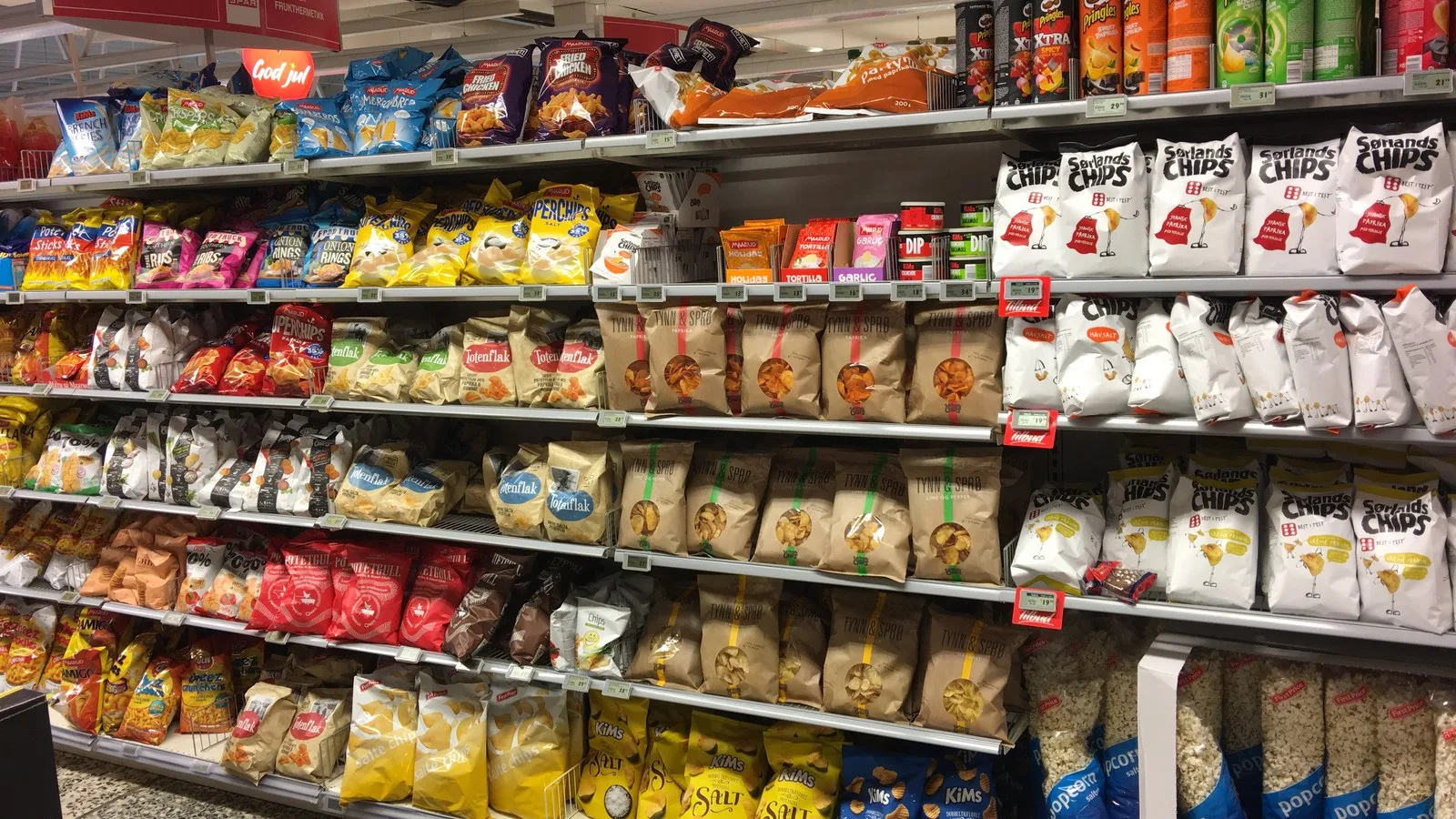
Your next packet of chips, biscuits or fizzy drink will soon carry a warning you cannot miss. On Thursday, 26 November, the Supreme Court ordered the Food Safety and Standards Authority of India (FSSAI) to put a separate red hexagon warning on packaged foods for every nutrient they are high in, sugar, salt or fat. A product high in sugar will carry a red hexagon saying HIGH SUGAR, one high in salt a hexagon saying HIGH SALT, and one high in fat a hexagon saying HIGH FAT, each with its own standard pictorial representation. The ruling ends years of delay over front-of-pack nutrition labelling in India, and it will touch almost everything on a supermarket shelf.
What the court ordered
A bench of Justices J.B. Pardiwala and K. Vinod Chandran delivered the 132-page judgment on a petition filed by Kerala-based non-profit 3S and Our Health Society, which had asked for mandatory warning labels to help consumers identify packaged foods high in nutrients linked to health risks. The court directed FSSAI to frame the warning label rules around three nutrients of concern: total sugars, saturated fat and salt. That is a change from the regulator's proposal, which used added sugar and added fat, a departure from its own 2021 position that the court said FSSAI had not adequately justified.
The court also rejected FSSAI's plan for a single combined hexagon. It held that each nutrient of concern must get its own separate hexagon, with its own pictogram and warning words, so that a shopper can see at a glance which nutrient a product is high in. Each warning must occupy at least 4 per cent to 5 per cent of the principal display panel, as applicable, and must be prominent, conspicuous and readily legible, sitting on the upper left side of the front of the packet against a white background. A product will have to carry a warning if it crosses the prescribed limit for even one of the three nutrients. It need not be high in all three.
Why the court stepped in
The case has been pending for several years. FSSAI's 2022 draft proposed a star-rating system instead of warning labels. In April 2025, the Supreme Court directed the regulator to finalise its recommendations, but in February 2026 FSSAI told the court it would withdraw the draft and undertake further research. The court pulled the regulator up over the delay, after which FSSAI proposed warning labels using hexagons. The court observed that significant time and effort had already been spent on front-of-pack nutrition labelling without any commensurate result.
The bench held that the right to health, food and informed choice under Article 21 of the Constitution imposes a positive obligation on the State to act. It said children's vulnerability, poor nutrition information on packaged foods and the growing burden of non-communicable diseases strike at the very heart of the right to health.
The court also took note of multinational food companies following different standards in India and abroad. It observed that such companies comply with, and in some instances voluntarily adopt, front-of-pack labelling requirements in other jurisdictions, yet resist similar measures in India, and called such double standards deeply troubling. A consumer in India, the judgment said, is entitled to no less protection, and no less information, than a consumer in the United States or the United Kingdom.
The thresholds problem
The court directed FSSAI to revisit and reformulate the nutrient thresholds, the cut-off levels above which a warning is triggered. It said the thresholds must be based on scientific evidence and neither be too low nor too high. If they are too low, almost every packaged food would carry a warning and consumers would become desensitised. If they are too high, most products would escape warnings altogether. The court cited a study of 44,109 packaged-food records which found that 94.1 per cent exceeded at least one nutrient threshold under the 2024 dietary guidelines, while 85.3 per cent exceeded two or more. It said the thresholds currently on record were too low and needed to be revisited so the warning system stays meaningful.
FSSAI must also prepare an exhaustive list of exempt foods, with reasons, and stop manufacturers using additives or other ingredients to get around the warnings. Sweetened beverages that do not exceed the prescribed thresholds must not carry front-of-pack labels identical or deceptively similar to the warning labels for drinks that do exceed them.
What happens next, and when
FSSAI has four months to publish draft amendments to the regulations, invite public comments for 60 days and then finalise the rules. The court said the regulator must stick to the timeline and not allow the process to be delayed further in the name of stakeholder consensus. FSSAI must file an affidavit on progress when the matter is listed after 10 weeks.
Once the final rules are notified, food businesses will get a 365-day transition period to comply. The court upheld that transition period, rejecting the petitioners' plea for immediate implementation, but said it must be strictly adhered to, with no further extensions ordinarily. It warned against companies printing or stockpiling unlabelled packs during the transition, and directed FSSAI to monitor compliance. The judgment was pronounced on Constitution Day, 26 November. For shoppers, the change is simple: the next time a packet carries one, two or three red hexagons on its front, the label will say plainly which nutrient is the problem.
Frequently Asked Questions
What will the new food warning labels look like?
Each packaged food that crosses the limit for sugar, salt or fat will carry a separate red hexagon on the front of the packet, with the words HIGH SUGAR, HIGH SALT or HIGH FAT and a standard pictorial representation for that nutrient. Each hexagon must cover at least 4 per cent to 5 per cent of the front panel.
When will the warning labels appear on packets?
FSSAI has four months to publish draft amendments and finalise the rules after a 60-day public consultation. Once the final rules are notified, food companies get a 365-day transition period to comply, with no further extensions ordinarily.
Why did the court reject a single combined label?
The court held that a single combined hexagon would not tell a shopper which nutrient a product is high in. Separate hexagons for sugar, salt and fat make it easier for consumers to understand what a packaged food contains at a glance.
Read More: Explained: Maharashtra FDA vs FSSAI, the Food Safety Row
Read More: Explained: Bisleri Water Case and the FSSAI Prosecution Row
Read More: Explained: ICMR Report, Why Common Antibiotics Are Failing
Read More: Myths and Facts: Microwaving Food Does Not Destroy Its Nutrients



Comments
Be the first to comment on this story.