


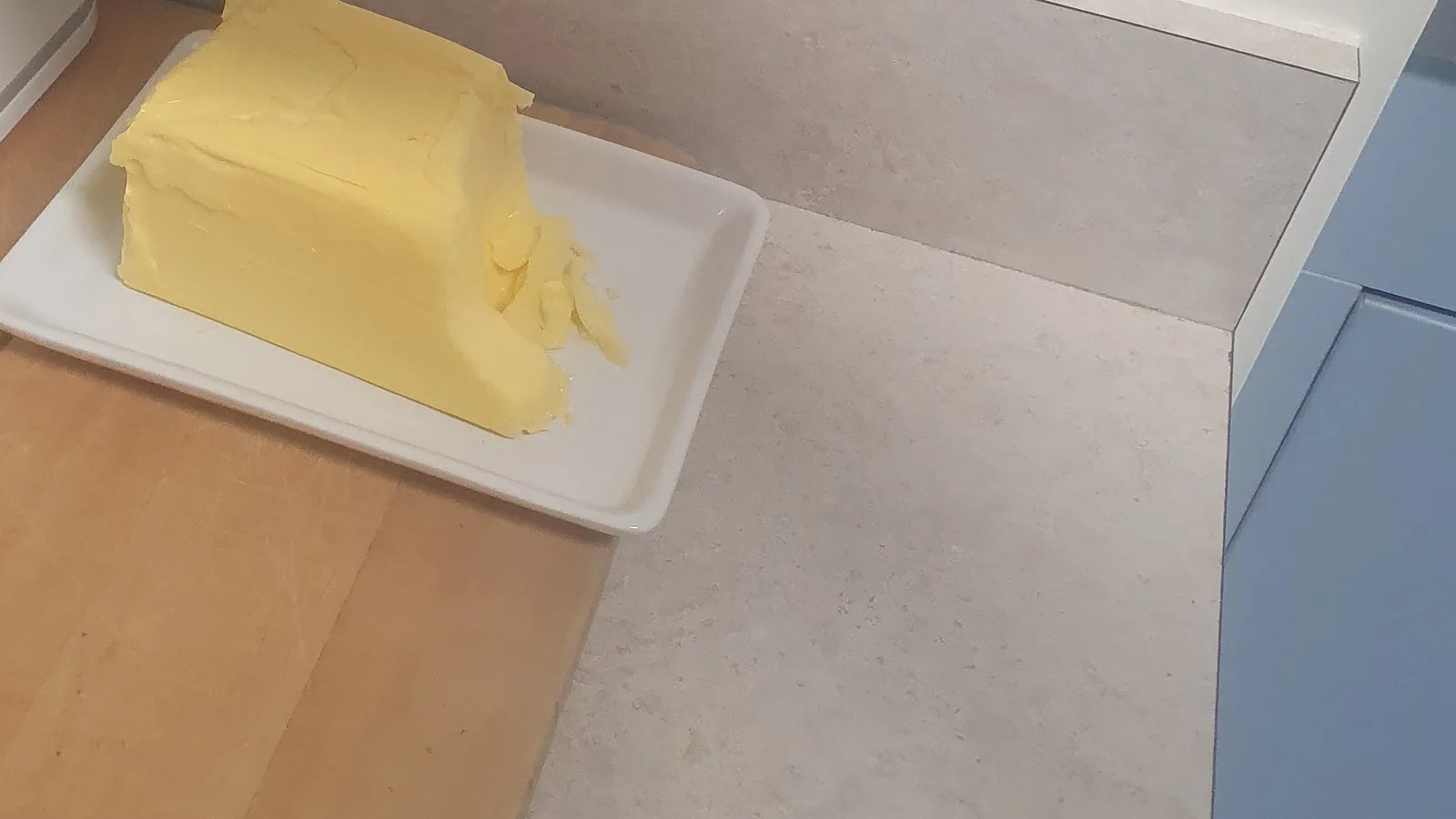
Reach for the butter dish after a burn and someone will tell you it soothes the skin and helps it heal. It feels cool and greasy when it goes on, and the advice has been passed down for generations. It is also wrong. Putting butter on a burn does not help it heal. It traps heat in the skin, can make the injury worse and raises the risk of infection. Verdict: False.
The claim
The claim is simple: spread butter, or another kitchen fat such as ghee or cooking oil, over a fresh burn and it will cool the skin, stop the pain and help the wound heal faster. The idea turns up in family first aid advice around the world, and in India the same claim is made for ghee. It sounds plausible because butter comes out of the fridge cold and feels soothing for a few seconds when it touches hot skin.
Why butter feels like it helps
Part of the myth is the first few seconds. Cold butter feels cool against a hot, painful burn, and that brief relief is easy to mistake for treatment. The second part is confusion about later care. Once a minor burn has cooled and started to heal, doctors do suggest a gentle moisturiser, and the Mayo Clinic notes that a lotion containing aloe vera or cocoa butter can soothe the skin and prevent dryness at that stage. But cocoa butter lotion on healing skin is not the same thing as kitchen butter on a fresh burn, and the timing matters. Nothing greasy belongs on a burn while it is still hot.
What butter actually does to a burn
A burn keeps damaging the skin until the heat is drawn out of it. Butter is a fat, and a layer of fat over the wound seals the heat in instead of letting it escape. The University of Rochester health encyclopedia puts it plainly: any greasy substance on a burn keeps heat in, and that can make it hard for a burn to heal or be correctly treated. The Mayo Clinic says the same: do not use butter, toothpaste or oil on a burn, because these can trap heat, cause irritation and make the injury worse. Britannica's first aid guidance adds that home remedies such as butter or petroleum jelly should not be applied to a wound, as they trap heat within the injury and can cause further damage.
There are two more problems. Butter is not sterile, so spreading it over damaged skin can push bacteria into the wound and raise the risk of infection. And a greasy coating makes it harder for a doctor or nurse to see how deep the burn is, which can delay proper treatment. The NHS lists the rule in its don't column for burns and scalds: do not put any creams, oils or butter on burns or scalds. The same warning covers toothpaste, ghee, cooking oil and ice, which can damage the skin further.
What to do instead
The right first aid is water, not anything from the kitchen shelf. The NHS advises holding the burn under cool running water for 20 minutes, as soon as possible and within three hours of the injury. The Mayo Clinic gives about 10 minutes as the minimum. While the burn cools, remove rings, watches or tight clothing nearby, unless anything is stuck to the skin. When the burn has cooled, lay cling film loosely over it, or cover it with a clean, non-stick dressing. Do not wrap the cling film tightly around a limb, and do not put it on the face.
Do not burst any blisters. They protect the wound against infection, and if one breaks on its own, clean it gently with water and cover it. Paracetamol or ibuprofen can help with the pain. Get emergency help for a burn larger than the size of the person's palm, a burn on the face, hands, feet, genitals or over a joint, a burn that looks deep or charred, or any burn that shows signs of infection or has not healed within two weeks.
Verdict: False
Putting butter on a burn does not help it heal. It traps heat in the skin, can make the injury worse, raises the risk of infection and makes the burn harder for a doctor to assess. Cool running water is the treatment that works, and butter belongs back in the fridge, not on the wound.
Frequently Asked Questions
Does butter help a burn heal?
No. Butter traps heat in the skin, which can make the injury worse, and it can push bacteria into the wound and raise the risk of infection. The NHS, the Mayo Clinic and Britannica all advise against putting butter, oil, toothpaste or any other home remedy on a burn.
What should I put on a burn instead?
Cool running water. The NHS advises 20 minutes under cool running water, as soon as possible and within three hours of the injury. The Mayo Clinic gives about 10 minutes as the minimum. When the burn has cooled, cover it loosely with cling film or a clean, non-stick dressing, and do not burst any blisters.
Is cocoa butter lotion safe on a burn?
Only after the burn has cooled and begun to heal. The Mayo Clinic suggests a lotion with aloe vera or cocoa butter to soothe healing skin and prevent dryness. That is not the same as kitchen butter, ghee or oil, which should never go on a fresh burn.
Read More: Myths and Facts: Touching a Baby Bird Does Not Make Its Mother Abandon It
Read More: Myths and Facts: A Dog's Mouth Is Not Cleaner Than a Human's
Read More: Myths and Facts: Chameleons Do Not Change Colour to Match Their Background
Read More: Myths and Facts: Cows Do Not Have Four Stomachs at All


Comments
Be the first to comment on this story.