


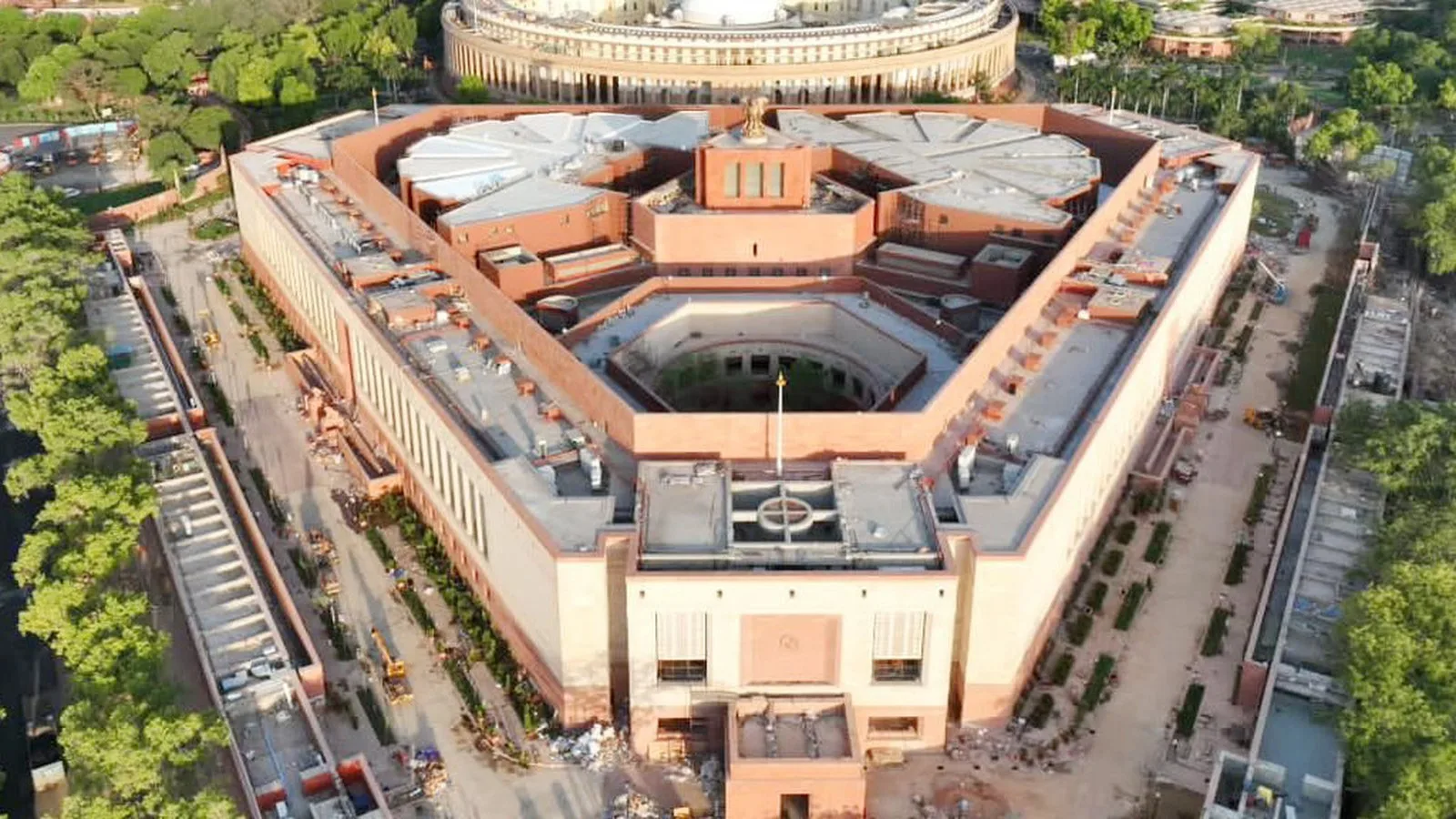
Parliament will meet again on November 30, more than three months after the Monsoon Session was adjourned. Parliamentary Affairs Minister Kiren Rijiju announced on Thursday that the government has asked the Lok Sabha Speaker and the Rajya Sabha Chairman to reconvene the two Houses to transact essential government business, with the sittings likely to conclude on December 3.
The announcement has set off intense speculation. The government has not said what business it plans to transact, but reports point to a fresh attempt to pass legislation on delimitation and the implementation of women's reservation in Parliament and state assemblies. Here is what the sitting is, why it is unusual, and what is at stake.
Why is Parliament reconvening on November 30?
Rijiju said in a post on X that the government has requested Lok Sabha Speaker Om Birla to reconvene the Lok Sabha on Monday, November 30, and Rajya Sabha Chairman C. P. Radhakrishnan to reconvene the Rajya Sabha on Wednesday, December 2. The sittings of both Houses may conclude on December 3, depending on the requirements of government business.
That gives the Lok Sabha four working days and the Rajya Sabha two. The minister did not name any bill or subject, describing the purpose only as essential government business. The Union Cabinet is scheduled to meet on Friday, November 27, and is expected to discuss the delimitation-linked women's quota legislation.
Is this a new session or a continuation of the old one?
The sittings will not be a new session. The Monsoon Session was adjourned sine die on August 13 and has never been formally prorogued, which is the formal ending of a session. Because the session is still technically alive, the November 30 sitting will be an extension of the Monsoon Session.
That distinction matters for timing. An extended sitting within an existing session needs a minimum of two days' notice, while convening a fresh session needs at least 14 days' notice. By November 30, the gap since Parliament last sat will be 108 days, the longest on record, surpassing the previous record of 87 days set in 2008.
The announcement has also put a question mark over the Winter Session, which is normally convened in the first three weeks of December.
What is delimitation, and why does it matter now?
Delimitation is the redrawing of the boundaries of Lok Sabha and Assembly constituencies on the basis of population, as counted in the Census. The last full delimitation was completed in 2008 on the basis of the 2001 Census, and the Constitution froze the number of Lok Sabha seats at 543 until after the first Census following 2026.
The legislative package the government is reported to be preparing has three parts: the Delimitation Bill, 2026, the Constitution (One Hundred and Thirty-First Amendment) Bill, 2026, and a Union Territories Laws (Amendment) Bill. Together, they would raise the strength of the Lok Sabha from 543 to a maximum of 850 seats through delimitation, with around 283 seats reserved for women on rotation.
What is the women's reservation law, and why is it linked to delimitation?
The women's reservation law is the Constitution (One Hundred and Sixth Amendment) Act, 2023, known as the Nari Shakti Vandan Adhiniyam. Passed by Parliament in September 2023, it provides for 33 per cent reservation for women in the Lok Sabha and state assemblies. But its implementation was linked to a future delimitation exercise following the first Census conducted after the Act came into force.
The new package seeks to delink women's reservation from delimitation based on the 2027 Census, so that the quota can be implemented ahead of the 2029 general election. This is the government's second attempt. In April, the Lok Sabha voted down the Constitution Amendment Bill after the government failed to muster the two-thirds majority that constitutional amendments require. The accompanying Delimitation Bill and Union Territories Laws (Amendment) Bill were then held back.
Prime Minister Narendra Modi raised the issue on Constitution Day on November 26, saying no force can stop the delivery of justice to women and that the legislation aimed at giving women adequate representation was disallowed from being passed by one opposition party.
Does the government have the numbers to pass the bills?
A constitutional amendment needs a two-thirds majority in each House. In the Lok Sabha, that means 362 votes in the present 543-member House. After a breakaway group of the Trinamool Congress and the Shiromani Akali Dal joined the ruling alliance, the NDA has a total of 319 members, still short of the two-thirds mark. It will depend on support from parties such as the NCP (Sharad Pawar), which has 8 seats, and others outside the alliance.
Whether the government has closed that gap is the question the November 30 sitting will answer. If the bills are introduced and put to vote, the numbers will be tested in the House itself.
What is the Opposition saying?
The Congress has questioned why the government is calling a short sitting instead of a regular Winter Session. Its parliamentary strategy committee is scheduled to meet on Friday, November 27, to decide its response.
The Congress-led INDIA bloc, the DMK and the Aam Aadmi Party have set out four conditions for supporting the women's reservation legislation: the Lok Sabha's existing strength of 543 seats should remain unchanged, states should retain their current representation, 182 of the existing seats should be reserved for women, and this arrangement should be frozen for 25 years through a constitutional amendment. Their argument is that women's reservation should be implemented on its own, without being tied to delimitation.
CPI(M) MP John Brittas also criticised the move, alleging that the government's approach to mergers, takeovers and political realignments could be aimed at securing support for the delimitation legislation.
What happens next?
The Union Cabinet meets on Friday, November 27, and the Lok Sabha meets on Monday, November 30. Only then will it be clear whether the delimitation and women's reservation bills are actually introduced. If they are passed, the redrawing of constituencies would reshape the electoral map before the 2029 general election, and the long-pending women's quota would move a step closer to taking effect.
Frequently Asked Questions
Why is Parliament meeting on November 30?
The government has asked the presiding officers of both Houses to reconvene Parliament to transact essential government business. The Lok Sabha meets on November 30 and the Rajya Sabha on December 2, with sittings likely to conclude on December 3. Because the Monsoon Session was never prorogued after it was adjourned on August 13, this is an extension of that session, not a new one.
What is delimitation?
Delimitation is the redrawing of constituency boundaries on the basis of population, as counted in the Census. The proposed package would raise the Lok Sabha's strength from 543 to a maximum of 850 seats and reserve around 283 seats for women on rotation.
When will women's reservation actually take effect?
The 2023 law provides for 33 per cent reservation for women in the Lok Sabha and state assemblies, but its rollout was linked to a Census and delimitation. The new package seeks to delink it from delimitation based on the 2027 Census, with the aim of implementing it ahead of the 2029 general election.
Read More: Explained: Ravi Hanj Book Row Over Basavanna, Four FIRs and a Red Corner Notice
Read More: Explained: New US Tariffs, Why India Has an Edge Over ASEAN and at What Cost
Read More: Explained: Constitution Day, Why November 26 Is Samvidhan Divas
Read More: Explained: 26/11 Mumbai Attacks, 18 Years On, the Trial and the Men Still Beyond Reach

Comments
Be the first to comment on this story.