


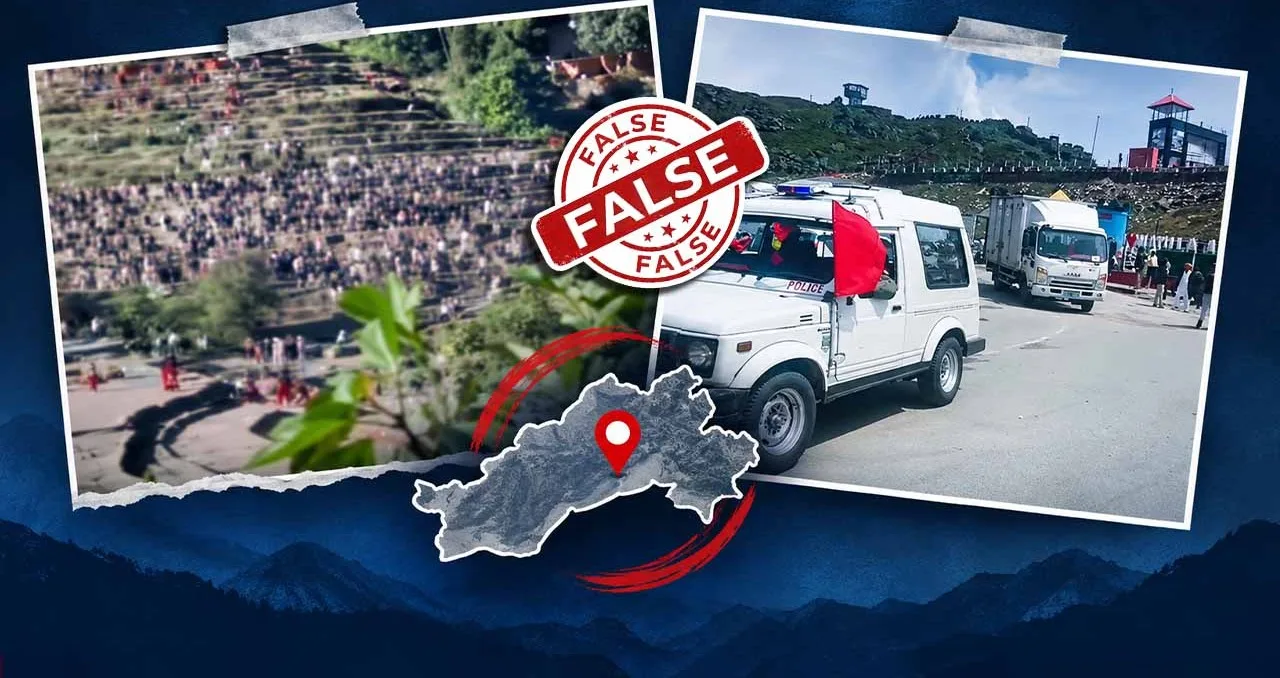
Claims that Chinese troops had defeated Indian soldiers and captured parts of Arunachal Pradesh are false. BOOM found that the viral posts rest on deepfakes of senior Army officers, old military footage and unrelated videos, and the Indian Army has rejected the claims as unsubstantiated. Verdict: False.
Days after the Indo-Tibetan Border Police chief confirmed reports of fresh face-offs between Indian and Chinese troops in Arunachal Pradesh on 22 October, a wave of misleading posts began circulating on social media. BOOM has published seven fact-checks tracing the viral videos to earlier incidents in Ladakh, Arunachal Pradesh and Jammu and Kashmir, and to unrelated events in Nepal and Kazakhstan.
The deepfakes of senior officers
BOOM found that footage of senior military officers and government officials was manipulated using AI generated audio to falsely attribute statements about Chinese incursions.
A deepfake of Lieutenant General Girish Kalia was shared with the claim that he admitted China had occupied Asaphila, Longju and Taksing Circle in Arunachal Pradesh. BOOM traced the original footage to October 2023, when Kalia was speaking about infiltration attempts in Jammu and Kashmir. He had made no such admission.
Another deepfake purported to show Lieutenant General Manoj Kumar warning that Arunachal Pradesh could become the next India-China flashpoint. BOOM found that the original footage was from his retirement speech in March 2026, during which he made no such remarks.
A deepfake video of Defence Minister Rajnath Singh was also shared, falsely claiming that he was dismissing the India-China standoff as a minor issue, accusing Army personnel of mutiny and prioritising trade relations with China over the border tensions. None of the three men said what the manipulated clips claim.
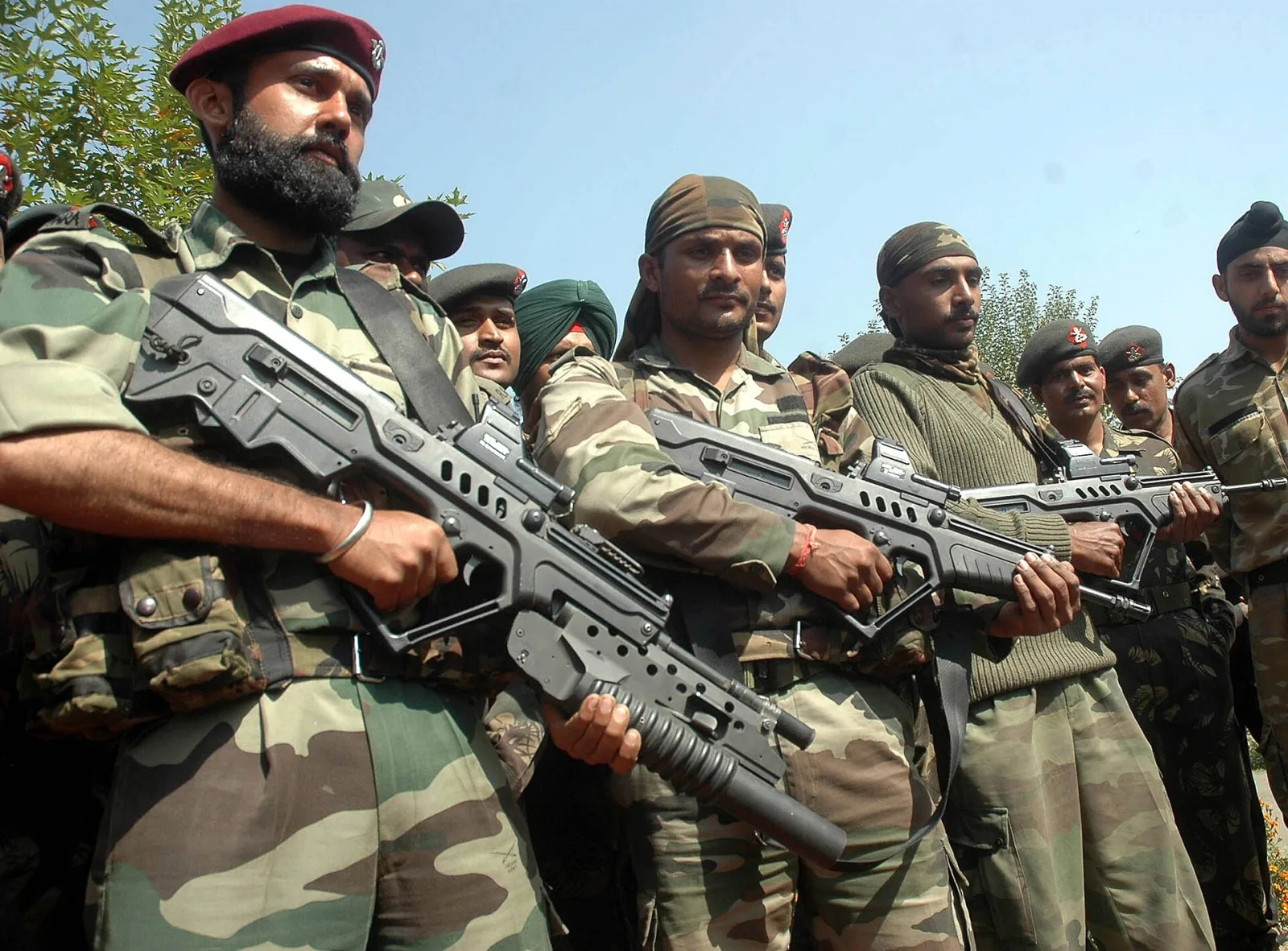
Old footage passed off as border clashes
BOOM found that old military confrontations and unrelated footage had surfaced and were presented as evidence of recent India-China clashes.
A video claiming that Chinese troops had pushed back 70 Indian soldiers in Arunachal Pradesh was traced to an earlier confrontation in Ladakh's Galwan Valley, with footage circulating since September 2020. Another clip showing soldiers clashing near the Chumi Gyatse waterfalls in Tawang had been online since 2021, while a separate assault video dated back to November 2024.
Another video purportedly showing injured Indian and Chinese soldiers actually is from a military training exercise in Kazakhstan in July 2026. A video that falsely claimed to show Chinese military vehicles entering India was traced to Nathu La Pass in Sikkim. Footage of Chinese troops allegedly apprehending an Indian soldier near Pangong Lake had also been circulating since 2025.
Two other videos, shared as evidence of Arunachal Pradesh residents resisting Chinese troops, were traced to a religious fair in Nepal's Doti district and Amarnath Yatra registration in Baltal, Jammu and Kashmir, respectively.
Protests falsely linked to the border conflict
Footage of local protests against the proposed Siang dam project in Arunachal Pradesh was also given a misleading border conflict narrative, claiming that security forces were being deployed against civilians amid Chinese incursions.
BOOM found that the footage was unrelated to the reported India-China face-offs. The video showed a 29 September protest against the proposed Siang Upper Multipurpose Project in Begging village, Arunachal Pradesh, where local residents had gathered to oppose the dam project.
The Army's own rebuttal
The Indian Army has itself rejected the claims. On 7 November, the Army's fact checking handle flagged six X accounts for coordinated inauthentic behaviour, saying suspected Pakistan sponsored accounts were circulating identical claims that Chinese forces had defeated Indian troops, advanced nearly 50 km into Arunachal Pradesh and established control over Indian territory.
The Army described the claims as false and unsubstantiated, and said the posts were part of an attempt to promote an anti-Indian Army narrative. It urged people to verify border related claims through credible and official sources before sharing them.
Why the claims spread
The posts arrived while attention was fixed on the border after the confirmed face-offs, and each one used real footage or a recognisable officer to make a fabricated claim look credible. A deepfake needs only a short clip of a public figure and a cloned voice, and old combat footage is easy to relabel with a new caption.
The pattern is the same across BOOM's seven fact-checks in this wave: real images and voices, rearranged or relabelled to tell a false story about the border. None of the videos shows what the posts claim, and there is no evidence to support the claim that Chinese troops advanced 50 km into Arunachal Pradesh or took control of Indian territory.
Frequently Asked Questions
Did China capture parts of Arunachal Pradesh?
No. The Indian Army has said there is no evidence to support claims that Chinese troops advanced 50 km into Arunachal Pradesh or established control over Indian territory. BOOM found the viral videos are deepfakes, old footage or unrelated clips.
Did Lt Gen Girish Kalia admit China occupied Arunachal areas?
No. BOOM traced the clip to October 2023 footage of Kalia speaking about infiltration attempts in Jammu and Kashmir. The admission was added with AI generated audio.
What did the Army say about the viral posts?
On 7 November, the Army flagged six X accounts for coordinated inauthentic behaviour and called the claims false and unsubstantiated, saying they were amplified in a coordinated manner to promote an anti-Indian Army narrative.
Read More: Fact Check: Viral Video of Rahul Gandhi Crying Is an AI Face Swap
Read More: Fact Check: CRPF Chief Deepfake on Slain Kishtwar Officers
Read More: Fact Check: Jaishankar and Lavrov Deepfakes Fuel False India-Russia Rift Claims
Read More: Fact Check: Photo of Indian Embassy Counsellor at London Protest Is Doctored

Comments
Be the first to comment on this story.