


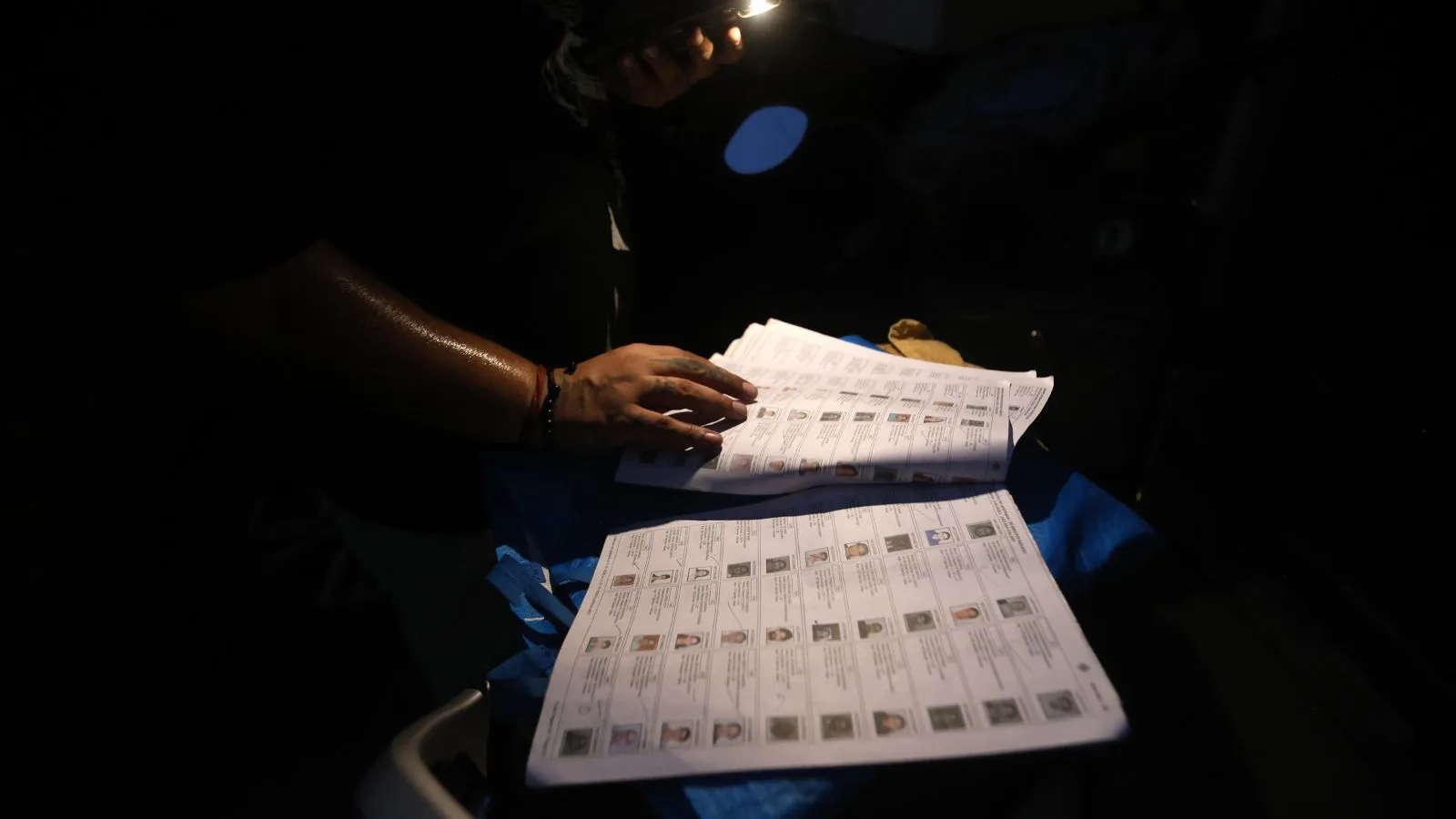
In the Bhusawal Assembly constituency in Maharashtra's Jalgaon district, 186 people filed 14,567 objections seeking the deletion of voters from the electoral roll. After inquiry, only 74 were found valid, and the district administration has started legal action against those who filed objections with malicious intent. The episode shows how the Special Intensive Revision, or SIR, of voter lists works, and where it can be misused.
What happened in Bhusawal
The objections were filed in Form 7, the official application used to object to a person's inclusion on the voters' list or to seek deletion of an existing name. According to a factual report prepared after an inquiry, the 186 objectors sought the deletion of 14,562 voters in the 12-Bhusawal Assembly constituency, and the total number of objections received by post came to 14,567.
The issue was first raised by the opposition Congress. Its local booth level agent, Munawwar Khan, flagged the mass submission of Form 7 objections and demanded an inquiry. Khan told The Indian Express that his team had traced some of the people named as objectors, and many of them denied having signed a Form 7.
The inquiry tested every objection. Individual notices were issued to the objectors, and a public notice was published in a newspaper on 5 November 2026 asking them to submit evidence. Booth Level Officers carried out physical spot inspections of each application. Along the way, 21 objectors voluntarily withdrew 2,532 objections.
In the end, 74 voters were found eligible for deletion, and action has been started as per the rules. An official order dated 17 November 2026 recorded that all 14,567 objections had been completely disposed of by following due legal process, and said legal action would be taken against individuals filing objections with malicious intent. The seat is represented by Bharatiya Janata Party minister for Textiles Sanjay Savkare.
What is Form 7, and what are the limits
Form 7 is one of three forms at the heart of the claims and objections stage. Form 6 is used to seek inclusion as a voter, Form 7 to object to an entry or seek a deletion, and Form 8 for corrections or changes to voter details.
The Bhusawal case is one reason the Election Commission tightened the rules in October 2026. Noting that bulk filing of Form 7s had caused avoidable inconvenience to voters, the Commission capped the number of applications an individual can submit at 10 Form 7s during the claims and objections period, and five per month during continuous updation in the normal course.
What is the Special Intensive Revision
The Special Intensive Revision is a time bound, door to door revision of electoral rolls carried out by the Election Commission. It differs from the routine summary revision because Booth Level Officers visit households, verify existing electors and collect fresh information, with the aim of rebuilding the roll constituency by constituency.
The current exercise began in Bihar in June 2025. On 14 May 2026, the Commission announced Phase III, covering 16 states and three Union Territories and more than 36 crore electors. Maharashtra is among the states in this phase, with 1 October 2026 as the qualifying date.
The process runs in stages: house to house enumeration, publication of a draft roll, a claims and objections period, hearings and verification, and publication of the final roll. In Maharashtra, the draft roll published on 31 August removed the names of more than two crore people, who the Commission says were absent, permanently shifted, deceased or duplicate registrations.
Where the Maharashtra exercise stands
The claims and objections window in Maharashtra closed on 13 November, after the deadline was extended twice. Between 31 August and 12 November, the Commission received 23.6 lakh applications online, most of them Form 6 applications for inclusion. The disposal of claims and objections must be completed by 25 November, and the final electoral roll is scheduled to be published on 30 November 2026.
Over 99 percent of the 1.2 crore voters who were served notices during the revision have been added back to the rolls, according to reports. The Supreme Court has asked the Election Commission not to set rigid deadlines, and has issued notices on a petition by Rahul Gandhi and other INDIA bloc leaders challenging the legality of the SIR.
Separately, the Commission announced on 6 November that the 20.6 million electors deleted from the draft roll would get another opportunity through fresh enumeration forms. Ten days later, officials said generation of those forms had not yet begun, which could push the final publication beyond 30 November. The Bhusawal outcome shows the system can catch bulk misuse, but it also shows how much verification the exercise still has to complete.
Frequently Asked Questions
What is Form 7 in the SIR process?
Form 7 is the official application used to object to a person's inclusion on the voters' list or to seek deletion of an existing name. In Bhusawal, 14,567 Form 7 objections were filed by post, and only 74 were found valid after inquiry.
How many voters were actually deleted in Bhusawal?
Only 74 voters were found eligible for deletion after Booth Level Officers inspected each application and hearings were held. The remaining objections were disposed of, and 21 objectors voluntarily withdrew 2,532 objections.
When will Maharashtra's final voter list be published?
The final electoral roll is scheduled for publication on 30 November 2026, after claims and objections are disposed of by 25 November. Officials have said the re-enrolment of 20.6 million deleted electors could delay that date, as fresh enumeration forms had not yet been generated.
Read More: Explained: The CEC Law Row and the Supreme Court Recall Plea
Read More: Explained: Why India's Core Sector Growth Hit a Series-High 10.9%
Read More: Explained: How NSE Became the World's Fifth Largest Listed Exchange
Read More: Explained: Why the AI Sell-Off Wiped Out Wall Street's 2026 Gains
Comments
Be the first to comment on this story.