


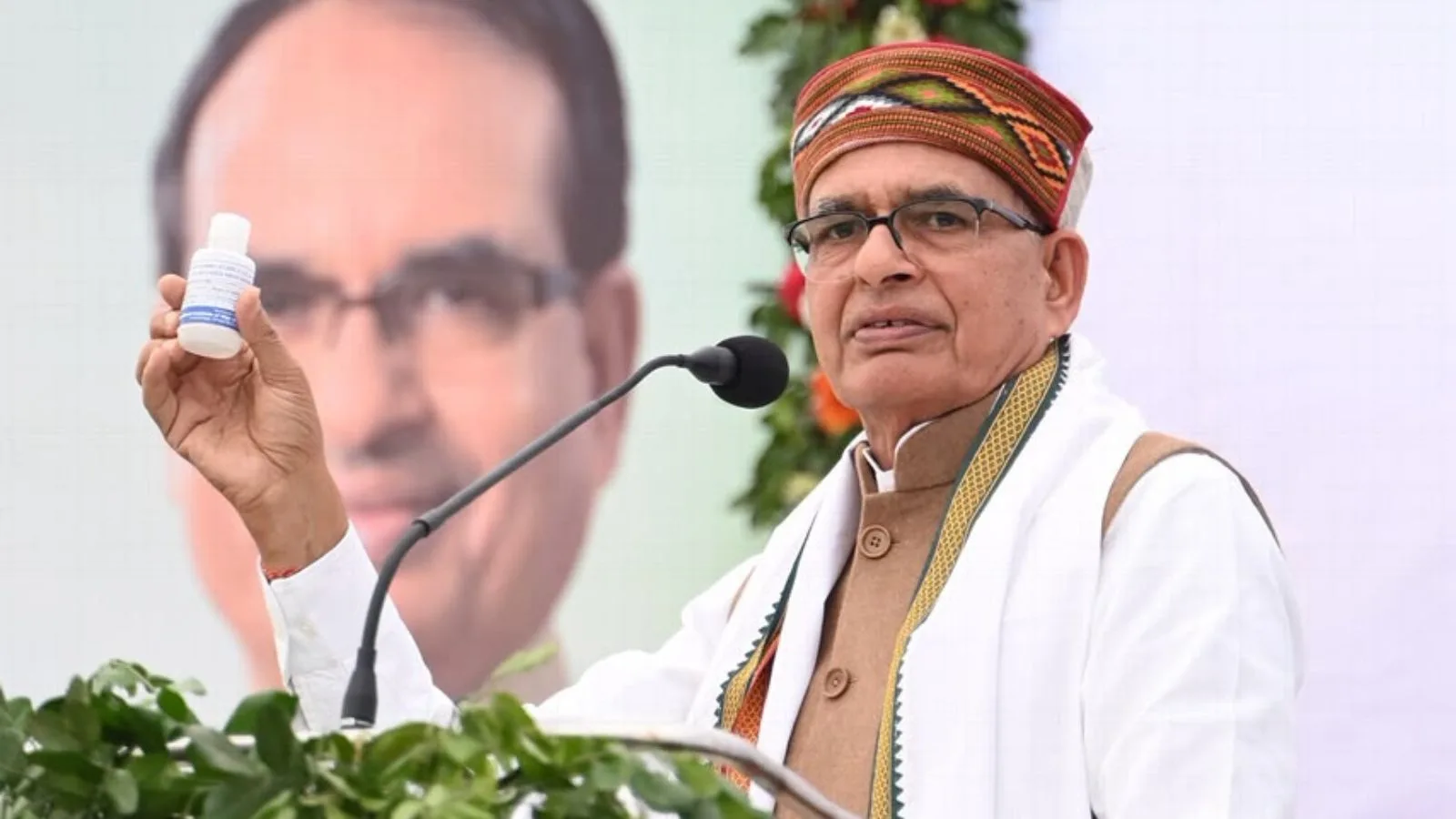
India has unveiled its first indigenous vaccine against H5N1 bird flu for chickens, priced at just Rs 1-2 per dose. Union Agriculture Minister Shivraj Singh Chouhan launched it in Bhopal on 20 November 2026, and scientists at the ICAR-National Institute of High Security Animal Diseases say it protects poultry against the strain behind most Indian outbreaks. Here is what the vaccine is, why it matters, and what is still unclear.
What was launched
The vaccine was developed by scientists at the ICAR-National Institute of High Security Animal Diseases (NIHSAD) in Bhopal. It is an inactivated vaccine against the H5N1 virus of clade 2.3.2.1a, the strain of highly pathogenic avian influenza that has caused most bird flu outbreaks in Indian poultry.
Chouhan dedicated the vaccine to the nation at a ceremony at ICAR-NIHSAD in Bhopal, where it was developed. He also announced a new Rs 300-crore state-of-the-art animal disease research laboratory for the city, and said NIHSAD had emerged as a symbol of India's scientific capabilities.
The minister said the launch was initially proposed to be held in Delhi, but he insisted on bringing it to Bhopal to honour the scientists and the city where the vaccine was developed. He called the research team the "real heroes" of the project.
What is H5N1, and why does it matter
H5N1 is a highly pathogenic strain of avian influenza, commonly known as bird flu. It spreads rapidly among poultry, kills infected birds in large numbers, and forces the culling of entire flocks to stop outbreaks spreading.
The threat is not new. India's first bird flu outbreak was reported in 2006 in Navapur, Maharashtra, where 10 lakh chickens died and lakhs more birds were culled and buried to contain it. India has recorded over 500 outbreaks since 2006. About 9 lakh chickens died in 2021, and another 2 lakh died this year.
The most recent major outbreak came in May 2026 in Navapur, in Nandurbar district of Maharashtra, where the H5N1 strain led to the culling of nearly 400,000 poultry birds across 13 farms. Chouhan warned that the virus can also pass to mammals and humans, which is why controlling it in poultry matters for public health as well as for farmers.
How the vaccine was developed
The vaccine was developed after months of work under stringent biosecurity conditions at NIHSAD, one of India's high-security animal disease laboratories. The research team comprised Dr S Nagarajan, Dr Manoj Kumar, Dr C Tosh, Dr H V Murugkar, Dr Aniket Sanyal, Dr Senthil Kumar D, Dr Naveen Kumar and Dr Yogisharadhya R.
The development involved months of strict precautions. Scientists reportedly gave up weekends, sanitised themselves before and after leaving the laboratory, bathed with nearly 120 litres of water daily as part of their safety protocol, and avoided keeping pets at home to minimise the risk of contamination.
Chouhan compared the team's dedication and discipline to that of soldiers, and placed the bird flu vaccine alongside India's two indigenous Covid-19 vaccines, which were developed within nine months under a task force led by Prime Minister Narendra Modi.
What it means for poultry farmers
The price is the most important detail for farmers. At Rs 1-2 per dose, the vaccine is aimed at making protection against bird flu affordable even for small poultry farmers, who cannot absorb the cost of imported vaccines or the losses from an outbreak.
Chouhan described livestock as "moving ATMs" that give farmers a regular monthly income alongside crops. Animal husbandry contributes 14 percent of India's GDP, and poultry contributes another 1 percent. Major animal diseases cost about Rs 56,000 crore in average annual losses, including Foot and Mouth Disease at Rs 22,000 crore, Lumpy Skin Disease at Rs 20,000 crore, Brucellosis at Rs 9,212 crore and Peste des Petits Ruminants at Rs 4,683 crore.
The government points to its National Animal Disease Control Programme, which has delivered 147 crore 16 lakh free doses against Foot and Mouth Disease, and to the Lumpi-ProVacInd vaccine for Lumpy Skin Disease, developed by scientists at Hisar and Izatnagar after the 2022 outbreak infected 32.8 lakh animals and killed 1.86 lakh. NIHSAD has also developed indigenous vaccines for Gumboro disease, Brucella abortus S-19 Delta, Classical Swine Fever and African Swine Fever.
What is still unclear
The launch is a research milestone, but some practical details are not yet public. The announcement does not by itself establish when the vaccine will become commercially available, how it will be deployed across poultry farms, or what vaccination protocols will be followed.
Until the rollout plan is announced, the vaccine's impact will depend on manufacturing scale, distribution to small farmers, and uptake in the states where outbreaks recur. The Rs 300-crore laboratory announced alongside the launch is meant to strengthen that pipeline, but it is a longer-term investment.
- India has recorded over 500 bird flu outbreaks since 2006, with the latest major one in Maharashtra in May 2026. - The new vaccine targets H5N1 clade 2.3.2.1a, the strain behind most Indian poultry outbreaks. - At Rs 1-2 per dose, it is priced for small poultry farmers. - A Rs 300-crore animal disease research laboratory was announced for Bhopal alongside the launch.
Frequently Asked Questions
What is the new H5N1 vaccine?
It is India's first indigenous vaccine against the H5N1 clade 2.3.2.1a strain of highly pathogenic avian influenza, developed by ICAR-NIHSAD scientists in Bhopal to protect chickens.
How much will the vaccine cost?
It is priced at Rs 1-2 per dose, which the government says makes it affordable even for small poultry farmers.
When will farmers be able to use it?
That is not yet clear. The launch announcement does not say when the vaccine will become commercially available or how it will be rolled out across poultry farms.
Read More: Explained: Why India's Oil Import Bill Rose 54% in Seven Months
Read More: Explained: Why Counting Farm Fires Misses Stubble Burning Scale
Read More: Explained: The Riemann Hypothesis and the Claimed AI Proof
Read More: Explained: The CEC Law Row and the Supreme Court Recall Plea

Comments
Be the first to comment on this story.