


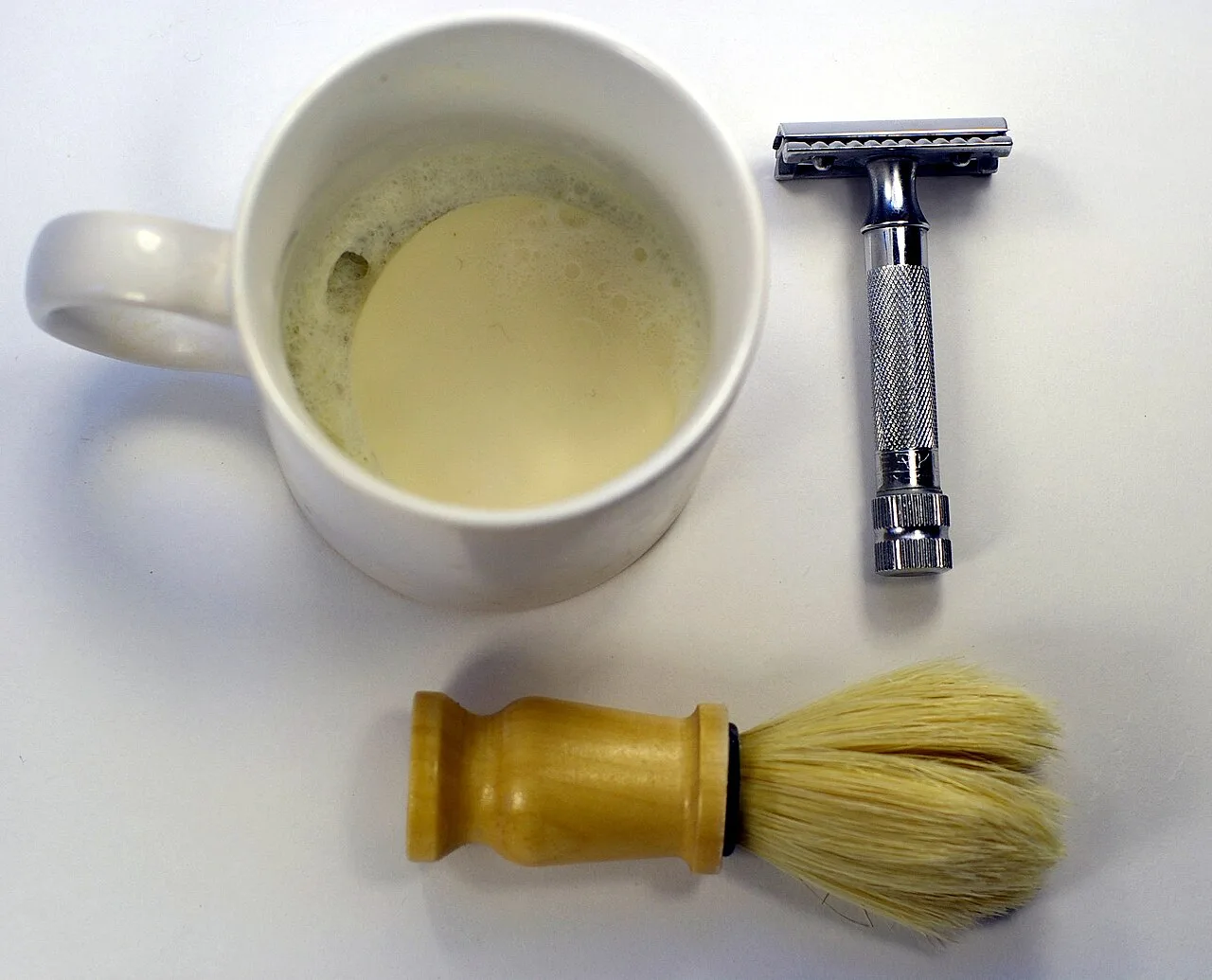
Almost everyone has heard it: once you start shaving, your hair will grow back thicker, darker and faster. It is one of the most repeated grooming myths around, and it is false. Decades of research show that shaving changes nothing about the hair itself. What changes is only how the regrowing hair looks and feels. Verdict: False.
The myth
The claim is simple. A razor, the story goes, stimulates the hair so that it returns coarser and darker than before, and regular shaving keeps making it worse. Parents warn teenagers about it, and many people avoid shaving parts of the body for fear of ending up with thicker hair. The belief has survived for nearly a century, even though scientists settled the question long ago.
What the studies show
The earliest test dates to 1928, when researchers compared shaved and unshaved hair on male subjects and found no difference in growth rates or thickness. The result was published in the journal Anatomical Record, and later work confirmed it.
A stronger test came in 1970, published in the Journal of Investigative Dermatology. Researchers had men shave one leg regularly over several months while leaving the other leg unshaved, then measured the weight, diameter and growth speed of the hair on both legs. They found no significant difference between the shaved and unshaved sides.
In 2007, the British Medical Journal published a paper on prominent medical myths and listed the belief that shaving accelerates hair growth among the top misconceptions. The paper explained that shaving only removes the hair shaft, which is made of dead keratin, while the follicles that control thickness, colour and growth rate lie deep beneath the skin, untouched by a razor. The Mayo Clinic states the same conclusion plainly: shaving hair does not change its thickness, colour or rate of growth.
- A 1928 study found no difference in growth rate or thickness between shaved and unshaved hair. - A 1970 study that shaved one leg and not the other found no significant difference in weight, diameter or growth speed. - The British Medical Journal listed the belief among leading medical myths in 2007. - The Mayo Clinic and Cleveland Clinic agree that shaving does not affect hair growth.
Why stubble feels thicker
The illusion has a simple cause. An uncut hair tapers to a fine, soft point at its tip. A razor slices through the hair at its widest part, near the surface of the skin, and leaves a sharp, blunt end. That is why stubble feels coarse and prickly a day or two after shaving, even though each hair is no wider than before.
Colour plays a trick too. The part of a hair near the root has not been exposed to sun or washing, so it is often darker than the older, lighter tips. New growth shows its true colour against freshly shaved skin, and stands out more than a mix of older hairs would. Season can add to the confusion: beard growth is slower in January and February and climbs to about 60 percent faster by mid-summer, so someone who starts shaving in spring may notice faster regrowth that is really the season.
What actually controls hair growth
Hair grows from a follicle, a small pocket in the skin that holds the root. The characteristics of hair, its thickness, colour, texture and growth speed, are set by genetics, hormones, age and overall health. A razor only trims the dead shaft above the skin. It cannot reach the follicle, cannot make the root pocket larger, and cannot create new follicles. For hair to become thicker, the follicle would need to produce a wider shaft, and that happens only through internal signals such as hormones.
Shaving, waxing and hair removal creams differ in what they remove, but none of them changes the follicle. Waxing pulls the whole strand out, root and all, while creams dissolve hair into soft tips that feel less bristly as they regrow. Shaving leaves the bulb and its control centre exactly as they were, so the next hair is made by the same follicle at the same speed and width as before.
Frequently Asked Questions
Does shaving make hair grow back thicker?
No. Studies from 1928 and 1970 found no difference in thickness, weight or growth speed between shaved and unshaved hair. The Mayo Clinic says shaving does not change hair thickness, colour or rate of growth.
Why does stubble feel coarse if the hair is unchanged?
A razor cuts hair at its widest point and leaves a blunt, sharp end, while an uncut hair tapers to a fine tip. The blunt ends feel prickly as they grow out, even though each hair is no wider than before.
Can shaving change hair colour?
No. Colour is set in the follicle beneath the skin. New growth near the root simply has not been lightened by sun or washing yet, so it can look darker than older hair.
Read More: Myths and Facts: Coffee Does Not Dehydrate You, Studies Show
Read More: Myths and Facts: Cracking Your Knuckles Does Not Cause Arthritis
Read More: Myths and Facts: Goldfish Do Not Have a Three Second Memory



Comments
Be the first to comment on this story.