


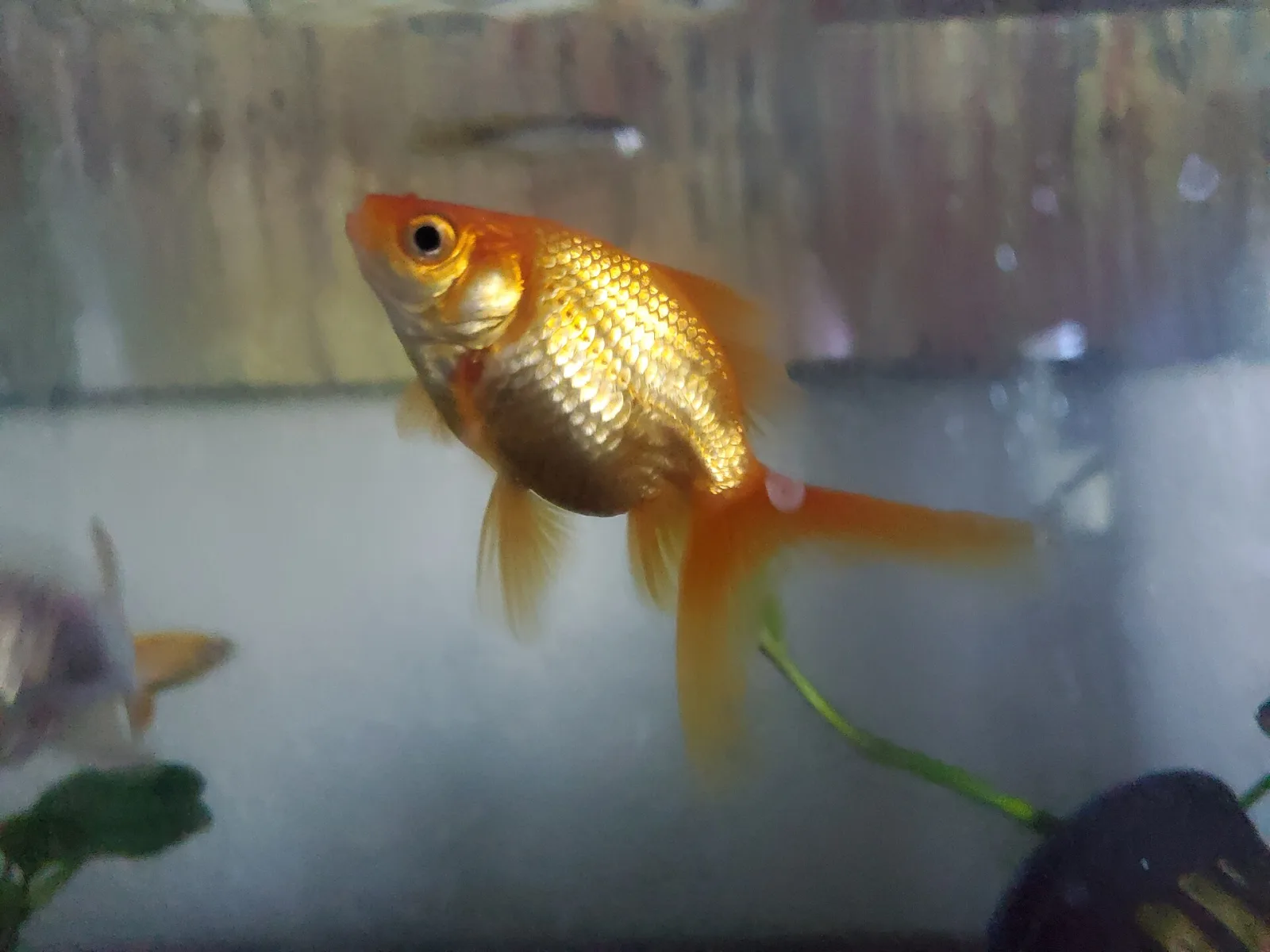
The idea that a goldfish forgets everything within three seconds is one of the most repeated animal myths around. It is also false. Decades of experiments show that goldfish can learn, remember feeding times, tell colours apart and navigate by landmarks for weeks and months. Verdict: False.
The myth
The claim is simple: a goldfish has a memory of about three seconds, so everything it sees is new to it a moment later. The number changes depending on who tells the story. In some places it is two seconds, in others ten, but it is always short. The idea has survived for decades, even though scientists have known since the 1950s and 1960s that goldfish can learn and remember.
What the experiments show
In a 1994 study at the University of Plymouth, researchers trained eight goldfish to press a lever to get food. They then limited the reward so the lever only produced food during one hour each day. The fish learned the pattern and pressed the lever far more often around feeding time, showing they could learn a daily schedule and anticipate it.
In another experiment, goldfish trained to tell apart smells linked to different outcomes still remembered the difference at least three months later. Colour tests go back further. In 1959, researchers trained goldfish to tell coloured panels apart even when the brightness of the panels varied, and later work confirmed the finding with blue, green and red panels.
Culum Brown, a fish cognition expert at Macquarie University in Australia who has studied fish intelligence for more than 25 years, put it plainly to Live Science: "The three-second memory thing is a complete myth." He added that goldfish can remember for weeks, months and even years, and that thousands of studies show fish have excellent memories.
- Goldfish trained to press a lever for food learned to expect it at the same hour each day. - Fish trained on smell differences remembered them at least three months later. - Goldfish can tell blue, green and red panels apart regardless of brightness.
A schoolboy test, and a fish that learned to drive
A simple home experiment made the point in a way anyone could follow. Rory, a 15-year-old schoolboy in Australia, put a red Lego brick in his goldfish tank and dropped food next to it. At first the fish avoided the brick. After a week of training, it swam towards the brick when it appeared, expecting food. Rory then fed the fish for a week without the brick. When he put the brick back, the fish swam to it faster than before, showing it remembered the link between the brick and food.
In 2022, researchers at Ben-Gurion University in Israel went further and trained goldfish to drive a small wheeled tank on land towards a target, steering by what they could see. The task needed navigation and memory far beyond a few seconds.
Why the myth survives
Part of the answer may be guilt. Fish cognition experts have suggested that a forgetful fish makes a small, bare tank easier to justify: if the fish remembers nothing, there is nothing to miss. That explanation is a suspicion, not a proven fact.
What is proven is that goldfish are a standard laboratory animal for studying learning and memory, and have been for more than 60 years. The exact upper limit of a goldfish memory is still not pinned down, because different kinds of memory last for different lengths of time. But on the one question the myth answers, the evidence is clear: a goldfish memory lasts far longer than three seconds.
Frequently Asked Questions
How long can a goldfish remember something?
Experiments show goldfish can remember learned tasks for weeks and months. In one test, fish still remembered a learned smell difference at least three months later.
Can goldfish learn new tasks?
Yes. Goldfish have been trained to press levers for food, tell colours apart, find food using landmarks and even steer a wheeled tank towards a target on land.
Why do people believe the three-second myth?
There is no scientific source for the figure. Experts suggest it survives because it makes keeping a fish in a small, bare tank easier to justify.
Read More: Myths and Facts: Coffee Does Not Dehydrate You, Studies Show
Read More: Myths and Facts: We Use All of Our Brain, Not Just 10 Percent
Read More: Myths and Facts: Sugar Does Not Make Children Hyperactive



Comments
Be the first to comment on this story.