


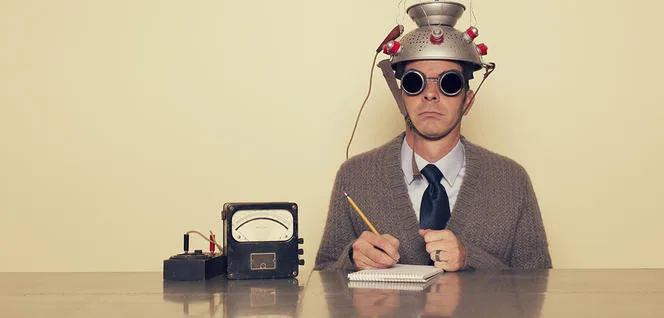
The claim that humans use only 10 percent of their brains is one of the most repeated ideas in popular science. Films, self-help books and motivational speeches have all told us that unlocking the other 90 percent would bring genius, fame or fortune. Neuroscience says otherwise. Brain scans, studies of brain injury and simple evolutionary logic all point the same way. We use all of our brain. Verdict: False.
The myth
The myth says that most people use only a tenth of their brain, and that the rest sits idle, waiting to be unlocked. It is often dressed up with an exact number, 10 percent, which makes it sound measured and scientific. The promise attached to it is seductive. If 90 percent of the brain is spare capacity, then tapping into it could make anyone smarter, more creative or even telepathic. Films such as Lucy, in which a character gains superhuman powers by using more of her brain, have carried the idea to millions of viewers.
Where the claim came from
The claim is often blamed on famous scientists, but the blame does not hold up. According to some authors, the myth came from the 19th century American psychologist William James, while others attribute it to Albert Einstein. There is not a shred of evidence that either of them ever said it. The French National Centre for Scientific Research, CNRS, notes that the origin of the myth remains a mystery, and that the evidence against it is very real.
More seriously, the myth was probably fed by real scientific studies that were misunderstood. The psychologist Karl Lashley concluded in early experiments that the cerebral cortex was undifferentiated and had no specific function. Others pointed out that when very large numbers of neurons fire together, the result is an epileptic seizure, and took that as a sign that most of the brain is normally quiet. The content and results of these studies were, at best, misinterpreted or deformed, and at worst, completely invented, according to CNRS. The idea then spread through the self-help movement of the 1920s, which promised readers they could unlock hidden mental power.
What the evidence shows
The first line of evidence is the cost of the brain itself. The human brain accounts for only 2 percent of total body volume, yet it uses some 20 percent of the body's total energy. It is highly unlikely that our species would have conserved an organ that consumes such a large share of available resources if its output were a meagre 10 percent of its capacity. If 90 percent of the brain were truly redundant, evolution would have trimmed it long ago to save energy.
The second line of evidence comes from brain injury. Numerous observational studies in patients with brain lesions have shown that no part of the brain is redundant. All cerebral regions clearly play a part in information processing, preparation for action, or particular forms of behaviour. As the neurologist Barry Gordon put it, we use virtually every part of the brain, and most of the brain is active almost all the time. If 90 percent of the brain were unused, damage to those areas would have no effect. In practice, even slight damage to small areas can have profound effects.
The third line of evidence comes from brain imaging. Functional magnetic resonance imaging, known as fMRI, and positron emission tomography, known as PET, let researchers watch the brain at work. They show that nearly all regions of the brain have a function, and that over the course of a day, we use 100 percent of the brain, in the words of Mayo Clinic neurologist John Henley. No study has demonstrated an entirely silent zone in a healthy brain, whether by recording electrical, magnetic, chemical or metabolic activity.
Why the myth survives
The myth survives because it flatters us. It tells us that genius is already inside us, waiting to be switched on, and that our limits are not real. That message sells books, films and courses, and it is far more appealing than the reality, which is that intelligence comes from practice, learning and the slow work of the whole brain. The myth also survives because it is hard to disprove in a single sentence. The truth needs brain scans, lesion studies and evolutionary reasoning, while the myth needs only a confident number.
There is a grain of truth buried in it, which helps it along. At any single moment, only some parts of the brain are highly active, while others are quieter. But quieter is not the same as unused. Over a day, every region is called on, just as every muscle in the body is used over a day even though not all of them work at once.
Frequently Asked Questions
Do we really use only 10% of our brain?
No. Brain scans and lesion studies show we use all of our brain. The brain uses about 20 percent of the body's energy despite being only 2 percent of body volume, and no part of it is redundant.
Did Einstein say we use only 10% of our brain?
There is no evidence Einstein ever said it. The claim has also been attributed to the psychologist William James, again with no evidence. The true origin of the myth is unknown.
Do brain scans show unused parts of the brain?
No. Imaging tools such as fMRI and PET scans show that nearly all regions of the brain are active and have a function. No study has found an entirely silent zone in a healthy brain.
Read More: Myths and Facts: Sugar Does Not Make Children Hyperactive
Read More: Myths and Facts: Cracking Your Knuckles Does Not Cause Arthritis
Read More: Myths and Facts: Coffee Does Not Dehydrate You, Studies Show
Read More: Explained: Why Gold Prices Have Fallen 25% in Nine Months



Comments
Be the first to comment on this story.