


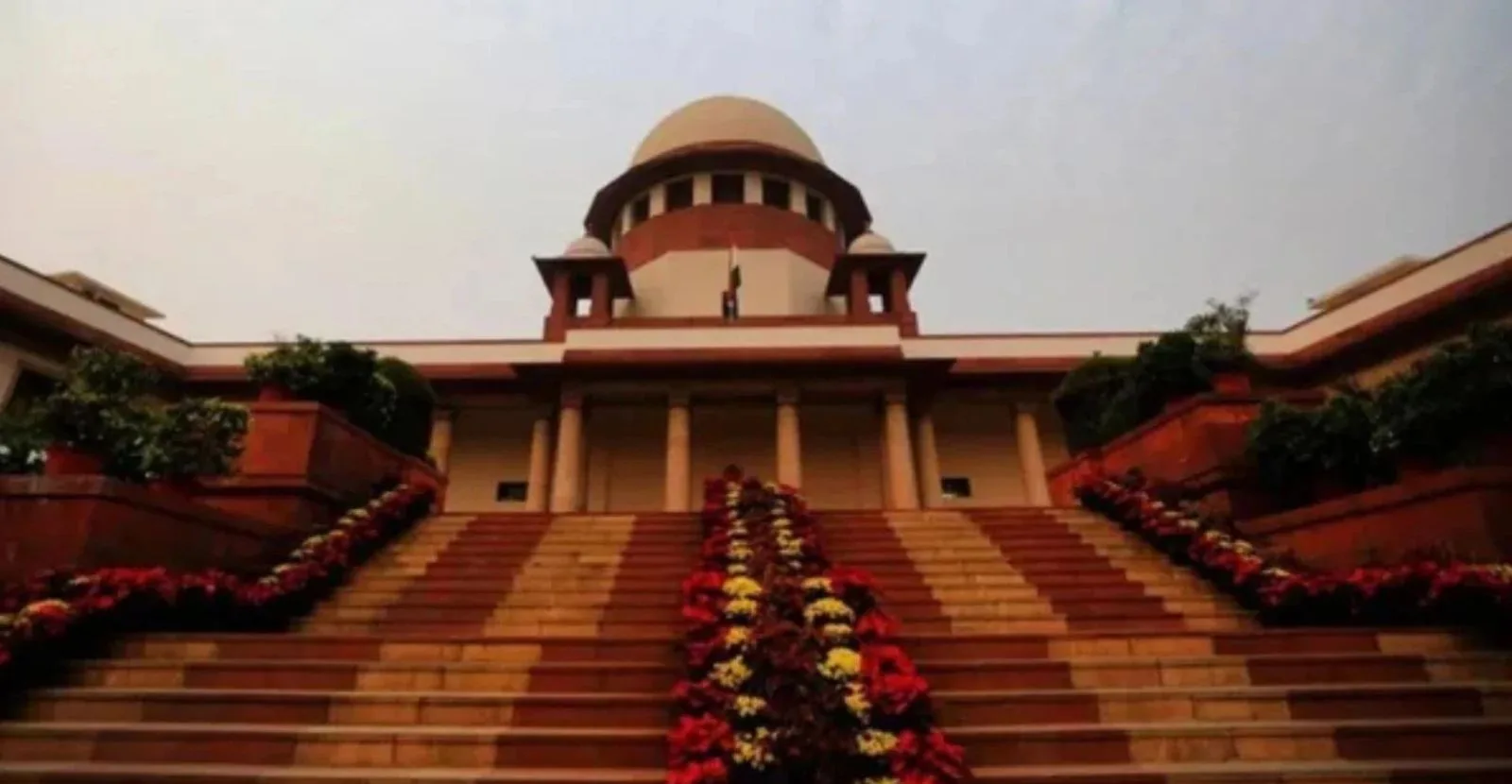
The Supreme Court on Friday asked applicants seeking a recall of its September 23 verdict on the law governing the appointment of the Chief Election Commissioner (CEC) and Election Commissioners to raise their plea before the five-judge Constitution Bench that will hear the matter. A three-judge bench led by Chief Justice of India Surya Kant declined to list the recall application before the same bench that delivered the September verdict.
What the case is about
The row is over the Chief Election Commissioner and Other Election Commissioners (Appointment, Conditions of Service and Term of Office) Act, 2023, which sets out how the CEC and Election Commissioners are picked. Petitions challenging the law have been pending before the Supreme Court.
On September 23, a two-judge bench of Justices Dipankar Datta and S C Sharma delivered a split verdict on the Centre's request to refer the matter to a Constitution Bench. Justice Datta rejected the prayer for a reference, while Justice Sharma favoured it. Having failed to arrive at a unanimous view, the bench placed the matter before the Chief Justice of India for reference to a Constitution Bench.
The 2023 law and the 2023 judgment
The dispute goes back to a Constitution Bench judgment of March 2023 in the Anoop Baranwal case. That judgment said the CEC and Election Commissioners should be appointed by a committee of the Prime Minister, the Leader of the Opposition in the Lok Sabha and the Chief Justice of India, until Parliament enacted a law on appointments.
Parliament then passed the 2023 Act. Under it, the selection committee comprises the Prime Minister, the Leader of the Opposition and a Union Cabinet Minister nominated by the Prime Minister, replacing the Chief Justice of India with a minister. Petitioners challenging the law argue that this changes the balance of the selection process in the government's favour. The Centre has defended the law.
What the recall application says
The recall application seeks a recall of only Justice Sharma's opinion, and a recall or suitable modification of the common order, on account of what it calls a subsequent and material circumstance bearing upon judicial propriety and disclosure.
After the judgment was pronounced, news reports said Justice Sharma's son, Siddharth Sharma, is the standing counsel for the Election Commission of India before the Madhya Pradesh High Court. The applicants say this information was not disclosed to the parties during the hearings, and that a judge hearing the matter in such circumstances raises questions of conflict of interest.
What happened in court on Friday
Advocate Prashant Bhushan, appearing for the applicants, told the three-judge bench, also comprising Justices Joymalya Bagchi and V Mohana, that the recall application should ideally go before the same bench. "Recall application should go before them. It may be listed next week," he said.
The Chief Justice of India and Justice Bagchi said the applicants can request the five-judge bench when it takes up the matter for hearing. Bhushan pointed out that the matter was referred to a five-judge bench because Justice Sharma had dissented, saying, "If Justice Sharma had not dissented in this case, then it would not have been referred to the Constitution Bench."
Chief Justice Kant said Justice Dipankar Datta, who presided over the two-judge bench, had also agreed to refer the matter, adding that his own role "was only to constitute the bench". Bhushan then pressed for an early listing, noting that Justice Sharma is set to retire on November 29. The Chief Justice replied, "You can raise before the bench when the matter comes. Presiding judge is there in any case."
What happens next
The reference will now go before a five-judge Constitution Bench, which will decide the challenge to the 2023 law. The recall plea will have to be raised before that bench when it takes up the matter. Until then, the September 23 order referring the case to the larger bench stands, and the questions over the selection committee and the alleged conflict of interest remain undecided.
Frequently Asked Questions
What is the 2023 law on appointing the CEC?
The Chief Election Commissioner and Other Election Commissioners Act, 2023, sets out how the CEC and Election Commissioners are appointed. Its selection committee comprises the Prime Minister, the Leader of the Opposition and a Union Cabinet Minister nominated by the Prime Minister.
Why is a recall of the September 23 verdict being sought?
The applicants say that after the verdict, reports showed Justice S C Sharma's son is the Election Commission's standing counsel before the Madhya Pradesh High Court, and that this was not disclosed during the hearings, raising questions of conflict of interest.
What did the Supreme Court say on Friday?
A three-judge bench led by Chief Justice Surya Kant declined to list the recall plea before the same bench and asked the applicants to raise it before the five-judge Constitution Bench when it takes up the matter.
Read More: Explained: Why Counting Farm Fires Misses Stubble Burning Scale
Read More: Explained: Why India's Oil Import Bill Rose 54% in Seven Months
Read More: Explained: Why Gold Prices Have Fallen 25% in Nine Months
Read More: Explained: How the FIFA Presidential Election Works



Comments
Be the first to comment on this story.