


A mathematician at the AI company Anthropic says he has proved the Riemann Hypothesis, a 167-year-old problem about prime numbers, with help from the company's AI model Claude. The claim has not been verified by other mathematicians, and the problem is still listed as unsolved. Here is what the problem is, how the AI is said to have helped, and what happens next.
The claim
Levent Alpöge, a mathematician working at Anthropic, said in a statement on his personal website on Friday 20 November 2026 that he believed he had found a proof of the Riemann Hypothesis while working with Claude. He said the method also covered the Generalized Riemann Hypothesis, a much broader version of the problem.
He released the argument as code written in Lean, a programming language used to formalise mathematical arguments so a computer can check them step by step. The proof was released in 14 parts, according to technology publication OfficeChai. Alpöge said the formalisation was complete but acknowledged that the proof was extremely long, that he had not yet written a readable mathematical paper explaining it, and that parts of the argument were beyond his own technical expertise.
Wikipedia's article on the problem notes that a second draft proof, by Alessandro Masullo, was also posted online on the same day.
What is the Riemann Hypothesis?
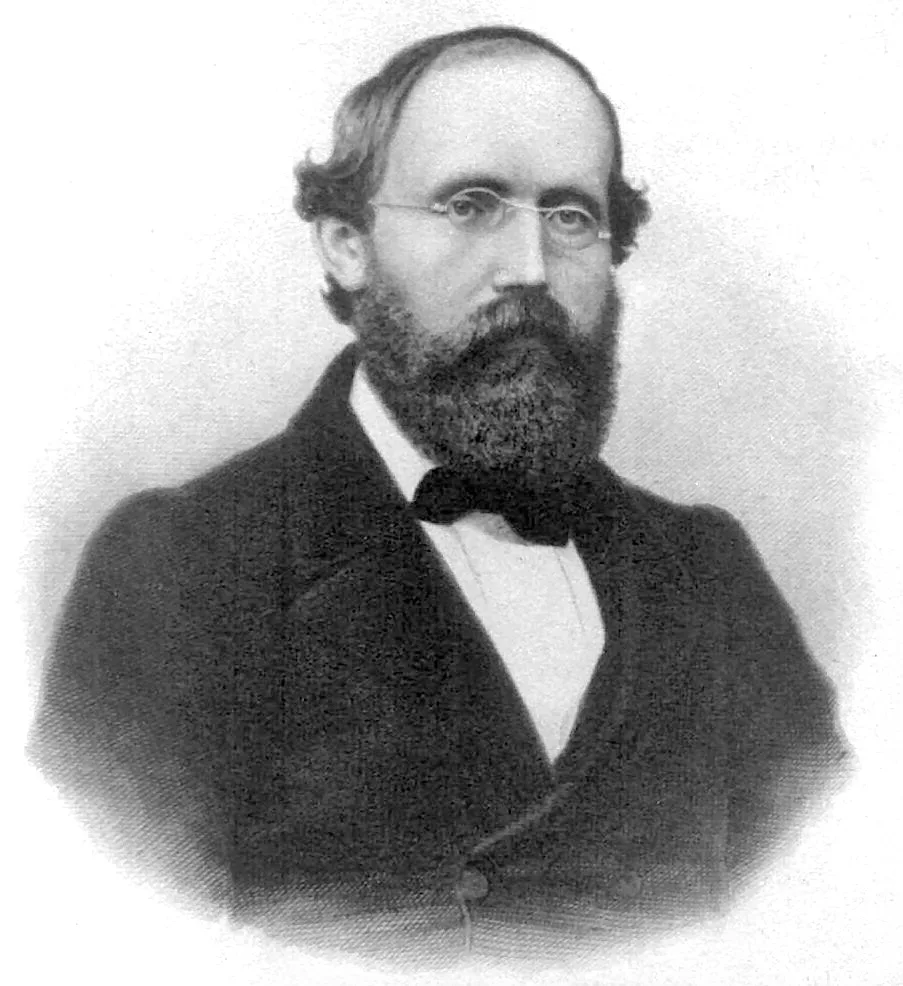
First proposed by the German mathematician Bernhard Riemann in 1859, the hypothesis is about the distribution of prime numbers, the numbers divisible only by themselves and one. Primes look irregular along the number line: there are 25 primes between 0 and 100, but only 16 between 1,000 and 1,100, and they grow scarcer as numbers rise.
Riemann connected that pattern to a mathematical function called the Riemann zeta function. The hypothesis states that all the non-trivial zeros of the function, the inputs that make its value zero, have a real part of exactly one half, placing them on a line mathematicians call the critical line. Proving it would give a far more precise understanding of how primes are spread out.
It is one of the seven Millennium Prize Problems named by the Clay Mathematics Institute in 2000, each carrying a one million dollar prize. The prize rules require publication in a qualifying outlet, at least two years to pass, and general acceptance by the mathematical community. The Poincare conjecture is the only one of the seven solved so far.
- The hypothesis was proposed by Bernhard Riemann in 1859. - It says all non-trivial zeros of the zeta function lie on the critical line. - It is one of seven Millennium Prize Problems, each worth one million dollars.
How Claude is said to have helped
Alpöge described the work as a collaboration in which he guided the research while Claude supplied several crucial mathematical ideas. The breakthrough, he said, came from combining two approaches in number theory. One central idea was adapting a technique called Stepanov's method, previously used on an analogous version of the problem in the setting of function fields.
The difficulty was reproducing the role of multiplicity in ordinary number theory, where the technique could not be applied directly. Alpöge said Claude suggested using a sequence of operations known as theta lifts to solve that difficulty, and that the model substantially outpaced him towards the end of the work. "Tens of such occurred," he wrote, describing the occasions when Claude came up with unexpected mathematical steps.
Why it matters, and what happens now
The Riemann Hypothesis has been called the greatest unsolved problem in mathematics. It was on David Hilbert's list of 23 problems for the 20th century in 1900, and the Clay Institute put it first among its Millennium Problems in 2000. A proof would sharpen the mathematics behind prime numbers, which underpin modern cryptography, and would ripple through number theory and beyond.
The claim arrives after a year of rapid progress in AI-assisted mathematics. In August 2026, Anthropic reported that an unreleased research version of Claude had improved a longstanding lower bound on the share of zeta function zeros lying on the critical line, from 41.6 percent to 67.2 percent. That was progress on a related question, not a solution. In September, Scientific American reported on Alpöge's AI-assisted work on the 1947 Hopf problem.
None of that settles the new claim. The proof now has to be checked by independent mathematicians, simplified into a form others can read, and published before the Clay Institute would even consider it. Until that happens, the Riemann Hypothesis remains unsolved.
Frequently Asked Questions
Has the Riemann Hypothesis been proved?
No. Levent Alpöge has claimed a proof, but it has not been independently verified, and the Clay Mathematics Institute still lists the problem as unsolved.
What is the Riemann Hypothesis in simple terms?
It says that all the non-trivial zeros of the Riemann zeta function lie on a line where the real part is exactly one half. If true, it would pin down the pattern behind the prime numbers.
What is the prize for solving it?
One million dollars from the Clay Mathematics Institute. The solution must be published in a qualifying outlet, wait at least two years, and win general acceptance from mathematicians.
Read More: Explained: Why Gold Prices Have Fallen 25% in Nine Months
Read More: Explained: The CEC Law Row and the Supreme Court Recall Plea
Read More: Explained: How the FIFA Presidential Election Works



Comments
Be the first to comment on this story.