


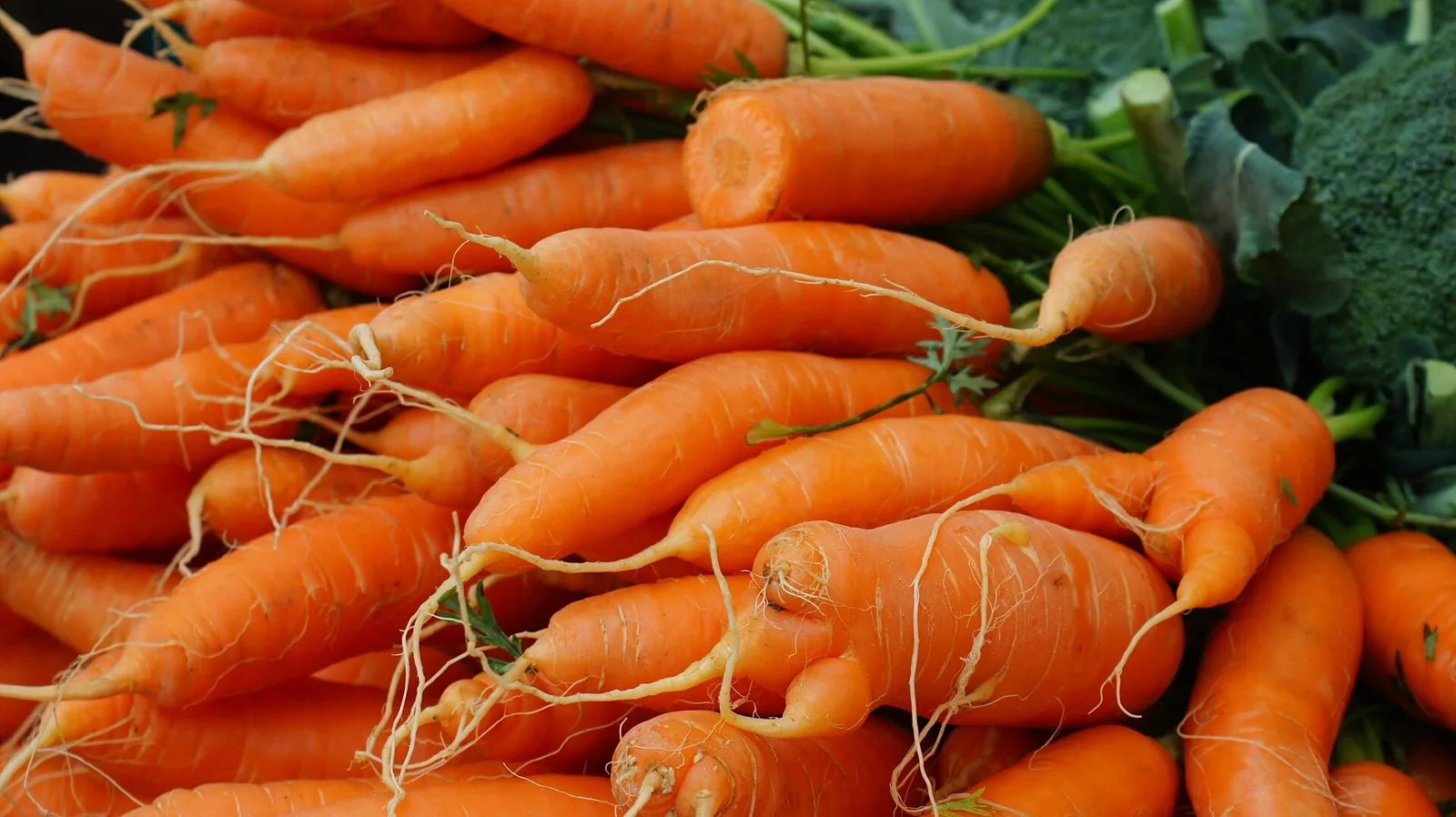
Eat your carrots and you will see in the dark. Most of us heard that as children, and the idea has survived for more than eighty years. It contains a grain of truth, but as a promise about your eyesight, it is mostly a myth.
Carrots are genuinely good for your eyes. They are rich in beta-carotene, a pigment that gives them their orange colour, and the body converts beta-carotene into vitamin A. Vitamin A is essential for the retina, the layer at the back of the eye that turns light into signals for the brain. Without enough of it, the rod cells that handle vision in dim light cannot make rhodopsin, the pigment that lets them respond to low light, and night blindness follows.
But that is where the claim stops being true. Once your body has enough vitamin A, eating more carrots does not sharpen your vision any further. The system is not open ended, and extra beta-carotene is simply stored or unused. It will not give you sharper eyesight, it will not keep you from needing glasses, and it will not let you see in the dark.
Where the story came from
The carrot and night vision link was born in Britain during the Second World War. The Ministry of Food ran a propaganda campaign telling civilians that eating carrots would help them see during blackouts, with posters declaring that carrots keep you healthy and help you to see in the blackout. The campaign also served a practical purpose, encouraging people to eat a vegetable that was plentiful while other foods were rationed.
The story gained a hero in John Cunningham, a Royal Air Force night fighter pilot nicknamed Cat's Eyes, whose success in shooting down German bombers was credited in the press to his carrot eating. In reality, Cunningham was using a new and secret technology, onboard radar. He later said it would have been easier had the carrots worked, but that flying on instruments at night was a long, hard grind.
Historians have long debated whether the carrot story was a deliberate cover for radar or simply a convenient tale the Air Ministry was happy to go along with. Either way, the radar stayed secret and the carrot story entered popular culture, where it has remained ever since.
What the science actually says
Vitamin A deficiency is a real and serious problem. The National Eye Institute notes that every year an estimated 250,000 to 500,000 children become blind as a result of vitamin A deficiency. In places where undernourished people suffer severe deficiencies, supplements of vitamin A or beta-carotene have been shown to improve night vision. A 2005 trial found that pregnant women in Nepal who ate about 4.5 ounces of cooked carrots six days a week saw their night blindness improve, compared with other vitamin A rich foods.
That is a story about correcting a deficiency, not about boosting healthy eyes. In countries where vitamin A deficiency is rare, most people already get enough of the vitamin from their ordinary diet, through carrots, leafy greens, dairy and fish. For them, extra carrots add nothing to their vision.
The experts are clear about the limit. Dr Jonathan Rubenstein, chair of ophthalmology at Rush University Medical Center, told Popular Science that people should not think loading up on carrots will make them see better, saying, "That's not true." Dr Rebecca Taylor, a clinical spokesperson for the American Academy of Ophthalmology, puts it the same way: "Vitamin A will keep your vision healthy; it won't improve your vision. It won't keep you from needing glasses or contacts."
There is one more catch. Vitamin A is fat soluble, so the body absorbs it best when eaten with some fat. A raw carrot on its own delivers less of the vitamin than the same carrot eaten as part of a meal.
The verdict
The myth is mostly false. Carrots support eye health because of their vitamin A content, and they can correct night blindness caused by a deficiency. But eating more carrots will not give a healthy person sharper vision or better night vision. The idea that they will comes from a wartime propaganda campaign that outlived the war by eight decades.
Frequently Asked Questions
Do carrots improve your eyesight?
Only if you are deficient in vitamin A. Carrots supply beta-carotene, which the body turns into vitamin A, and that vitamin is essential for night vision. If you already get enough vitamin A, extra carrots will not sharpen your sight.
Where did the carrot and night vision story start?
In Britain during the Second World War. The Ministry of Food promoted carrots as a way to see in the blackout, and press reports credited RAF pilot John Cunningham's night flying success to carrots. His success actually came from secret onboard radar.
Can eating too many carrots harm you?
Eating very large amounts of beta-carotene can turn the skin a yellow orange colour, a harmless condition called carotenemia. It fades when intake drops. Vitamin A from food is not toxic in the way high dose supplements can be.
Read More: Myths and Facts: Coffee Does Not Dehydrate You, Studies Show
Read More: Myths and Facts: Vitamin C Does Not Prevent the Common Cold
Read More: Myths and Facts: Sugar Does Not Make Children Hyperactive
Read More: Myths and Facts: Cracking Your Knuckles Does Not Cause Arthritis



Comments
Be the first to comment on this story.