


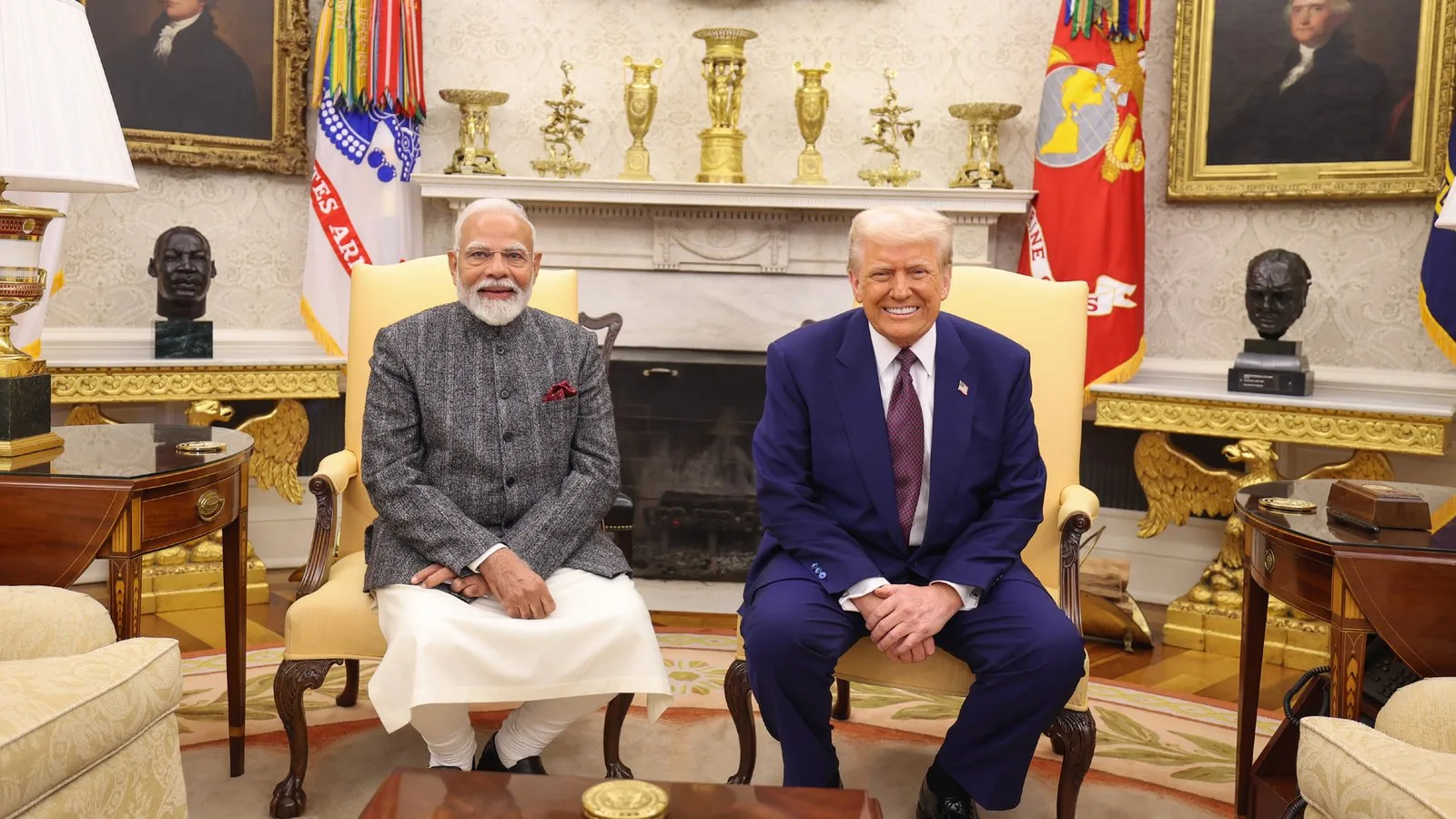
Nearly nine months after the US Supreme Court struck down President Donald Trump's Liberation Day tariffs, Washington has unveiled a new tariff plan for India and 13 other trading partners. India gets a lower rate than its Asian rivals, but the discount comes with steep demands.
What has the US proposed?
The United States Trade Representative (USTR) has proposed a 25 per cent tariff on Indian goods, which could fall to 17 per cent once New Delhi signs a trade deal with Washington. The proposal follows a Section 301 investigation into forced labour and excess industrial capacity, and comes after the Supreme Court ruled in February 2026 that the earlier Liberation Day tariffs were not authorised by law. Those tariffs had put a 50 per cent duty on Indian goods between August 2025 and February 2026.
Bangladesh, Indonesia, Malaysia, Cambodia and Thailand have been offered 18 per cent under trade deals, Vietnam faces 20 per cent, and China faces up to 40 per cent. The European Union, Japan, Taiwan, Switzerland and South Korea are at 15 per cent, while Singapore is at 10 per cent.
What is Section 301 and why does it matter?
Section 301 of the Trade Act of 1974 lets the USTR investigate foreign government practices that Washington considers unreasonable or discriminatory and burdensome to American commerce, and then impose tariffs in response. The USTR opened this investigation in March 2026, covering 16 economies, and spent eight months gathering evidence before publishing the proposal.
Because Congress expressly gave the president tariff powers under Section 301, the new duties stand on firmer legal ground than the emergency tariffs the Supreme Court struck down.
Why India has an edge over ASEAN
India competes directly with ASEAN countries across textiles, chemicals, electronics, solar products, automobiles and electrical equipment. A lower tariff than its rivals was a key Indian ask in the talks, because even a small gap can decide where global buyers place orders.
The China factor behind the US case
The USTR's case rests heavily on India's dependence on China. Indian industry estimates cited by the USTR say India supplies about a third of its pharmaceutical exports to the US, covering up to 47 per cent of all generic prescriptions and 61 per cent of generic solid oral drugs there. But, the USTR said, "Despite some domestic growth, India remains heavily dependent for many active pharmaceutical ingredients (APIs) and bulk drug ingredients. Thus, India's acts, policies, and practices that relate to structural excess capacity and production are unreasonable because they distort fair, market-oriented competition."
The USTR said India promotes this excess capacity through industrial plans, Make in India and production linked incentive schemes. It pointed out that India's imports of intermediate manufacturing goods from China rose 97 per cent between 2017 and 2025, while imports from non-market economies rose 152 per cent. "Surging imports of NME inputs both distort competitive conditions within the Indian market and enhance the (artificial) competitiveness of Indian downstream products manufactured using those NME inputs," the USTR said.
What India has agreed to give up
The edge comes at a price. Under the joint statement released by the two countries, India agreed to "eliminate or reduce" tariffs on all US industrial goods and a wide range of US food and agricultural products, including dried distillers' grains, red sorghum, tree nuts, fruit, soybean oil, wine and spirits.
India also agreed to ease barriers for US medical devices, scrap restrictive import licensing for US technology goods, and decide within six months whether US or international standards, including testing rules, are acceptable for US exports in identified sectors. India also intends to buy 500 billion dollars of US energy products, aircraft and parts, precious metals, technology products and coking coal over five years.
The dairy and GM red lines
The deal had been stuck for months over steep US demands, particularly on agriculture. Commerce and Industry Minister Piyush Goyal said on 3 November that the US may have eased its demands on genetically modified products and certain dairy imports, two of the biggest points of contention.
"We are very sensitive to the opening of the dairy sector. Till date, we have never opened the dairy sector for anybody. We are sensitive about not allowing any GM products to come to India. We have never allowed it, and we will never allow it in the future. We are sensitive to our religious sensitivities," Goyal said while speaking to students at Kirori Mal College.
The USTR had said in a March 2025 report that India imposes "onerous requirements" on dairy imports, including certification rules the USTR argued lack a discernible animal or human health justification.
What happens next
The tariffs are proposed, not yet in force. Written comments are due on 5 January 2027 and hearings begin on 25 January, after which the USTR will publish the final rates. The new duty will not stack on the existing 10 per cent forced labour tariff or standard most favoured nation rates: US customs will apply only the higher single rate where goods overlap. The months ahead will decide whether the 17 per cent deal rate holds, or the 25 per cent ceiling applies.
Frequently Asked Questions
What tariff has the US proposed on Indian goods?
The USTR has proposed a 25 per cent tariff on Indian goods under Section 301, falling to 17 per cent if India signs a trade deal with the US. The rates are proposed, not final: written comments are due on 5 January 2027 and hearings begin on 25 January.
Why is India getting a lower rate than Vietnam and other ASEAN countries?
The proposed rates are 18 per cent for Bangladesh, Indonesia, Malaysia, Cambodia and Thailand, and 20 per cent for Vietnam, against 17 per cent for India with a deal. India competes with these countries in textiles, electronics and other goods, and a lower rate was a key Indian demand in the trade talks.
What is Section 301?
Section 301 of the Trade Act of 1974 lets the US Trade Representative investigate foreign practices it finds unreasonable or discriminatory and impose tariffs in response. The US is using it after the Supreme Court struck down the earlier Liberation Day tariffs in February 2026, because Section 301 expressly authorises tariffs.
Read More: Explained: How NSE Became the World's Fifth Largest Listed Exchange
Read More: Explained: Sensex Surges 2,000 Points, What Is Behind the Rally
Read More: Explained: G20 Johannesburg Summit, Six Proposals by Modi
Read More: Explained: Ganga Water Treaty Ends December 12, What Happens Next
Comments
Be the first to comment on this story.