


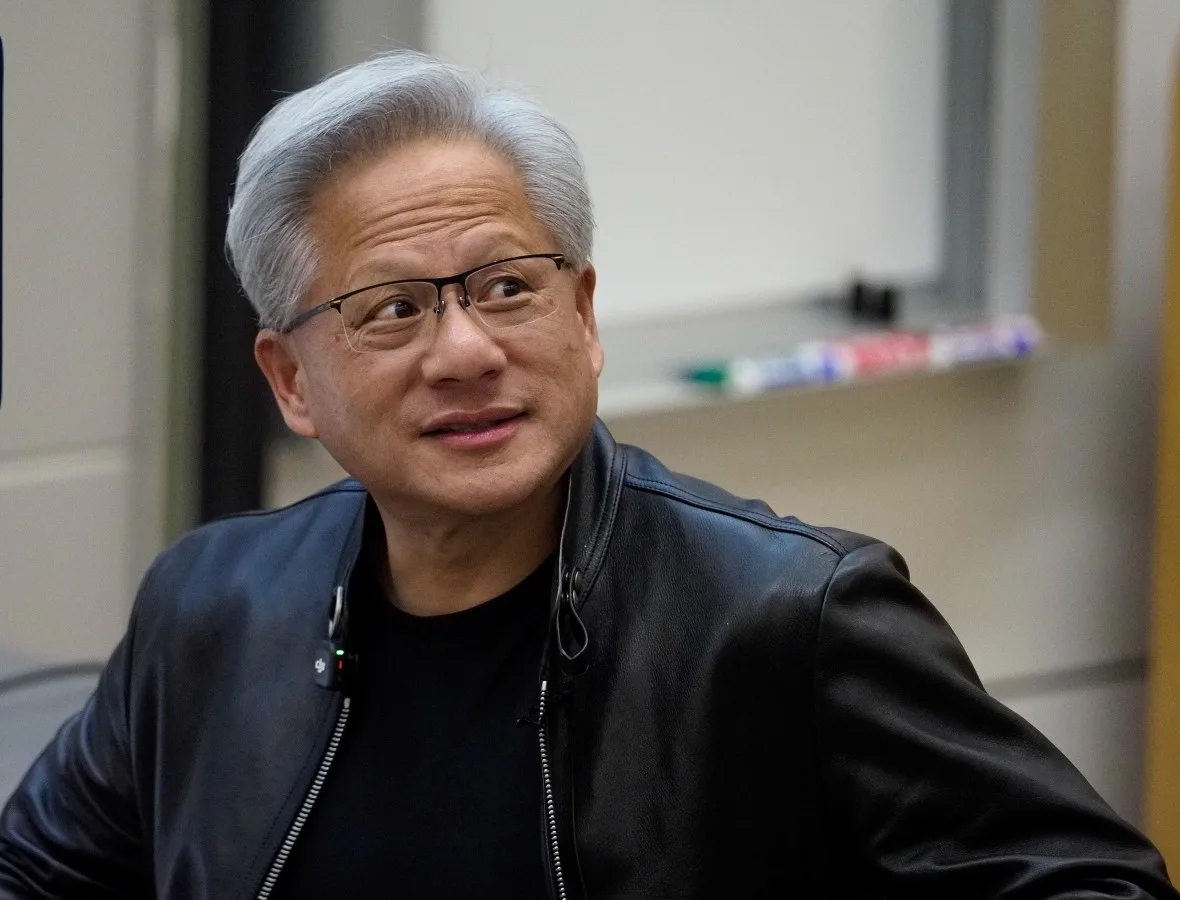
Less than two weeks after stepping down as chief executive of Nvidia, Jensen Huang is back at the helm of the world's most consequential artificial intelligence chipmaker. His reinstatement on Monday, November 23, sent Nvidia shares up 31.5 percent in a single day, adding roughly 950 billion dollars to the company's market value. But in Washington, lawmakers from both parties have questioned how and why the board reversed its decision so quickly.
Huang had stepped down after revelations of an affair with Alice Huang, a Chinese businesswoman formerly associated with Megaspeed, a Singapore-based company under scrutiny over the suspected diversion of advanced Nvidia chips to China. US intelligence officials reportedly suspect her of having worked for Chinese intelligence, an allegation Beijing has denied. No evidence establishing Huang's personal involvement in espionage or illegal chip shipments has been made public.
The national security question
The concerns carry weight because Washington has been trying to restrict Beijing's access to advanced American semiconductors, which can be used to build sophisticated AI systems with potential military applications.
In announcing Huang's reinstatement, Nvidia's board said it had received inputs from senior officials in the US government and was confident that his return posed no national security risk. However, it did not identify those officials or disclose what information they had provided.
Nvidia also said its own investigation, being conducted by a committee of independent directors with the help of external legal counsel, would continue, and that Huang had committed to cooperating with it.
On the same day Huang returned, the Trump administration moved to add Megaspeed and several associated entities to its trade blacklist, restricting their access to sensitive American technology. In a joint statement last week, the US Departments of Justice and Commerce said Nvidia had stopped selling chips to Megaspeed in June 2025. Investigations into the suspected diversion of chips remain underway.
The board's sudden U-turn
As recently as November 17, Nvidia's board chairman Harvey Jones had categorically ruled out Huang's return as CEO, telling investors during the company's earnings call that the executive's personal conduct was inconsistent with the chipmaker's standards and values.
Six days later, the board unanimously voted to reinstate him, saying that after several meetings with Huang, it was satisfied with his forthrightness and ability to lead the company. It offered little explanation of how the concerns about his personal conduct had been addressed.
Apart from his relationship with Alice Huang, the Nvidia co-founder reportedly had affairs with two employees of the chipmaker, including Kimberly Powell, its vice president of healthcare, according to Reuters. Huang has publicly acknowledged marital infidelity but has not individually addressed all the reported relationships. He has since also admitted to having affairs with more women than previously reported.
These revelations raise questions beyond national security, including about workplace power dynamics, potential conflicts of interest and the board's oversight of its chief executive. They also show how Nvidia's rise, and the power built around Huang, have effectively made him and the company too big to fail.
Trump's intervention and the conflict of interest question
In an extraordinary instance of a sitting US President intervening in the leadership of a publicly listed company, Donald Trump acknowledged on Monday that he had personally persuaded Nvidia's board to bring Huang back.
"And I convinced them. I made the deal," Trump told CNBC.
Trump also claimed that US Attorney General Todd Blanche had confirmed that the government did not possess evidence of unlawful conduct by Huang. But the absence of evidence of criminal wrongdoing does not necessarily answer the broader concerns about potential national security vulnerabilities.
There is also a financial dimension to Trump's intervention. According to a Reuters analysis of his financial disclosures, the President owns Nvidia shares worth between 11 million and 55 million dollars. Monday's rally could have increased his net worth by as much as 17 million dollars. The White House has maintained that Trump's investments were independently managed and that neither the President nor his family could influence investment decisions.
Trump's intervention is also significant because Huang has lobbied the US administration to ease restrictions on the sale of AI chips to China, an important market for Nvidia.
A bipartisan backlash, and more investigations
Huang's reinstatement has drawn criticism even from within Trump's Republican Party. Republican Senator John Curtis questioned which government officials had advised Nvidia's board, what information they had provided, and how the board had arrived at its assessment while its independent investigation remained incomplete.
"Nvidia's board says it relied on input from senior US officials to conclude that bringing Jensen Huang back posed no national security risk. I have some questions. Who in our government weighed in? What did they tell the board? And on what basis did the board conclude there was no risk?" Curtis wrote in a social media post on X. "Last week, the board said it didn't intend to reinstate him. I'd like to know what changed."
Republican Senators Pete Ricketts and Kevin Cramer also criticised the decision, with Cramer arguing that while Nvidia's board would bear the legal and reputational risks of bringing Huang back, any national security consequences would extend to American citizens and the military.
Democratic Senator Elizabeth Warren called the decision reckless and demanded that the Trump administration explain its role to Congress. Senate Democratic leader Chuck Schumer promised investigations into any wrongdoing by the administration and Nvidia executives.
Separately, California Attorney General Rob Bonta has issued an investigative subpoena to Nvidia to ascertain whether the company or Huang's actions enabled China to obtain advanced chips or confidential information, and whether the chipmaker misled investors about such risks.
The controversy is unlikely to die down soon, particularly with Democrats set to take control of Congress in January. Huang is scheduled to appear before lawmakers for closed-door questioning on December 1, followed by a public hearing before the Senate Banking Committee on December 3.
Frequently Asked Questions
Why did Jensen Huang step down as Nvidia CEO?
Huang stepped down after revelations of an affair with Alice Huang, a Chinese businesswoman formerly associated with Megaspeed, a Singapore-based company under scrutiny over the suspected diversion of advanced Nvidia chips to China.
Why was Huang reinstated so quickly?
Nvidia's board unanimously voted to bring him back on November 23, six days after its chairman had ruled out his return, saying it was satisfied with his forthrightness and ability to lead after several meetings with him. President Donald Trump said he had personally persuaded the board.
What investigations are still underway?
Nvidia's own independent investigation continues, US investigations into the suspected diversion of chips to China remain underway, and California's attorney general has issued a subpoena to Nvidia. Huang is set to face closed-door questioning by lawmakers on December 1 and a public Senate Banking Committee hearing on December 3.
Read More: Explained: G20 Johannesburg Summit, Six Proposals by Modi
Read More: Explained: Pax Silica, the AI Pact India Just Signed
Read More: Explained: Why the Shenzhen Nuclear Declaration Matters
Read More: Explained: Why COP31 Ended Without a Deal on Fossil Fuels
Comments
Be the first to comment on this story.