


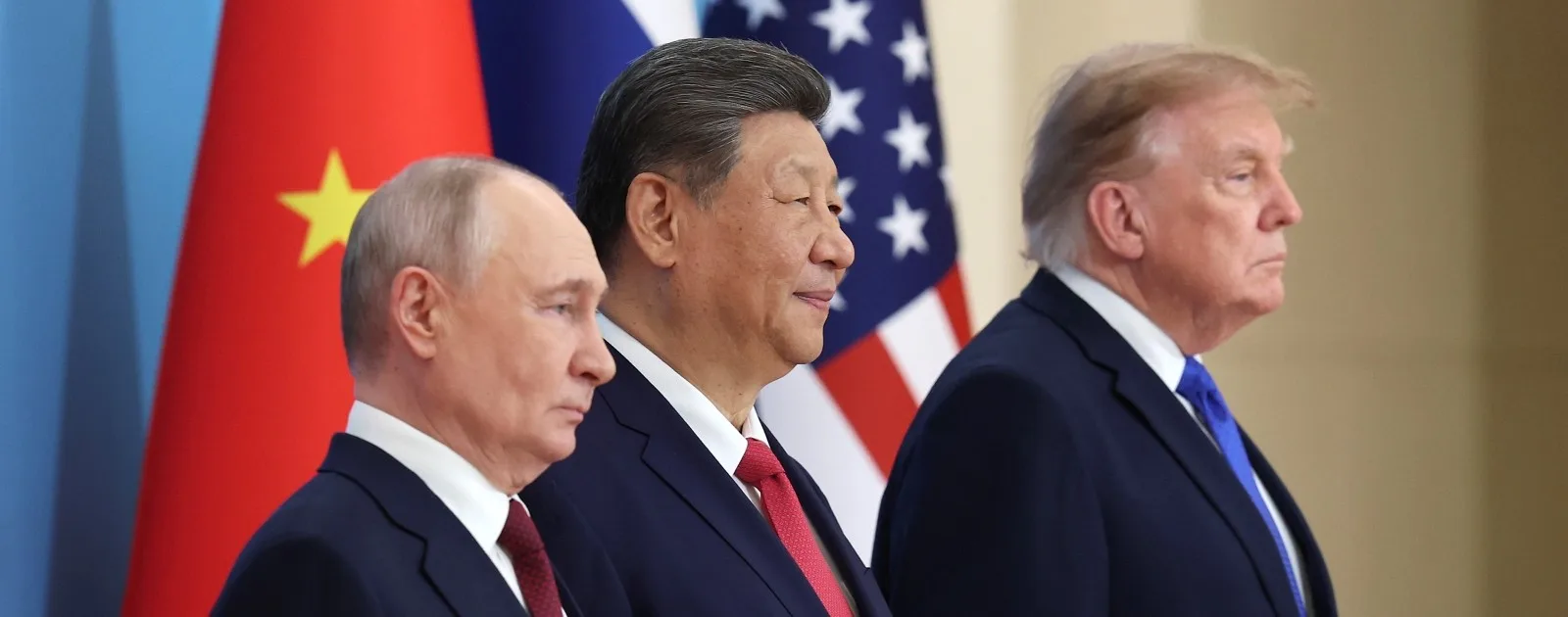
The leaders of the United States, Russia and China have pledged to increase the production and supply of refined petroleum products, in a joint declaration issued after an unprecedented trilateral summit in Shenzhen on 19 November 2026. The promise sounds significant, but energy experts say it is short on specifics and will bring little extra fuel to world markets in the near term.
What happened in Shenzhen
Chinese President Xi Jinping hosted US President Donald Trump and Russian President Vladimir Putin in Shenzhen, on the sidelines of the Asia-Pacific Economic Cooperation summit. The meeting lasted about an hour and a half, and it was the first trilateral summit in this format between the three leaders.
The four-point declaration they issued covered reform of the United Nations, the supply of refined petroleum products, respect for state sovereignty and the immunities of state officials, and the prevention of nuclear conflict. On energy, the three countries said they plan to increase the production and supply of refined petroleum products "for the benefit of all nations", and reaffirmed the importance of stable energy flows.
The declaration also said the International Criminal Court and similar bodies must not abuse their jurisdiction, and that the three leaders reaffirmed a nuclear war cannot be won and must never be fought. The last legally binding limits on US and Russian strategic nuclear forces, the New START treaty, expired on 5 February 2026.
Why the timing matters
The pledge comes at a time when global fuel supplies are severely strained. The conflicts in West Asia and Ukraine have disrupted oil and fuel supply chains and pushed up fuel prices. Roughly a fifth of the world's oil supplies passed through the Strait of Hormuz before the West Asia conflict, and while crude flows have largely recovered, shipments of refined petroleum fuels from the Gulf remain significantly below pre-war levels.
Ukrainian attacks on Russian oil refineries have reduced Moscow's ability to process crude and export diesel, which has compounded the shortage of fuels in international markets. The International Energy Agency noted in its latest Oil Market Report that diesel prices in Europe remained 77 percent above pre-war levels.
Diesel is the fuel under the most pressure. It powers long-haul trucks, farm machinery, construction equipment and other heavy industrial equipment, as well as transport, which makes it one of the most politically sensitive fuels. In the United States, retail diesel prices have touched record highs, a major concern for the Trump administration.
So severe has the crisis become that last month Trump announced the US would buy thousands of tonnes of Russian diesel, and would relax its sanctions regime to help Russian diesel reach other countries. The announcement surprised many, since the US has taken numerous measures, including sanctions, to restrict Moscow's earnings from energy exports.
The limits each country faces
The US, Russia and China are among the world's largest oil producers and refining powers, and their combined influence over crude supplies, refining capacity and petroleum trade makes the commitment worth noting. But each of them faces a different constraint, and that is why analysts doubt the pledge will quickly translate into more fuel.
"I don't see the declaration bringing much extra fuel onto the market in the near term. All three countries have pledged to increase the production and supply of refined products, but each faces a different constraint," Abu Dhabi-based energy analyst Natalia Katona told The Indian Express.
American refiners have become important suppliers of diesel to international markets, but US refineries are already operating at extremely high utilisation rates, which leaves little room to raise output further. The US Energy Information Administration reported that US refineries processed 16.9 million barrels per day in the week ending 13 November, at 95.7 percent capacity utilisation.
China puts domestic supply first. Beijing formally banned diesel exports in March, then allowed limited shipments of diesel and jet fuel to selected partner countries. Only a handful of companies had permission to export under general-trade quotas in June, more received permits in July, but the monthly approval process interrupted trade again in early October, and only in mid-October did Beijing approve limited additional volumes. With refinery output below expectations and domestic diesel stocks at their lowest, Katona said, Beijing has little incentive to let more diesel leave the country.
Russia, traditionally a major exporter of diesel and other petroleum products, is constrained by damage to its refining infrastructure from Ukrainian attacks. Rystad Energy estimated that Russian refinery runs have slumped to around 3.5 million barrels per day in November, from 4.3 million in October and 5.0 million a year ago. Western sanctions on Moscow also complicate Russian petroleum trade, financing, insurance and shipping.
What the markets made of it
The market reaction was modest. "The market reaction to the news from the trilateral summit in Shenzhen, China, was modest. European gasoil prices fell 1.5 percent on the news, while crude oil prices barely moved. That response is consistent with our view that the pledge offers limited near-term relief for refined product markets," Jorge Leon, Rystad Energy's head of geopolitical analysis, said in a note.
The declaration gives no volume target and no timetable, leaving each government to decide how much it can deliver. Rystad expects Beijing to keep product exports around September to October levels. The pledge may offer some psychological relief to fuel markets, particularly for diesel, but turning the commitment into actual additional supplies will be a major challenge.
Frequently Asked Questions
What did the US, Russia and China pledge at Shenzhen?
The three leaders pledged to increase the production and supply of refined petroleum products "for the benefit of all nations" and reaffirmed the importance of stable energy flows, in a joint declaration issued after their trilateral summit in Shenzhen on 19 November 2026.
Why are global fuel supplies strained?
Conflicts in West Asia and Ukraine have disrupted supply chains, refined fuel shipments from the Gulf remain below pre-war levels, and Ukrainian attacks have cut Russian refining capacity. Diesel prices in Europe are 77 percent above pre-war levels, according to the International Energy Agency.
Why will the pledge bring little extra fuel soon?
US refineries already run at about 95.7 percent capacity, China prioritises domestic supply and has curbed diesel exports, and Russian refinery runs have fallen to about 3.5 million barrels per day. The declaration also sets no volume target or timetable.
Read More: Explained: Why India's Oil Import Bill Rose 54% in Seven Months
Read More: Explained: Why the AI Sell-Off Wiped Out Wall Street's 2026 Gains
Read More: Explained: Why India's Core Sector Growth Hit a Series-High 10.9%
Read More: Explained: Cyclone Akvan and Why It Weakened Before Landfall


Comments
Be the first to comment on this story.