


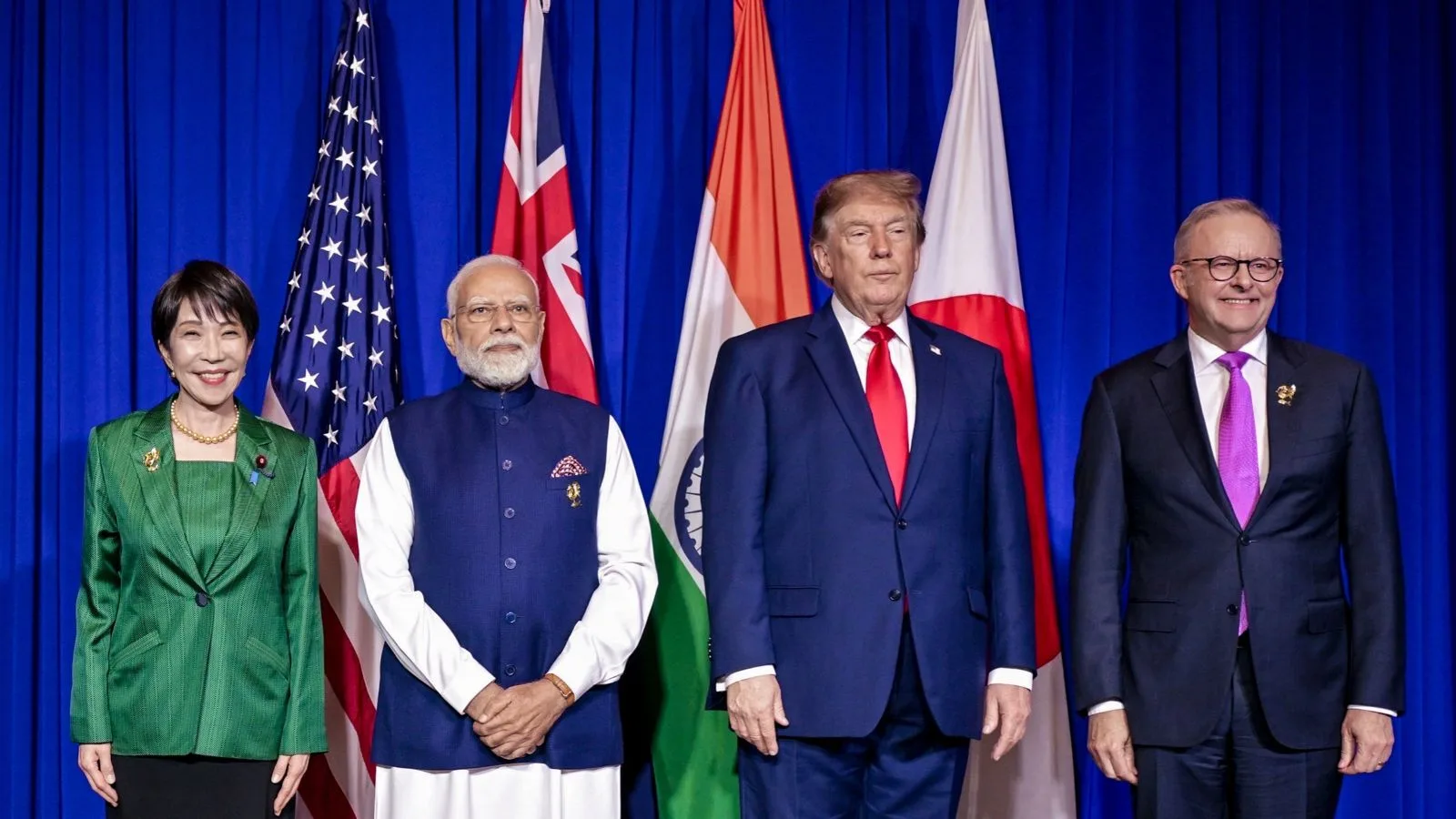
After a gap of more than two years, the leaders of India, the United States, Japan and Australia sat down together in Manila on November 17 and announced a set of new initiatives on maritime security, artificial intelligence and critical minerals. The meeting revived the Quad at a moment when the Indo-Pacific is being reshaped by great-power rivalry, and it put India back at the centre of a grouping it helped build.
What is the Quad
The Quad, formally the Quadrilateral Security Dialogue, brings together India, the United States, Japan and Australia. It began in 2007, fell dormant, and was revived in 2017 in Manila itself. The grouping is not a military alliance. It describes itself as a partnership of four democracies working on maritime security, trusted supply chains, new technologies and disaster response.
This year also marks the tenth anniversary of the Free and Open Indo-Pacific vision first articulated by former Japanese prime minister Shinzo Abe in 2016. The Quad says its goal is a free, open and inclusive Indo-Pacific, with freedom of navigation and overflight and respect for international law.
What happened in Manila
The leaders met at the Solaire hotel in Paranaque, Metro Manila, on the sidelines of the East Asia Summit. It was the first Quad leaders summit since September 2024, and many diplomats had quietly wondered whether the grouping had lost its sense of purpose under US President Donald Trump's second term.
US President Donald Trump, Prime Minister Narendra Modi, Japan Prime Minister Sanae Takaichi and Australia Prime Minister Anthony Albanese posed for a family photograph before the talks began. Trump had arrived in the Philippine capital only hours earlier and went straight into the Quad session before joining a US-ASEAN special summit.
Addressing the leaders, Modi said the Quad is a constructive and trusted partnership, from maritime security to trusted supply chains, new technologies to disaster response. Trump said the Quad leaders summit has become very important and very special, and added that his phone is always open, and the Oval Office is always open, to the leaders of India, Japan and Australia. Trump also recalled that he brought back the Quad in 2017, when it was announced on the sidelines of the ASEAN meeting.
What the leaders announced
The joint statement and the announcements that followed covered six areas:
- Indo-Pacific Maritime Surveillance Collaboration, a framework first announced by Quad foreign ministers in New Delhi in May, to improve information sharing and maritime domain awareness across the region. - A joint maritime exercise in 2027 in which P-8 and P-3C patrol aircraft from all four countries will fly together, described by officials as the first of its kind in a Quad context. - A Quad AI Accelerator, backed by an 85 million dollar fund, to coordinate and fund access to trusted artificial intelligence, its deployment and technical assistance across the Indo-Pacific. - Enhanced cybersecurity cooperation in response to the rapid increase in the number and scale of cyber incidents in the region. - Work on critical minerals and supply chains, with the leaders expressing grave concern over economic coercion, including through arbitrary export restrictions, and calling for stronger critical supply chains and safe maritime transit corridors. - The inaugural Quad Business Leaders Forum in Mumbai in early 2027, to foster business ties and commercial deals across the private sectors of the four countries.
The leaders also condemned cross-border terrorism, reiterated support for ASEAN centrality, and reaffirmed their opposition to unilateral attempts to change the status quo through force or coercion, without explicitly naming China. Trump also pointed to the 30th edition of the Malabar naval exercise held near Japan, where the four navies practised anti-submarine and anti-surface warfare.
Why the timing matters
India was expected to host the 2025 Quad summit, but it was postponed by the Trump administration. India could not host the summit in 2025 and 2026 as its ties with the US frayed and the dates for Trump's India visit could not be finalised. The Manila meeting, held on the margins of ASEAN, restored the leaders-level format after that long pause.
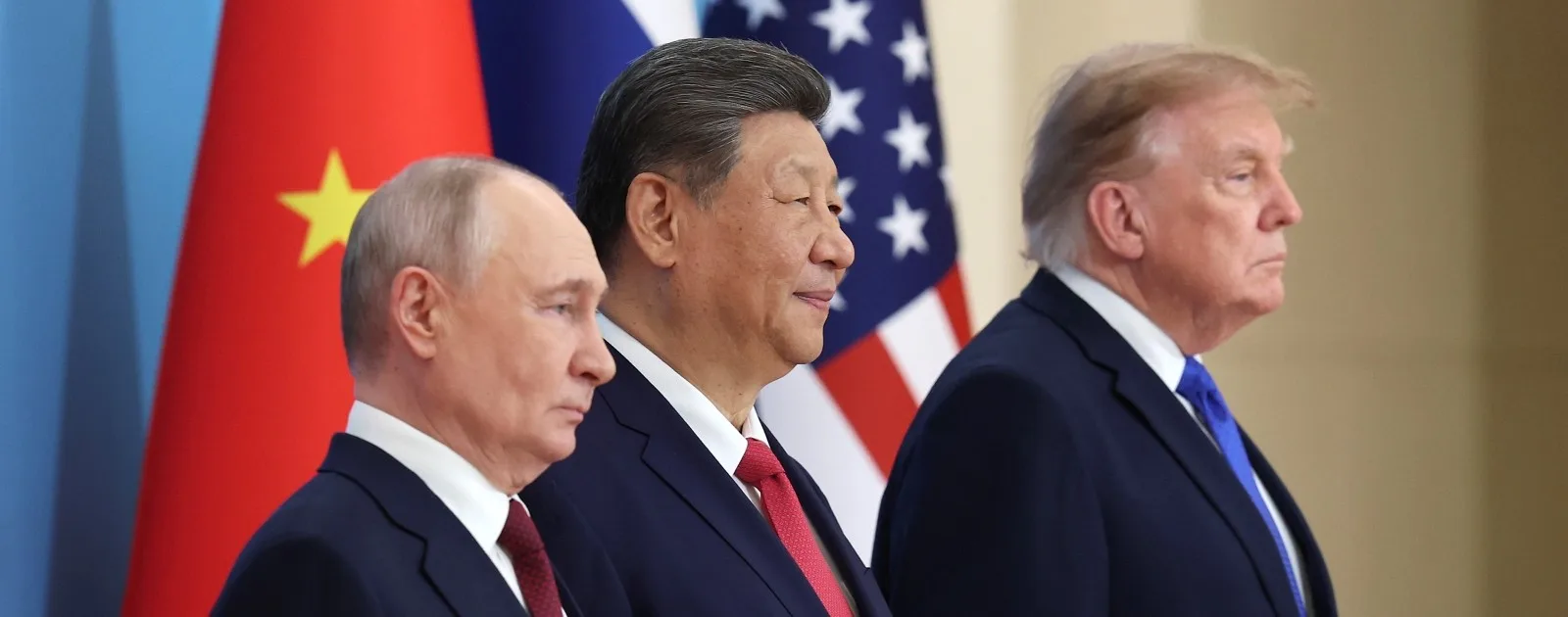
The timing carried a second message. The Manila meeting took place less than 48 hours before Trump was due to meet Chinese President Xi Jinping and Russian President Vladimir Putin in Shenzhen. The juxtaposition of the Quad meeting and the Shenzhen trilateral captured a defining feature of current geopolitics: a global power pursuing coalitions and great-power consultations at the same time.
What it means for India
For India, the summit delivered recognition of its role as a net security provider in the Indian Ocean, protecting sea lanes and monitoring China's expanding maritime footprint. Building economic and technological resilience in critical minerals, supply chains, AI and cybersecurity is the key to reducing strategic dependency, attracting investment and developing manufacturing capability.
At the same time, the summit exposed the limits of India's position. India's geography, naval capabilities, economic potential and independent diplomatic relationships make it an essential partner, but they reflect strategic relevance rather than strategic primacy. India also seeks to pursue strategic autonomy, engaging with the US, Russia, China and the Global South on its own terms.
The Manila summit delivered on most issues, but implementation capacity has yet to be tested. For India, the question now is whether its membership of the Quad translates into real influence in global affairs, and whether its diplomacy can avoid becoming captive to either coalition-building or great-power bargaining.
Frequently Asked Questions
What is the Quad?
The Quad, formally the Quadrilateral Security Dialogue, is a grouping of India, the United States, Japan and Australia. It began in 2007, was revived in 2017, and works on maritime security, trusted supply chains, new technologies and disaster response in the Indo-Pacific.
What did the Manila summit announce?
The leaders announced an Indo-Pacific Maritime Surveillance Collaboration, a joint patrol aircraft exercise in 2027, a Quad AI Accelerator backed by an 85 million dollar fund, enhanced cybersecurity cooperation, work on critical minerals, and a Quad Business Leaders Forum in Mumbai in early 2027.
Why had the Quad leaders not met for over two years?
The last leaders summit was in September 2024. India was expected to host the 2025 summit, but it was postponed by the Trump administration, and India could not host in 2025 and 2026 as its ties with the US frayed and dates for Trump's India visit could not be finalised.
Read More: Explained: Pax Silica, the AI Pact India Just Signed
Read More: Explained: Labour Codes One Year On, What Has Changed for Workers
Read More: Explained: Why COP31 Ended Without a Deal on Fossil Fuels
Read More: Explained: SEBI Wants to Ease FPI Disclosure Rules

Comments
Be the first to comment on this story.