


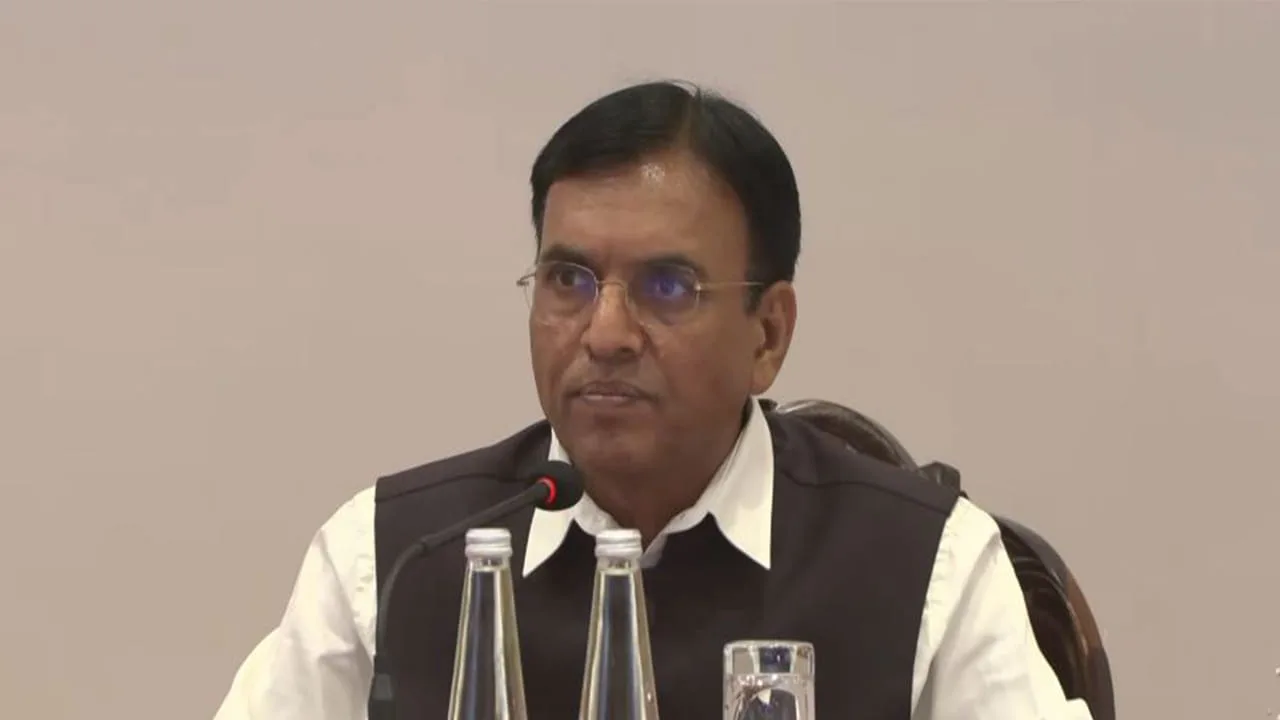
India's four Labour Codes completed one year on 21 November 2026. The government marked the anniversary with a two-day Chintan Shivir of labour ministers in Gandhinagar, where Union Labour and Employment Minister Mansukh Mandaviya said social security coverage has grown from 25 crore people in 2014 to 101 crore in 2026. Here is what the codes changed for workers and employers, and what is still unfinished.
What are the four Labour Codes?
The four codes replace 29 central labour laws with four consolidated laws. Parliament passed the Code on Wages in 2019 and the other three codes in September 2020, but they were brought into force together only on 21 November 2025.
The four codes are the Code on Wages, 2019; the Industrial Relations Code, 2020; the Code on Social Security, 2020; and the Occupational Safety, Health and Working Conditions Code, 2020. Together they cover pay, unions and disputes, provident fund and insurance, and workplace safety.
Labour is on the Concurrent List, so both the Centre and the states must frame rules for the codes to work fully. The Centre notified its final rules on 8 May 2026, while states have been notifying their own rules at different speeds.
What changed in your salary and PF?
The biggest change is a single definition of wages that applies across all four codes. Wages now mean basic pay, dearness allowance and retaining allowance. If the excluded allowances in your pay add up to more than 50 per cent of your total remuneration, the excess is added back and treated as wages.
That matters because wages are the base for provident fund, gratuity and other benefits. An employer who kept basic pay low and allowances high will now see the PF and gratuity base rise. The provident fund wage ceiling also rose from Rs 15,000 to Rs 25,000 a month from 17 September 2026.
Pay dates have tightened too. Monthly wages must now be paid by the 7th of the following month, whatever the size of the establishment. Wages due when an employee leaves must be paid within two working days of resignation, dismissal or retrenchment. Total deductions from pay are capped at 50 per cent, and overtime must be paid at twice the normal rate.
Minimum wages now apply to all employees, not only to workers in scheduled employments. The Centre will fix a national floor wage, and no state will be allowed to set its minimum wage below it.
What changed for gig and fixed-term workers?
For the first time, the law defines gig workers and platform workers. Food delivery, ride-hailing and similar aggregators must contribute 1 to 2 per cent of their annual turnover to a social security fund, capped at 5 per cent of the amount paid to gig and platform workers.
Fixed-term employees must now get the same wages and benefits as permanent workers doing the same work, and they become eligible for gratuity after one year of continuous service instead of five. The five-year rule continues for permanent employees.
Every worker must now receive an appointment letter, including existing staff. The Employees State Insurance cover has been extended across India, and it is now mandatory even if a single worker is engaged in a hazardous occupation.
What is still pending after one year?
State-level rule-making is the biggest unfinished task. More than 16 states have notified rules under the codes, and more than 25 are expected to complete the process before December, the Labour Ministry said. According to Indian Staffing Federation tracking, only six jurisdictions had notified rules under all four codes by October 2026, while around ten had notified rules under at least one code.
The old provident fund and ESI schemes were kept alive for one year after the codes came into force, and that transition period ended on 20 November 2026. New EPF, pension and EDLI schemes under the Code on Social Security were notified on 29 June 2026.
Trade unions continue to object to parts of the reform. They have flagged the higher threshold for prior government approval for layoffs, retrenchment and closure, raised from 100 workers to 300 workers for factories, mines and plantations, and the stricter strike rules, under which workers must give notice 60 days before striking or within 14 days of giving such notice.
What happens next?
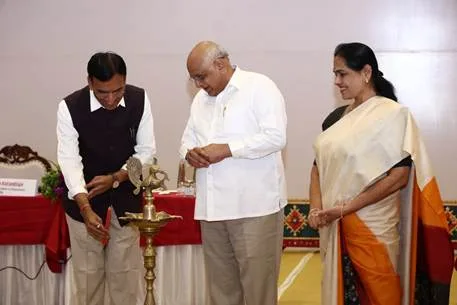
The Chintan Shivir, held on 21 and 22 November at Mahatma Mandir in Gandhinagar, was co-chaired by Gujarat Chief Minister Bhupendra Patel and Mandaviya, with Union Minister of State Shobha Karandlaje also taking part. On the second day, Mandaviya launched the National Career Service ONE portal, the e-Shram Livelihood Profile module and eight Career Lounges across the country.
The conclave is expected to produce recommendations on closing the implementation gaps, including uniform state rules, international labour mobility and better labour statistics. For workers, the practical test of the codes will be whether their state notifies its rules and whether the new wage definition shows up in their salary slips.
Frequently Asked Questions
When did the four Labour Codes come into force?
All four codes came into force together on 21 November 2025, replacing 29 central labour laws. The Centre notified its final rules on 8 May 2026, and states are notifying their own rules separately.
How does the 50 per cent wage rule affect my salary?
Your basic pay, dearness allowance and retaining allowance must together make up at least 50 per cent of your total pay. If allowances exceed that limit, the excess is added back to wages, which raises the base for your PF and gratuity. Your gross salary need not change, but your take-home pay can fall slightly because the PF deduction rises.
Do gig workers get social security under the new codes?
Yes. The Code on Social Security defines gig workers and platform workers for the first time, and aggregators must contribute 1 to 2 per cent of their annual turnover to a social security fund for them.
Read More: Explained: Why COP31 Ended Without a Deal on Fossil Fuels
Read More: Explained: Why the Supreme Court Panel Wants Curbs on Riverbed Sand Mining
Read More: Why India's Oil Import Bill Jumped 54% in Seven Months
Read More: NSE Becomes World's Fifth Largest Listed Exchange Operator
Comments
Be the first to comment on this story.