


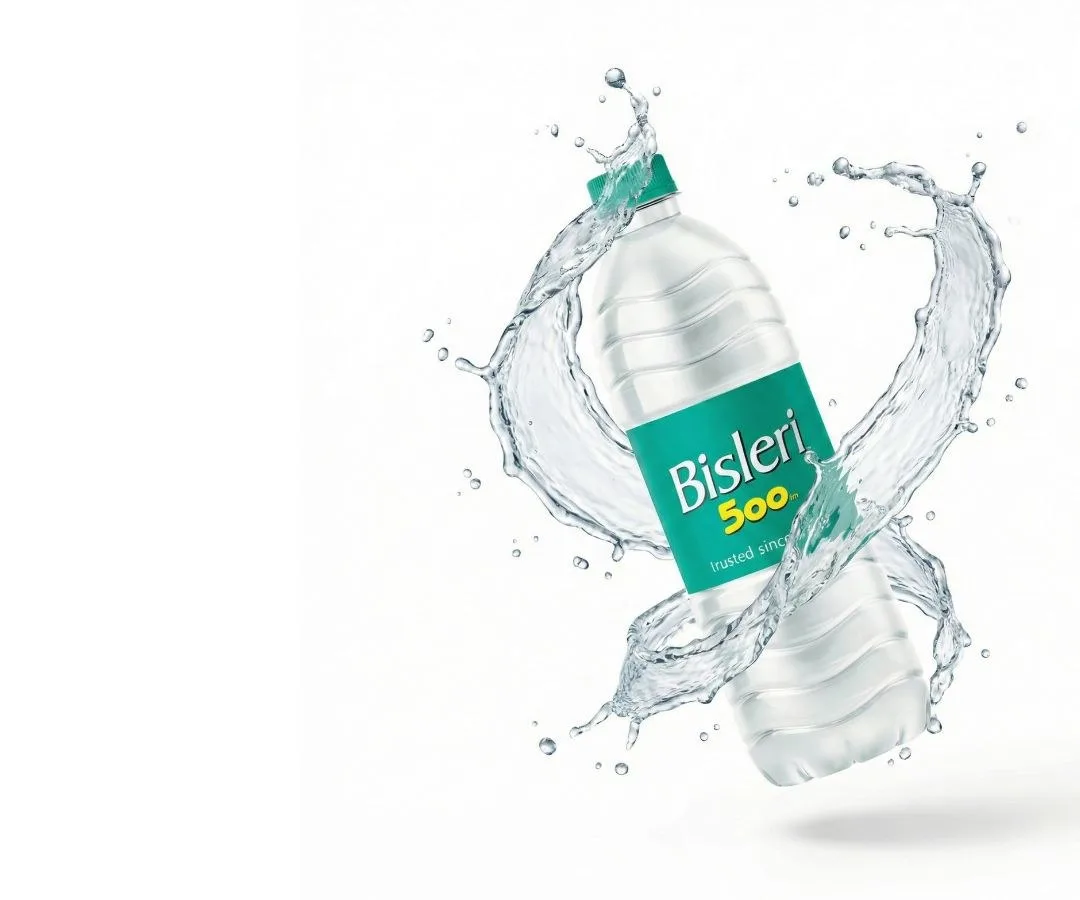
India's food safety regulator has sanctioned prosecution against Bisleri, the country's largest bottled water maker, after a packaged water sample failed tests for bromate and a second test flagged PAHs. The company says its own tests found the water within limits and that it received no notice. Here is what the case is about, what the chemicals are, and why the timing has drawn attention.
What did FSSAI announce?
On 22 November, the Food Safety and Standards Authority of India (FSSAI) announced enforcement action against nine entities, including sanction of prosecution for Bisleri International Pvt. Ltd. Under Section 42 of the Food Safety and Standards Act, 2006, sanction of prosecution is the official approval required from the Commissioner of Food Safety before criminal proceedings can be launched against an offender.
In a social media post, FSSAI said a regulatory sample of packaged drinking water, other than mineral water, was collected from Bisleri's premises and found non-compliant with the prescribed bromate limits and declared unsafe under the Act. When Bisleri appealed, the sample was sent to the Referral Food Laboratory, which also declared it unsafe, this time because it detected polynuclear aromatic hydrocarbons, or PAHs.
What are bromate and PAHs?
Bromate is a chemical compound that is not typically present in natural raw water at high levels, according to the World Health Organisation. It forms mainly as a disinfection by-product during drinking water treatment, when ozone used to disinfect water reacts with bromide naturally present in the source water.
PAHs, or polynuclear aromatic hydrocarbons, are a group of chemicals that occur naturally in coal, crude oil and gasoline, according to the US Environmental Protection Agency. They are also produced when coal, oil, gas, wood, garbage and tobacco are burned. PAHs can reach water through industrial discharge, runoff and other contamination routes.
What health risks do they carry?
According to the WHO, exposure to bromate carries significant health risks, categorised by toxicity and long-term carcinogenic potential. High-dose ingestion can cause severe gastrointestinal distress, including nausea, vomiting, abdominal pain and diarrhoea, along with central nervous system depression, hemolytic anaemia, a disorder involving the destruction of red blood cells, and pulmonary edema, or excess fluid in the lungs. Severe acute poisoning can lead to irreversible renal failure and deafness or hearing loss. Animal studies have also shown that elevated bromate intake leads to severe kidney and liver toxicity, with marked increases in blood urea nitrogen and liver enzymes as well as kidney tissue lesions.
The FSSAI finding does not by itself establish that any particular bottle on sale today is unsafe. The case turns on one sample from one batch, and the two laboratories that tested it reached different conclusions on bromate, which is why Bisleri has questioned the process.
What has Bisleri said?
Bisleri said the matter dates back about 14 months, to a batch produced in September 2025 at its Goa manufacturing facility, one of 143 plants in its network. On 30 September 2025, FSSAI collected six samples from the Goa facility. Five met all applicable standards, the company said, while the sixth recorded a bromate level of 12 micrograms per litre, against the prescribed limit of 10 micrograms per litre.
After Bisleri's appeal dated 22 November 2025, the referral laboratory found bromate within the prescribed limit but separately flagged PAHs in the sample. Bisleri said the difference between the two results raised questions and warranted clarification. It had the same sample tested independently at an FSSAI-approved laboratory, which found bromate within the limit. The company said it submitted those results to FSSAI's Western Regional Office with a letter dated 2 February 2026 and received no further communication after that, so it understood the matter to be closed.
"To date, Bisleri has received no notice by email or in hard copy and has been unable to locate the reported notice on FSSAI's website. Drinking water safety is a priority for Bisleri. We maintain stringent quality controls of over 90 tests across our 10-step manufacturing process and will continue to cooperate with FSSAI to address the matter through the appropriate regulatory process. A trusted brand for years, Bisleri remains safe for consumption," the company said in a statement.
Why does the timing matter?
The sample collection came amid changes in the bottled water market. It happened days before Reliance Consumer Products, the FMCG unit of Reliance Industries, was set to launch its new packaged water product, Campa Sure, in October 2025. The launch followed the government's decision on 22 September to cut tax on packaged water to 5 per cent from 18 per cent. Reliance had announced in June 2025 that it planned to invest up to Rs 8,000 crore over 12 to 15 months to expand beverage manufacturing.
India's bottled water segment is worth about Rs 30,000 crore and is dominated by Bisleri, Coca-Cola's Kinley and PepsiCo's Aquafina. Bisleri reported annual sales of $345.31 million for the year ending March 2025, according to Reuters. The timing does not prove any link between the enforcement action and the new competition, but it is the reason the case is being watched beyond food safety circles.
Frequently Asked Questions
Why is FSSAI taking action against Bisleri?
A regulatory sample of packaged drinking water from Bisleri's premises was found non-compliant with bromate limits and declared unsafe. A referral laboratory later also declared it unsafe after detecting PAHs. FSSAI has sanctioned prosecution under the Food Safety and Standards Act, 2006.
What is the bromate limit for packaged drinking water?
The prescribed limit is 10 micrograms per litre. The sample in question recorded 12 micrograms per litre in the first test, though a referral laboratory later found bromate within the limit and flagged PAHs instead.
Has Bisleri been found guilty?
No. Sanction of prosecution is only the approval needed before criminal proceedings can be launched. Bisleri disputes the findings, says its own tests found the water within limits, and says it received no notice of the action.
Read More: Explained: SEBI Wants to Ease FPI Disclosure Rules
Read More: Explained: G20 Johannesburg Summit, Six Proposals by Modi
Read More: Explained: Why COP31 Ended Without a Deal on Fossil Fuels
Read More: Explained: Pax Silica, the AI Pact India Just Signed



Comments
Be the first to comment on this story.