


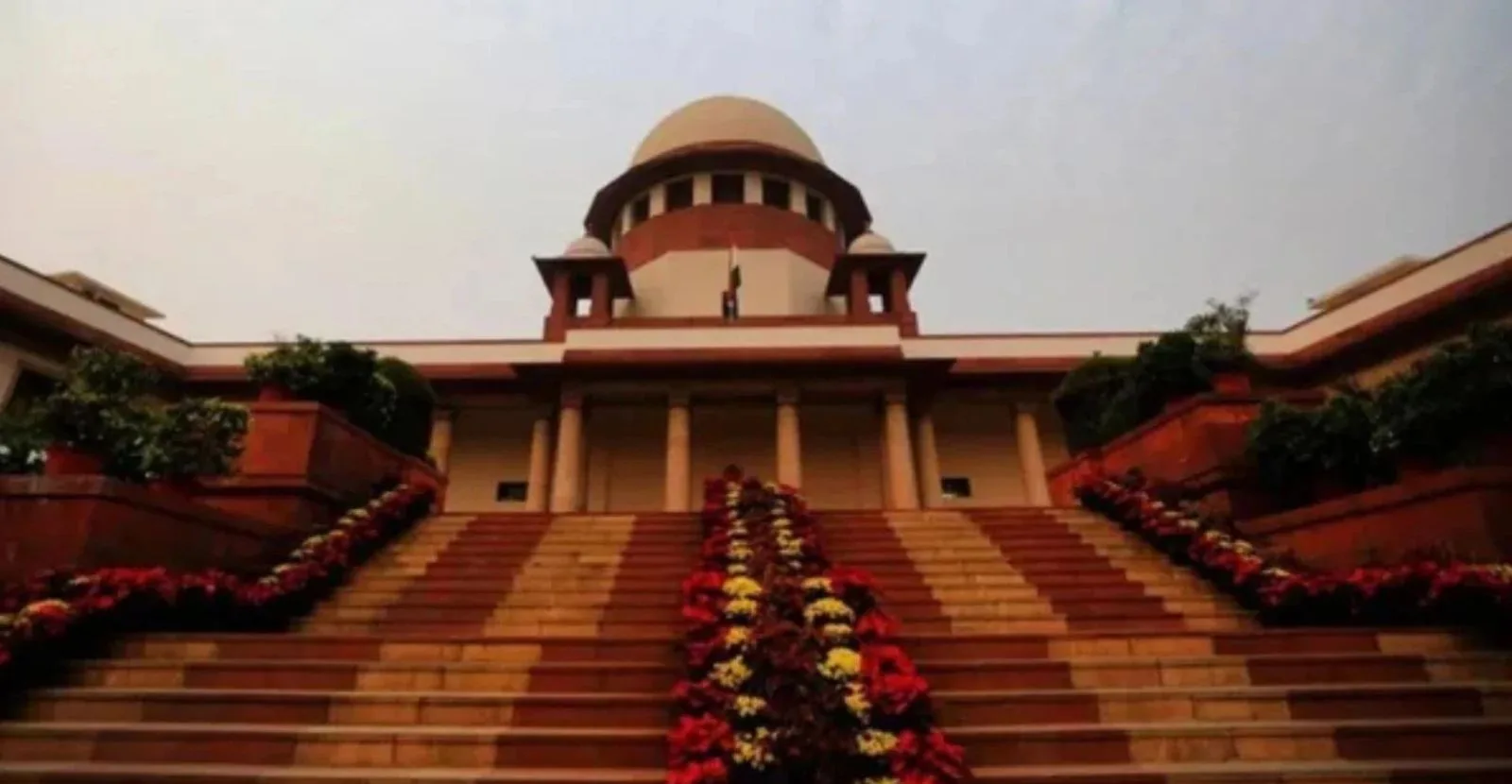
The Supreme Court's Central Empowered Committee has proposed a three-year roadmap to phase out unsustainable sand mining from riverbeds, and to recover construction material by desilting and dredging dam reservoirs instead. The recommendations came in a suo motu case concerning illegal sand mining in the National Chambal Sanctuary. In October, the court expanded the scope of the case and asked the committee to submit a report on riverbed sand mining. The court is yet to examine the recommendations in detail.
Demand for sand continues to grow as infrastructure and construction projects multiply across the country. But the ecological costs have now made curbs necessary, the committee said.
Why does the panel want riverbed sand mining phased out?
The committee's central argument is that rivers are not merely channels carrying water. They are dynamic systems that depend on a natural balance between water flow and sediment movement. Sand, gravel and silt help maintain riverbed elevation, channel stability, groundwater recharge and aquatic habitats.
Excessive removal of sand, especially from deep within the riverbed, can disrupt the natural subterranean barrier and allow surrounding groundwater to drain into the river channel, drying up wells and depleting aquifers, while the river erodes its own banks and bed to compensate. It also damages aquatic and riparian habitats and changes water flow, velocity and discharge capacity, which can make infrastructure vulnerable. In 2010, the Bombay High Court banned sand mining using suction pumps from the bed of the Vaitarna River in Palghar district, citing the threat to an important railway bridge. In 2024, the Kalwa-Nangal bridge over the Swan River in Punjab, connecting Ropar to Garhshankar, was damaged due to excessive sand extraction from the riverbed.
The committee distinguishes between scientific extraction and indiscriminate mining. Scientific mining involves limited removal, such as skimming the upper layer of sandbars deposited after the monsoon, rather than excavating deep pits. But given the environmental consequences and persistent enforcement failures, it wants a progressive transition away from unsustainable extraction from active river channels.
Why desilt dams and reservoirs instead?
The committee feels that scientific desiltation of dams and reservoirs could provide a substantial alternative source of sand and aggregates. Reservoirs intercept and retain large quantities of sediment transported by rivers, gradually reducing their storage capacity and affecting irrigation, hydropower generation and drinking water supply. Recovering suitable sand and gravel from these deposits could restore reservoir capacity and supply construction material without placing additional pressure on active river channels.
The committee cited government data presented in Parliament to show the scale of the loss. According to Central Water Commission assessments, 439 reservoirs had lost an average of 19.24 percent of their original gross storage capacity because of sedimentation, at an average annual loss of about 0.74 percent. Of these, 23 reservoirs had lost more than 50 percent of their original storage capacity, another 23 had lost between 40 and 50 percent, and 49 had lost between 30 and 40 percent.
The Gobind Sagar reservoir behind the Bhakra Dam illustrates the problem. Its original gross storage capacity of 9,868 million cubic metres has declined to approximately 7,300 million cubic metres, a loss of around 26 percent. The committee cautions that not all sediment can be used as construction-grade sand: material needs quality testing, and desiltation must account for downstream turbidity, habitats and dam safety.
It has recommended a national reservoir sediment management policy or programme, including a ten-year desilting cycle, reservoir-wise sediment assessments, quality testing, environmental safeguards and dam safety requirements.
How extensive is illegal sand mining?
The committee highlighted illegal mining as a major problem, pointing to outdated District Survey Reports, poorly demarcated mining boundaries, outdated replenishment studies, extraction beyond permitted depths and quantities, night-time operations and forged transit permits. Even holding a mining lease or environmental clearance does not establish that actual extraction is taking place within approved boundaries and limits, it noted.
The scale is hard to establish because India has no consolidated national database of sand extraction, consumption or illegal mining volumes. The committee cited Ministry of Mines data showing 95,306 illegal mining cases involving major and minor minerals in 2021-22 across reporting states, though these figures are not specific to sand and the quantity extracted remains unknown. There is also no reliable consolidated national figure for the quantity of sand legally mined from rivers. Sand is classified as a minor mineral under the Mines and Minerals (Development and Regulation) Act, 1957, and its regulation rests primarily with state governments.
Frequently Asked Questions
What has the Supreme Court panel proposed on sand mining?
The Central Empowered Committee has proposed a three-year roadmap to phase out unsustainable sand mining from riverbeds, and a plan to recover construction-grade sand by desilting and dredging dam reservoirs instead.
Why is riverbed sand mining harmful?
Excessive sand removal disrupts the balance between water flow and sediment movement, damages riverbeds and aquatic habitats, drains groundwater, dries up wells and can make bridges and other infrastructure vulnerable.
How much storage have reservoirs lost to sedimentation?
According to Central Water Commission assessments cited by the committee, 439 reservoirs had lost an average of 19.24 percent of their original gross storage capacity, and 23 of them had lost more than half.
Read More: Core Sector Growth Hits Series-High 10.9% in October
Read More: Why India's Oil Import Bill Jumped 54% in Seven Months
Read More: NSE Becomes World's Fifth Largest Listed Exchange Operator
Read More: Coffee and Dehydration: The Myth Is False, Studies Show

Comments
Be the first to comment on this story.