


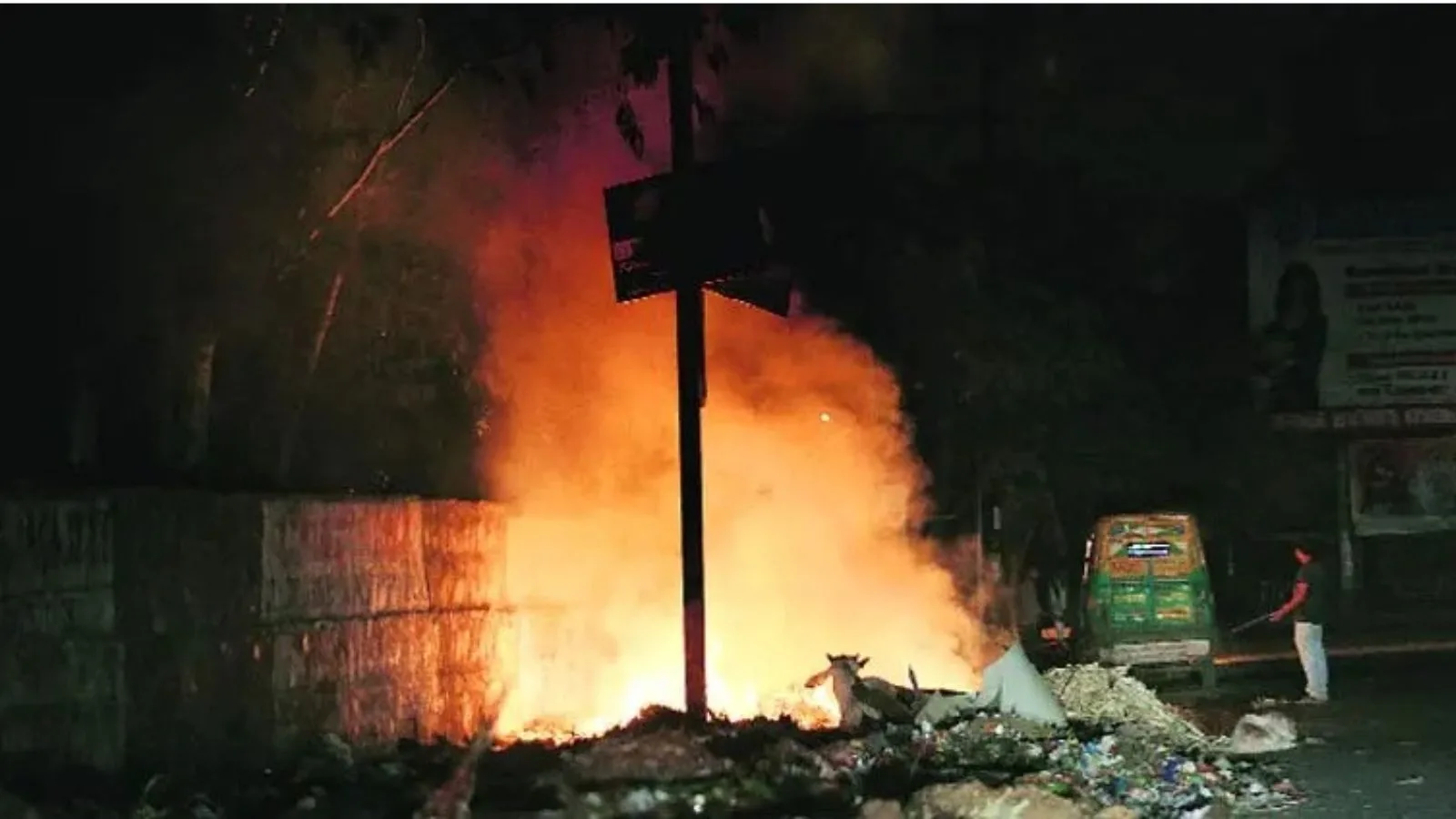
Burning garbage in the open in Delhi will soon cost Rs 10,000. The Municipal Corporation of Delhi has cleared a new set of waste rules with graded fines from Rs 500 to Rs 1.5 lakh, monthly user charges for waste collection, and a 5 percent yearly rise in penalties. Here is what the Solid Waste Management Bye-Laws 2026 change, who has to pay, and when the rules start.
What has changed
The MCD Standing Committee cleared the bye-laws at a meeting on Thursday, 19 November 2026. The rules are slated to take effect on 1 January 2027, replacing the framework under the 2018 bye-laws.
The headline change is the fine for open burning of solid waste: Rs 10,000, double the earlier Rs 5,000. Littering will now cost Rs 1,000, up from Rs 500. Households that fail to segregate, store and hand over waste in the prescribed manner face a fine of Rs 500, up from Rs 200.
The penalties are graded by the nature of the violation and the category of the offender, so a household, a street vendor, a hotel and a factory face very different fines for breaking the same set of rules.
The full fine list
- Households failing to manage waste properly: Rs 500. - Street vendors failing to manage the waste from their activities: Rs 500. - Littering: Rs 1,000. Drivers or owners of goods vehicles found littering: Rs 5,000. - Owners or occupiers who fail to maintain a clean area: Rs 2,000. - Construction and demolition waste handled improperly: Rs 2,000 for residential premises and Rs 10,000 for non-residential properties. - Marriage halls, party lawns and exhibition venues: up to Rs 15,000. Clubs, cinema halls, pubs and multiplexes: Rs 7,500. - Resident welfare associations and gated communities: Rs 15,000. Market associations and institutions: Rs 30,000. - Hotels: Rs 75,000 and restaurants: Rs 30,000 for failing to manage waste as prescribed. - Bulk waste generators failing to register or meet their obligations: Rs 50,000. - Manufacturers and brand owners selling disposable products without a system to collect packaging waste: up to Rs 1.5 lakh. - Industrial units failing to replace conventional fuel with refuse-derived fuel: Rs 1.5 lakh.
Who pays, and how often
Alongside the fines, the bye-laws fix monthly user charges for households, commercial establishments, hotels, restaurants, institutions and other waste generators. The charges fund garbage collection, transportation, processing and disposal, and vary by the size and category of the premises.
Both the user charges and the penalties will rise by 5 percent every year from 1 January. Repeat violations draw a higher penalty, with fines potentially imposed for every default, calculated per day or per month as applicable. The Delhi Pollution Control Committee may also impose environmental compensation on top of the fines.
Some institutional penalties, such as those for resident welfare associations, market associations and institutions, are levied only once a month.
Why now
The rules land as Delhi battles its winter pollution season. The capital woke on 21 November to an overall air quality index of 279, in the poor category, with hotspots such as AIIMS in the very poor range. Open burning of waste is one of the major local sources of PM2.5 and PM10, the fine particles that drive Delhi's winter smog.
The push is not new. Delhi's 2018 bye-laws already provided penalties for non-segregation, dumping in vacant plots and open burning, and a Delhi government order directed sanitary inspectors to impose an environmental fine of Rs 5,000 on anyone burning leaves, garbage or plastic in the open, citing National Green Tribunal orders. The 2026 bye-laws raise the stakes and widen the net to cover more categories of offenders.
On 19 November, the same day the Standing Committee cleared the bye-laws, Union Environment Minister Bhupender Yadav chaired a review meeting with civic bodies across Delhi-NCR, including Delhi, Ghaziabad, Noida, Gurugram and Faridabad, to assess their winter action plans.
The New Delhi Municipal Council has approved its own bye-laws with a Rs 7,500 fine for open burning, still awaiting notification. The MCD's full schedule of penalties was not immediately available, and it was not clear from the reports whether the bye-laws have been formally notified yet.
Frequently Asked Questions
When do Delhi's new waste fines start?
The Solid Waste Management Bye-Laws 2026 are slated to take effect on 1 January 2027. Fines and user charges will then rise by 5 percent every year from 1 January.
What is the fine for burning waste in the open?
Rs 10,000, double the earlier Rs 5,000. The Delhi Pollution Control Committee may also impose environmental compensation on top of the fine.
Do the fines apply to businesses as well as households?
Yes. The penalties are graded by offender. Households face Rs 500 for failing to segregate waste, while hotels face Rs 75,000, restaurants Rs 30,000, and manufacturers without a packaging waste collection system face up to Rs 1.5 lakh.
Read More: Explained: The Rs 874 Crore Plan to Clean the Yamuna
Read More: Explained: EPFO's New Systematic Withdrawal Plan for Retirees
Read More: Explained: Delimitation and the Fight Over Lok Sabha Seats
Read More: Explained: Cyclone Akvan and Why It Weakened Before Landfall

Comments
Be the first to comment on this story.