


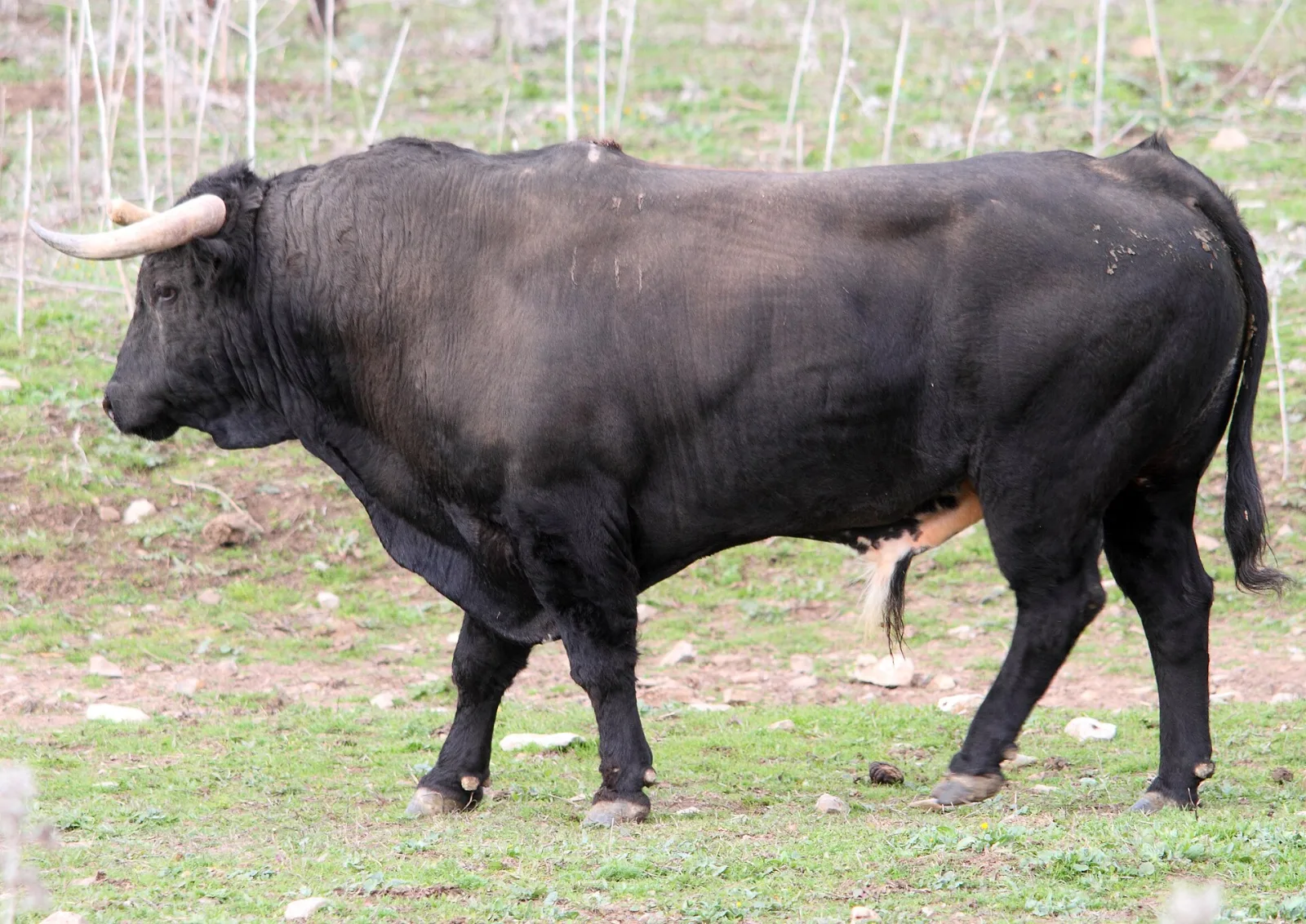
The image is famous: a matador waves a bright red cape, and a furious bull charges at it. From that picture grew one of the best known animal myths of all, that the colour red itself makes bulls angry. The phrase "red rag to a bull" is now used for anything that provokes rage. But the evidence says the colour has almost nothing to do with it. Bulls do not hate red. Verdict: False.
The myth
The claim is simple: bulls see red, hate it, and charge at it on sight. It feels true because bullfights are built around the red cape, called the muleta, and the bull always seems to attack it. But the cape is only one part of a long performance, and the bull's behaviour in the ring has more to do with noise, provocation and the frantic movement of the matador than with any colour. The idea has been tested again and again, and it has failed every time.
How bulls actually see
The first problem for the myth is that bulls cannot see red the way humans do. Humans have trichromatic vision, with three types of cone cells in the retina that detect red, green and blue light. Bulls, like most mammals, have dichromatic vision, with only two types of cone cells, sensitive to blue-violet and yellow-green light. They have no receptor for red light at all.
Animal scientist Temple Grandin explains in her book "Improving Animal Welfare" that cattle lack the red retina receptor and can only see yellow, green, blue and violet. A bull's vision is very similar to that of a human with red-green colour blindness, known as protanopia. To a bull, a red cape probably looks like a dull yellow or grey, so the idea of red enraging a bull is very hard to defend.
The MythBusters test
The most famous test of the myth came from the television show MythBusters, in its 2007 episode "Red Rag to a Bull". The team placed three stationary capes in an arena, one red, one white and one blue, and the bulls showed no preference for any colour.
Then the team moved one cape while the others stayed still. The bull charged at the moving blue cape and ignored the stationary red one. In the final test, a person dressed entirely in red stood still in the arena while two cowboys in other colours moved around. The bull ignored the person in red completely and chased the moving cowboys.
The tests were not rigorous laboratory science, but their result matches the research. A study by Riol and colleagues, "Color Perception in Fighting Cattle", found bulls showed no aggression when shown red. As far back as 1923, psychologist G. M. Stratton reported cattle experiments in Psychological Review and concluded that red does not arouse anger, and that brightness and motion matter more than hue.
Why the cape is red
If red does not anger the bull, why is the cape red at all? The answer is human tradition, not animal behaviour. In a bullfight, two capes are used. The larger capote, used in the first two stages, comes in colours such as pink, yellow, blue and purple, and bulls charge at it just as readily as they charge at the red muleta used in the final stage. The red colour is traditional, it adds drama, and it conveniently hides the bull's blood.
There is another factor the myth ignores. Fighting bulls are a specially bred, aggressive line of cattle, raised to charge at motion in an enclosed arena. Any sudden movement will set them off, whatever the colour of the thing that moves. In the ring they are also exposed to noise, provocation and injury, all of which add to their aggression.
The verdict
False. Bulls do not hate red, and they cannot even see it as red. A red cape looks dull yellow or grey to them, and experiments from 1923 to the MythBusters tests of 2007 all point the same way: bulls charge at movement, not colour. The red cape is a human tradition that hides blood and adds drama.
Frequently Asked Questions
Can bulls see the colour red?
No, not as humans see it. Bulls have dichromatic vision with only two types of cone cells, and they lack the receptor for red light. Red probably looks like a dull yellow or grey to them, similar to how a person with red-green colour blindness sees it.
What makes a bull charge, if not the colour red?
Movement. Bulls react to the rapid, unpredictable waving of the cape and to the movement of the matador, along with noise, provocation and fear. Tests show a bull will charge at a moving blue cape while ignoring a stationary red one.
Why do matadors use a red cape?
Tradition, and practicality. The red muleta is used only in the final stage of a bullfight, and the colour helps hide the bull's blood. The larger capote used earlier comes in pink, yellow, blue and purple, and bulls charge at those colours just the same.
Read More: Myths and Facts: Bats Are Not Blind, They Can See Well
Read More: Myths and Facts: Coffee Does Not Dehydrate You, Studies Show
Read More: Myths and Facts: Sugar Does Not Make Children Hyperactive
Read More: Myths and Facts: We Use All of Our Brain, Not Just 10 Percent


Comments
Be the first to comment on this story.