


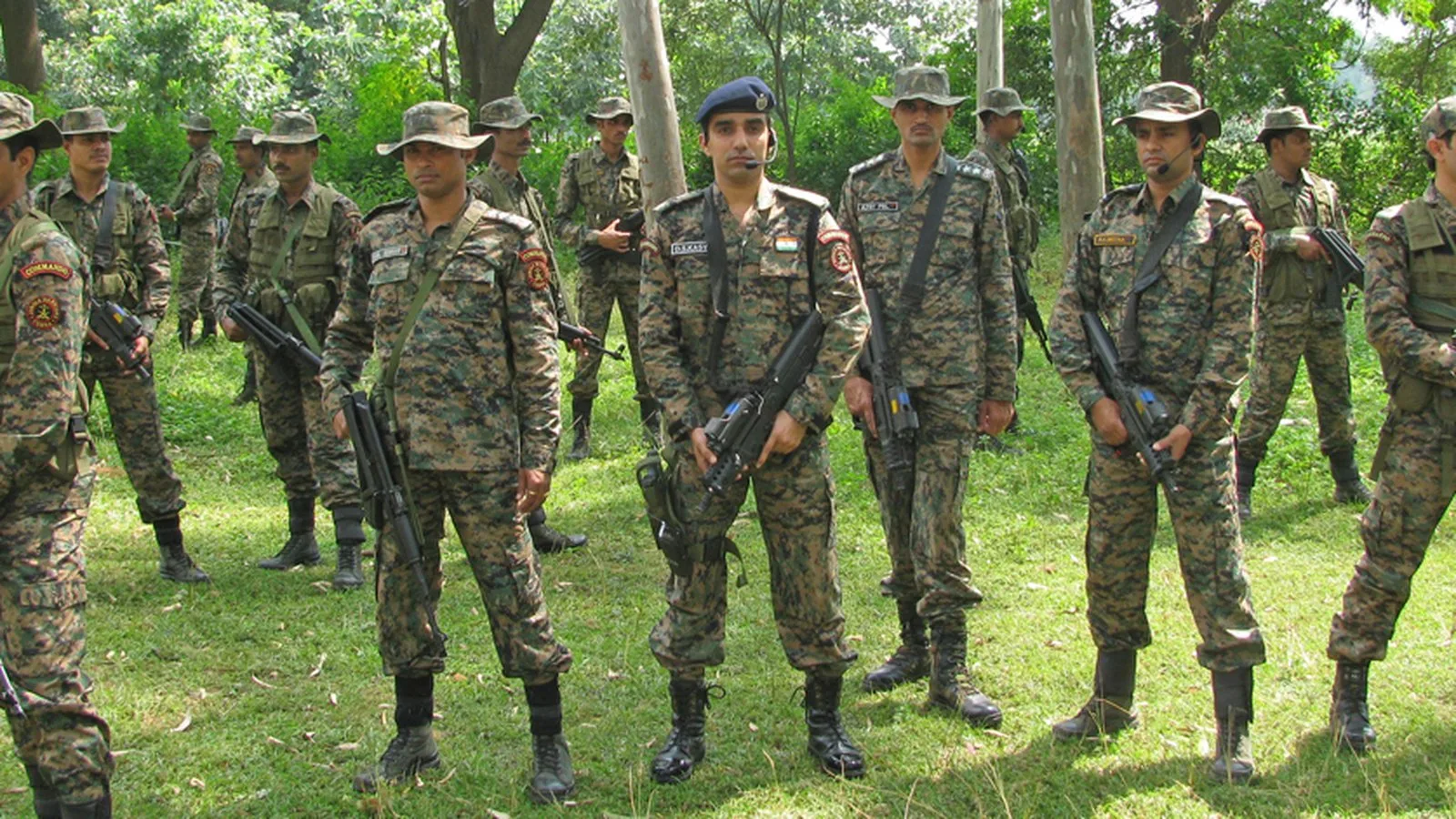
India has become effectively free from Left-Wing Extremism, with no district in the country still classified as LWE-affected, the government said in a backgrounder published by the Press Information Bureau on 24 November. The milestone was reached on 31 March 2026, the deadline the government had set in August 2024. The number of affected districts has fallen from 126 in 2014 to zero, and the number of most affected districts from 35 to zero.
Left-Wing Extremism, often called Naxalism, was for decades described by the government as one of India's biggest internal security challenges. This explainer looks at what the declaration means, how the government says it was achieved, and what still remains to be done.
What Naxal-free India means
Left-Wing Extremism grew from the Naxalbari uprising in West Bengal in 1967, inspired by Maoist ideology and the doctrine of armed revolution. Several extremist groups merged under CPI (Maoist) in 2004, making it India's biggest internal security challenge at the time. In 2009, the government publicly acknowledged that Naxalism was the biggest internal security challenge facing India.
"Naxal-free" is a classification, not a claim that every Maoist has surrendered. It means no district is any longer listed by the Ministry of Home Affairs as LWE-affected. The decline in that count was steady:
- 126 affected districts in 2014 - 90 in April 2018 - 70 in July 2021 - 38 in April 2024 - 8 in December 2025 - Zero in March 2026
The backgrounder says the country effectively became free from Naxalism on 31 March 2026, ending nearly six decades of Left-Wing Extremist violence.
The fall in violence
The sharpest change is visible in the violence figures. Naxal-related incidents fell from 870 in 2014 to 33 in 2026, as of 29 July. Deaths fell from 310 to 12 over the same period.
The worst year was 2010, when 1,936 incidents and 1,005 deaths were recorded. The decade from 2004 to 2014 recorded 17,542 violent incidents, 1,913 security personnel killed and 5,019 civilians killed. The backgrounder notes that nearly 92 per cent of Naxal weapons were looted directly from police armouries.
The strategy behind the decline
The first decisive shift came in 2015, with the approval of the National Policy and Action Plan to address LWE. It replaced an earlier approach the government describes as fragmented and incident-driven with a structured, whole-of-government framework coordinated by the Ministry of Home Affairs.
The plan rests on a four-pronged strategy: strengthening the security apparatus, rapid development, ensuring rights and entitlements, and managing perception. The government describes three mutually reinforcing strands behind it: restoring trust and faith in the State, expanding infrastructure, and delivering welfare.
The security grid was built out systematically. The government says 668 new security camps were constructed, compared with 169 before 2014, along with 615 fortified police stations, 68 night-landing helipads, 400 bullet-proof and blast-proof vehicles, and five hospitals for security personnel.
A layered force was put together, bringing together CoBRA (Commando Battalion for Resolute Action), the CRPF, District Reserve Guards and elite state units such as Jharkhand Jaguar and Andhra Pradesh's Greyhounds. Technology changed the operations too, with drones, unmanned aerial vehicles, satellite imagery and AI-based data analysis used for real-time monitoring and surveillance.
A series of coordinated operations, including Operation Black Forest, Operation Octopus, Operation Double Bull, Operation Thunderstorm, Operation Bhimbandh and Operation Chakrabandha, weakened Maoist networks. Operation Black Forest in April 2025 dismantled a key Maoist stronghold and led to more than 30 Maoists being killed, while Operation Double Bull made Gumla, Lohardaga and Latehar districts Naxal-free. Since 2014, 41 Polit Bureau and Central Committee members of CPI (Maoist) have been neutralised, the backgrounder says.
The government also targeted the support system. A dedicated vertical was set up in the National Investigation Agency to disrupt Naxal financing. The NIA has seized assets worth more than Rs 40 crore, the Enforcement Directorate has attached assets worth Rs 12 crore, and state agencies have confiscated another Rs 40 crore. The NIA had registered 112 LWE cases and filed 100 chargesheets by June 2026.
The funding behind the effort is large. About Rs 4,318.52 crore has been released under the Special Central Assistance scheme since 2017, projects worth Rs 1,761 crore have been sanctioned under the Special Infrastructure Scheme, and Rs 3,877.98 crore has been released under the Security Related Expenditure scheme since 2014-15.
Surrender and rehabilitation
Alongside the security operations, the government ran a rehabilitation offer with a clear message: for those who lay down their arms, there is a red carpet. Surrendering cadres receive an immediate grant of Rs 5 lakh for higher-ranked cadres and Rs 2.5 lakh for others, a monthly stipend of Rs 10,000 for 36 months, an additional Rs 50,000 that is doubled for group surrenders, and extra compensation for depositing weapons.
About 8,526 Naxalites had laid down their arms by November 2026, according to the backgrounder. The flow continued through 2026. On 28 July, 16 Maoists from the Kolhan and Latehar regions surrendered in Ranchi under the Nayi Disha, Nayi Pahal campaign, with 11 firearms and 1,562 rounds of ammunition. On 29 July, eight more Maoists carrying combined rewards of Rs 49 lakh surrendered before the Bijapur Police, and on the same day security forces arrested a top Maoist leader carrying a reward of Rs 1 crore from the Dhanbad-Giridih border.
Development in the former affected areas
The backgrounder argues that security alone did not end the insurgency. Roads, mobile connectivity, banking, schools and healthcare followed the security forces into areas that had been cut off for decades.
A total of 15,189 kilometres of roads have been built under the two LWE-specific schemes, the Road Requirement Plan and the Road Connectivity Project for LWE Affected Areas. In the Bastar region of Chhattisgarh alone, more than 3,240 kilometres of roads were built across Bastar, Bijapur, Dantewada, Sukma, Narayanpur, Kanker and Kondagaon districts.
On connectivity, 9,561 mobile towers have been commissioned, and 96 per cent of villages in the most affected areas, 44,728 of 46,592 villages, now have mobile connectivity. On rail, a 95-km line between Dalli Rajhara and Rowghat has been completed, a 140-km Rowghat-Jagdalpur phase has been approved, and a 153-km Dantewada-Manuguru line has been sanctioned.
Financial inclusion expanded sharply between April 2015 and March 2026, with 1,804 bank branches opened, 1,321 ATMs installed, 74,720 banking correspondents appointed and 6,025 post offices established.
In health, a 240-bed super specialty hospital at Government Medical College, Jagdalpur, was inaugurated by the Union Home Minister on 18 May 2026, and 11 Central Armed Police Force field hospitals have been opened to local tribal communities. In education, 259 Eklavya Model Residential Schools have been sanctioned and 179 made functional, along with 47 Industrial Training Institutes and 49 skill development centres, with an investment of nearly Rs 800 crore and skill training for more than 90,000 youth and women.
Under the Forest Rights Act, 21,26,273 title deeds have been distributed. The Bastar case study in the backgrounder shows how the change played out on the ground: the Bastariya Battalion, formed in 2017 with 1,143 personnel including about 400 local youth, strengthened local intelligence and trust, while 889 mobile towers and a dedicated plan for about 3,000 surrendered cadres, backed by Rs 20 crore for skills and livelihoods, followed.
What happens now
The work is not presented as finished. At present, 38 districts are categorised as Legacy and Thrust Districts, where continued security and developmental support is being provided to consolidate the gains.
One-third of the security camps in LWE-free areas are being converted into Seva Dera Kendras, Integrated Development Centres that provide access to government schemes, healthcare, banking, agricultural support and skill development under one roof. A memorandum of understanding has been signed with the National Institute of Design, Ahmedabad, to transform five security camps in Bastar into Shaheed Veer Gundadhur Seva Dera Kendras, starting with one at Netanar, the birthplace of Veer Gundadhur.
In August 2026, the Home Ministry told Parliament it had surveyed seven formerly LWE-affected districts of south Chhattisgarh to assess how fully welfare schemes had reached people there. On 8 November 2026, the Prime Minister celebrated Diwali with security forces at the CoBRA Operations Base in Karanpur, Bastar, describing it as the first Diwali when every district in the country is free from Naxalism, and noted that no CRPF jawan had lost his life on duty in the past year, the first such year in 47 years.
What the declaration does not mean
Three cautions belong with the milestone. First, the figures in the backgrounder are the government's own, and no independent audit is cited in it. Second, 33 incidents and 12 deaths were still recorded in 2026, as of 29 July, so the declaration is about districts classified as affected, not an end to all Maoist activity. Third, the continued support in 38 Legacy and Thrust Districts, and the conversion of security camps into development centres, show the government itself treats consolidation as unfinished work.
Frequently Asked Questions
What is Left-Wing Extremism?
Left-Wing Extremism, or Naxalism, is an armed Maoist insurgency that began with the Naxalbari uprising in West Bengal in 1967. Several groups merged under CPI (Maoist) in 2004, and the movement was centred in the forested tribal belt known as the Red Corridor. The government once called it the country's biggest internal security challenge.
How did the number of affected districts fall from 126 to zero?
The government credits the National Policy and Action Plan of 2015, which combined a bigger security grid, elite forces and technology-led operations with road, mobile and banking expansion, and a surrender and rehabilitation offer. The target of a Naxal-free India by 31 March 2026 was set on 24 August 2024 and met on schedule.
Does Naxal-free mean Maoist violence has ended completely?
No. The declaration means no district is classified as LWE-affected. In 2026, 33 Naxal-related incidents and 12 deaths were still recorded as of 29 July, and 38 districts remain categorised as Legacy and Thrust Districts receiving continued security and development support.
Read More: Explained: What Is a Civilisational State and Why Nations Are Using It in Foreign Policy
Read More: Explained: Contempt of Court, Why Defying a Judge Is Not Always Contempt
Read More: Explained: Sensex Surges 2,000 Points, What Is Behind the Rally
Read More: Explained: ICMR Report, Why Common Antibiotics Are Failing

Comments
Be the first to comment on this story.