


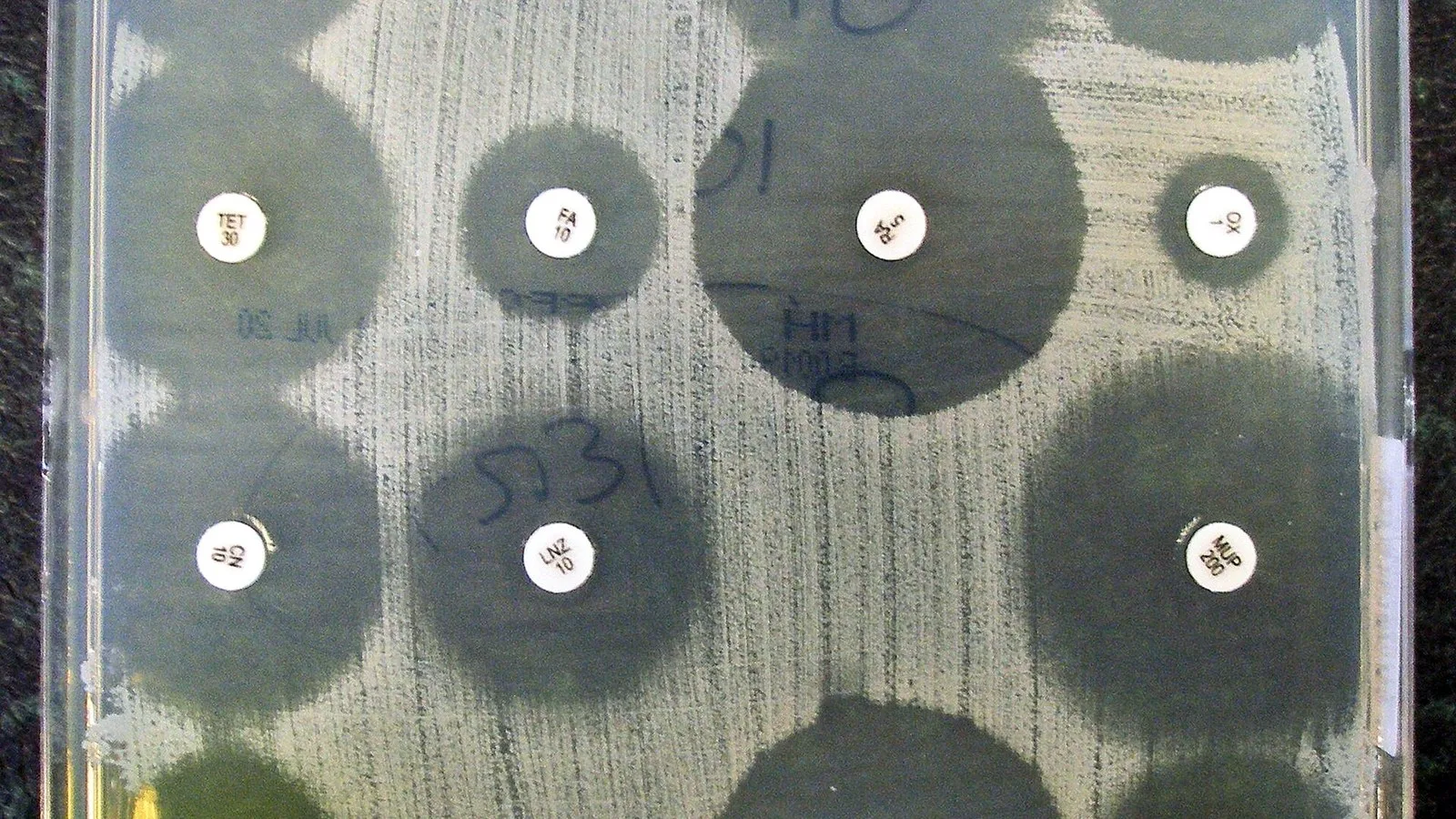
A new report from the Indian Council of Medical Research shows that several antibiotics doctors have used for years are no longer working against common bacteria in Indian hospitals. The ICMR's Antimicrobial Resistance Surveillance and Research Network (AMRSN) Annual Report 2025, released on 18 November, analysed more than 1.3 lakh laboratory samples from 64 hospitals across the country. Its findings show that resistance is no longer confined to large hospitals, and that newborns and critically ill patients face the greatest risk.
Antimicrobial resistance, or AMR, is a condition in which microbes evolve to resist the drugs meant to kill them, often because of the overuse of antibiotics. India has known about the problem for years, but the new report underlines how far it has spread.
What the report found
The report examined 1,13,008 positive laboratory samples from 30 large, specialised hospitals in 2025. For the first time, it also included data from 34 smaller, secondary-care hospitals, including 12 district hospitals, which contributed another 20,529 samples.
The most commonly found bacteria in the larger hospitals were Escherichia coli, or E. coli, which accounted for 24.4 per cent of the samples, followed by Klebsiella pneumoniae at 16.9 per cent, Pseudomonas aeruginosa at 12.2 per cent and Acinetobacter baumannii at 9.5 per cent.
The problem is particularly serious with E. coli, a bacterium that lives in the intestines but can cause urinary tract infections and sometimes serious bloodstream and intestinal infections. Only 18.4 per cent of the tested E. coli samples responded to cefotaxime and 24.7 per cent to ceftazidime, two commonly used antibiotics. Among E. coli from urine samples, just 9 per cent responded to ciprofloxacin and 18.2 per cent to levofloxacin.
Klebsiella pneumoniae, which can cause pneumonia, urinary tract infections, bloodstream infections and wound infections, presents a similar challenge. In 2025, only 36.5 to 40.4 per cent of the tested samples responded to carbapenems, a group of powerful antibiotics often used to treat serious infections when other medicines fail. The response was even lower among samples from intensive-care units.
The decline has been steady. Between 2017 and 2025, susceptibility to imipenem, a carbapenem, fell from 58.5 per cent to 36.5 per cent in Klebsiella pneumoniae, and from around 80 per cent to 63 per cent in E. coli.
The growing challenge of hospital infections
Some of the report's most worrying findings relate to bacteria commonly found in serious hospital infections. The report found that 91.1 per cent of the tested Acinetobacter baumannii samples showed resistance to carbapenems, leaving doctors with few treatment options, particularly in intensive-care units.
The problem is not limited to these bacteria. The report found that 56.8 per cent of the tested Staphylococcus aureus samples were resistant to methicillin, the form known as MRSA, and about one in five enterococci samples was resistant to vancomycin.
The findings on bacteria that cause diarrhoea are also concerning. Among the tested types of E. coli that cause diarrhoea, just 0.7 per cent responded to ciprofloxacin, while only 4.6 per cent responded to cefixime. Only 7.5 per cent of the tested Shigella flexneri samples and 8.9 per cent of Shigella sonnei samples responded to ciprofloxacin.
Why routine infections are harder to treat
Dr Kamini Walia, Scientist G and Head of the Descriptive Research Division at ICMR, said the findings show that routine infections are already becoming significantly harder to treat. She said it is high time antimicrobial resistance becomes a priority in healthcare discussions.
Infections caused by drug-resistant bacteria are difficult to treat because commonly used antibiotics may no longer work. The alternative medicines, often referred to as last-resort antibiotics, are expensive, carry a higher risk of side effects and may not be as effective.
The main driver of antimicrobial resistance is the misuse of antibiotics, particularly prescribing or taking them for illnesses that do not require these medicines. Antibiotics do not work against viral infections such as most cases of viral fever, and many diarrhoeal illnesses also do not require antibiotic treatment. Other important factors include poor infection prevention practices, such as inadequate handwashing and respiratory hygiene, and the use of antibiotics in animal farming.
Resistance has reached smaller hospitals
One important development in the 2025 report is the inclusion of secondary-care hospitals, which gives researchers a wider picture of resistance beyond large, specialised hospitals.
The new data show that resistance to third-generation cephalosporins is very high even in secondary-care hospitals. Carbapenem resistance, however, largely remains a problem in larger, specialised hospitals. For example, ceftriaxone susceptibility in E. coli declined from 39.8 per cent in the largest hospitals to 28 per cent in mid-level hospitals and just 11.5 per cent in the smallest hospitals in the network.
Dr Walia said district hospitals and smaller healthcare facilities should set up hospital infection control committees and antimicrobial stewardship committees, and introduce measures to identify infections early and control resistance.
Newborns and the critically ill face the greatest risk
For the first time, the report provides separate findings on bloodstream infections among newborns, infants and children. Among newborns aged 0 to 28 days, Klebsiella pneumoniae was the most commonly identified bacterium, accounting for 25.1 per cent of the tested samples. Candida, a type of fungus, and Acinetobacter baumannii were also commonly found.
Klebsiella pneumoniae is a common cause of infections in both adult and newborn intensive-care units. It is known to develop resistance to several drugs and can lead to high mortality. The ICMR said it is still analysing nationwide data from neonatal intensive-care units to get a clearer picture, and current treatment protocols may need to be adjusted according to what the findings reveal.
Not every drug is failing
The report also makes an important point: resistance does not affect every bacterium or medicine in the same way. Some bacteria continue to respond well to certain antibiotics, even as resistance to others increases.
Salmonella Typhi, the bacterium that causes typhoid, continued to respond well to several tested medicines, including azithromycin at 99.4 per cent, ceftriaxone at 96.6 per cent and ampicillin at 93.6 per cent. Its response to ciprofloxacin, however, was extremely low, at only 2 per cent.
There is also some good news for urinary tract infections. Fosfomycin worked against 96.5 per cent of urine E. coli samples and nitrofurantoin against 79.1 per cent. The report is clear that these are laboratory findings, and the right drug still depends on the site and severity of infection and on the patient's own tests.
What needs to change
The report highlights the need for a more careful and responsible approach to antibiotic use. Doctors need access to timely laboratory tests that can identify the bacteria causing an infection and show which antibiotics are likely to work against it. Based on these results, treatment can be changed when necessary.
Dr Walia said antimicrobial stewardship programmes should be made compulsory in all hospitals, and there should be a compulsory certificate course for all doctors who prescribe medicines. Adult vaccination against influenza, typhoid and pneumococcal infections should be encouraged, and high-quality infection prevention and control practices are equally important.
Doctors should also be aware of local antibiotic resistance patterns, known as antibiograms, which show which antibiotics are working against common bacteria in that particular hospital. Resistance patterns can differ between a district hospital, a large referral hospital and an intensive-care unit, so the same antibiotic cannot be assumed to work equally well everywhere.
The government has already begun to act. The second National Action Plan on Antimicrobial Resistance, NAP-AMR 2.0 for 2025 to 2029, was launched by Union Health Minister J P Nadda on 18 November 2025, the first day of the World Health Organization's World AMR Awareness Week.
Frequently Asked Questions
What is antimicrobial resistance?
Antimicrobial resistance is a condition in which microbes such as bacteria evolve to resist the drugs meant to kill them, often because of the overuse of antibiotics. Infections caused by drug-resistant bacteria are harder to treat because commonly used antibiotics may no longer work.
Which antibiotics are failing most in India?
Third-generation cephalosporins and fluoroquinolones are failing most against E. coli and Klebsiella pneumoniae. Only 18.4 per cent of tested E. coli samples responded to cefotaxime and just 9 per cent of urine E. coli samples responded to ciprofloxacin. Carbapenems, the powerful drugs used when others fail, worked in only 36.5 to 40.4 per cent of Klebsiella samples.
What is being done to contain antibiotic resistance?
The government launched the second National Action Plan on Antimicrobial Resistance, NAP-AMR 2.0 for 2025 to 2029, in November 2025. ICMR scientists say antimicrobial stewardship programmes should be made compulsory in all hospitals, doctors should base prescriptions on laboratory tests and local resistance patterns, and infection prevention and adult vaccination should be strengthened.
Read More: Explained: What Is a Civilisational State and Why Nations Are Using It in Foreign Policy
Read More: Explained: Contempt of Court, Why Defying a Judge Is Not Always Contempt
Read More: Explained: Sensex Surges 2,000 Points, What Is Behind the Rally
Read More: Explained: Miss Universe 2026, Five Problems Plaguing the Pageant



Comments
Be the first to comment on this story.