


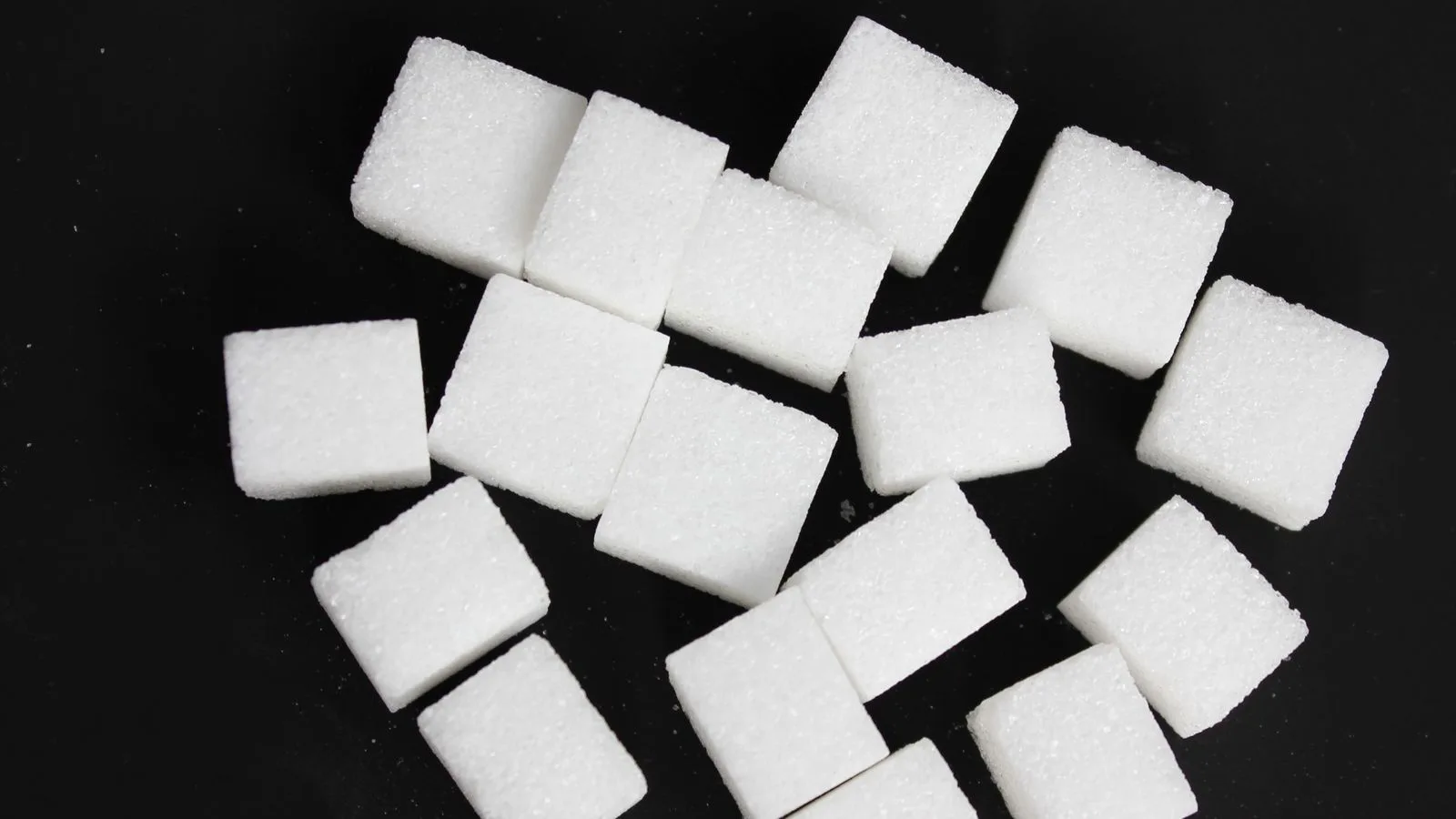
Every parent has heard it, and most have said it. Give a child cake and sweets at a birthday party, and within minutes the child is bouncing off the walls. Sugar makes children hyperactive. The verdict is simple: it is a myth. Decades of controlled experiments show sugar has no measurable effect on how children behave or think, and the belief survives because of expectation, not evidence.
The claim
The story is that sugar, especially sucrose in sweets, cakes and fizzy drinks, sends children into a state of hyperactivity: running around, unable to sit still, unable to concentrate. Parents are so sure of it that many ban sugar before school or bedtime. Teachers report the same pattern after class parties. The claim feels like common sense, and it is repeated so often that few people think to question it.
It also carries a heavier suggestion, that sugar causes attention deficit hyperactivity disorder, or ADHD. That is a separate claim, and it is also unsupported. ADHD is a clinical diagnosis with genetic and neurological roots. No controlled study has shown that eating sugar causes it.
What the trials found
The strongest evidence comes from a meta-analysis published in the Journal of the American Medical Association in 1995. Researchers Mark Wolraich, David Wilson and John White gathered 16 reports covering 23 studies. Every study had to meet strict conditions: the children were given a known amount of sugar, there was a placebo condition using an artificial sweetener, and the children, parents and researchers did not know who had received what.
Across 14 measures of behaviour and cognition, from activity levels to attention and memory, every pooled result included zero effect. In plain terms, the studies found no reliable pattern of sugar making children more hyperactive, less attentive or worse at thinking than the placebo. The authors were careful to add that a very small effect, or an effect in some small unidentified group of children, could not be ruled out. What the evidence did not support was the broad claim that sugar generally makes children hyperactive.
A second major test closed the remaining gap. In 1994, Wolraich and colleagues published a trial in the New England Journal of Medicine that ran for three weeks rather than a single dose. Children, including some described by their parents as sensitive to sugar, ate diets high in sucrose, aspartame or saccharin. The researchers measured 39 behavioural and cognitive variables in the sugar-sensitive children and found no significant differences between the diets. For preschool children, only 4 of 31 measures differed, with no consistent pattern. A short sugar challenge had not missed the effect. There was no effect to miss.
The experiment that blamed the parents
If sugar does not change behaviour, why are so many parents certain that it does? The answer comes from an experiment published in 1994 by David Hoover and Robert Milich in the Journal of Abnormal Child Psychology.
They recruited 35 boys aged 5 to 7 whose mothers described them as sugar-sensitive. Every boy was given a drink sweetened with aspartame, which contains no sugar. Half the mothers were told, falsely, that their sons had drunk sugar. The other half were told the truth.
The mothers who believed their sons had consumed sugar rated them as significantly more hyperactive. Videotapes of the mothers and sons together showed something else too. Those mothers stayed physically closer to their sons, criticised them more, and talked to them more than the mothers in the control group. The drink was the same for every child. Only the belief differed, and the belief changed both the rating and the interaction.
A similar experiment by Spring and Alexander found the same pattern. When parents were led to believe sugar, rather than aspartame, had been used as the sweetener, they described their children as more active, impulsive and fidgety, even though every child had drunk the same thing. It was the parent's expectation about sugar, not the sugar itself, that decided how the child's behaviour was judged.
Where the myth came from
The idea took hold in the late 1970s and early 1980s. A small study published in 1980 by Prinz and colleagues suggested a link between sugar and hyperactivity, and it arrived at a moment when parents were already worried about food additives and children's diets. The Feingold diet, which blamed food colourings and additives for hyperactivity, was widely discussed at the same time, and sugar was swept into the same suspicion.
The myth also has a perfect hiding place: context. Children eat the most sugar at the most exciting moments of their lives, birthday parties, festivals, holidays and treats after a win. They are already wound up, surrounded by friends, noise and freedom. Adults see the sugar, see the excitement, and join the two together. The sugar gets the blame for the party.
The media keeps the idea alive. Cartoons, films and advertising all use the sugar rush as a joke, and the phrase has entered everyday language. Once a belief is that familiar, people notice every example that confirms it and forget every calm child who just ate a sweet.
The verdict
Sugar does not make children hyperactive. A 1995 meta-analysis of 23 blinded, placebo-controlled studies found no effect on behaviour or thinking, a three-week diet trial in 1994 found the same, and experiments show that it is the adults' expectation of sugar, not the sugar itself, that changes how a child's behaviour is judged. The myth survives because sugar is eaten at exciting moments and because parents expect to see the effect.
None of this means sugar is harmless. Too much sugar damages teeth and adds calories that children do not need, and a balanced diet matters. But hyperactivity is not on the list of things sugar does. A child who is bouncing after cake is almost certainly bouncing because of the party, not the cake.
Frequently Asked Questions
Does sugar make children hyperactive?
No. A 1995 meta-analysis in the Journal of the American Medical Association combined 23 blinded, placebo-controlled studies and found no effect of sugar on children's behaviour or cognitive performance. A three-week diet trial published in 1994 found the same result.
Why do parents believe sugar makes their children hyperactive?
Mostly expectation and context. In a 1994 experiment, mothers who were falsely told their sons had drunk sugar rated them as significantly more hyperactive, even though every child had drunk a sugar-free drink. Children also eat the most sugar at exciting events like parties, where they are already wound up.
Does sugar cause ADHD?
No. ADHD is a clinical diagnosis with genetic and neurological roots. No controlled study has shown that eating sugar causes ADHD, and the trials that tested sugar against a placebo found no effect on attention or behaviour.
Read More: Myths and Facts: Vikings Did Not Wear Horned Helmets
Read More: Myths and Facts: Humans Have More Than Five Senses
Read More: Myths and Facts: Einstein Did Not Fail Maths at School
Read More: Myths and Facts: The 10 Percent Brain Myth Is False



Comments
Be the first to comment on this story.