


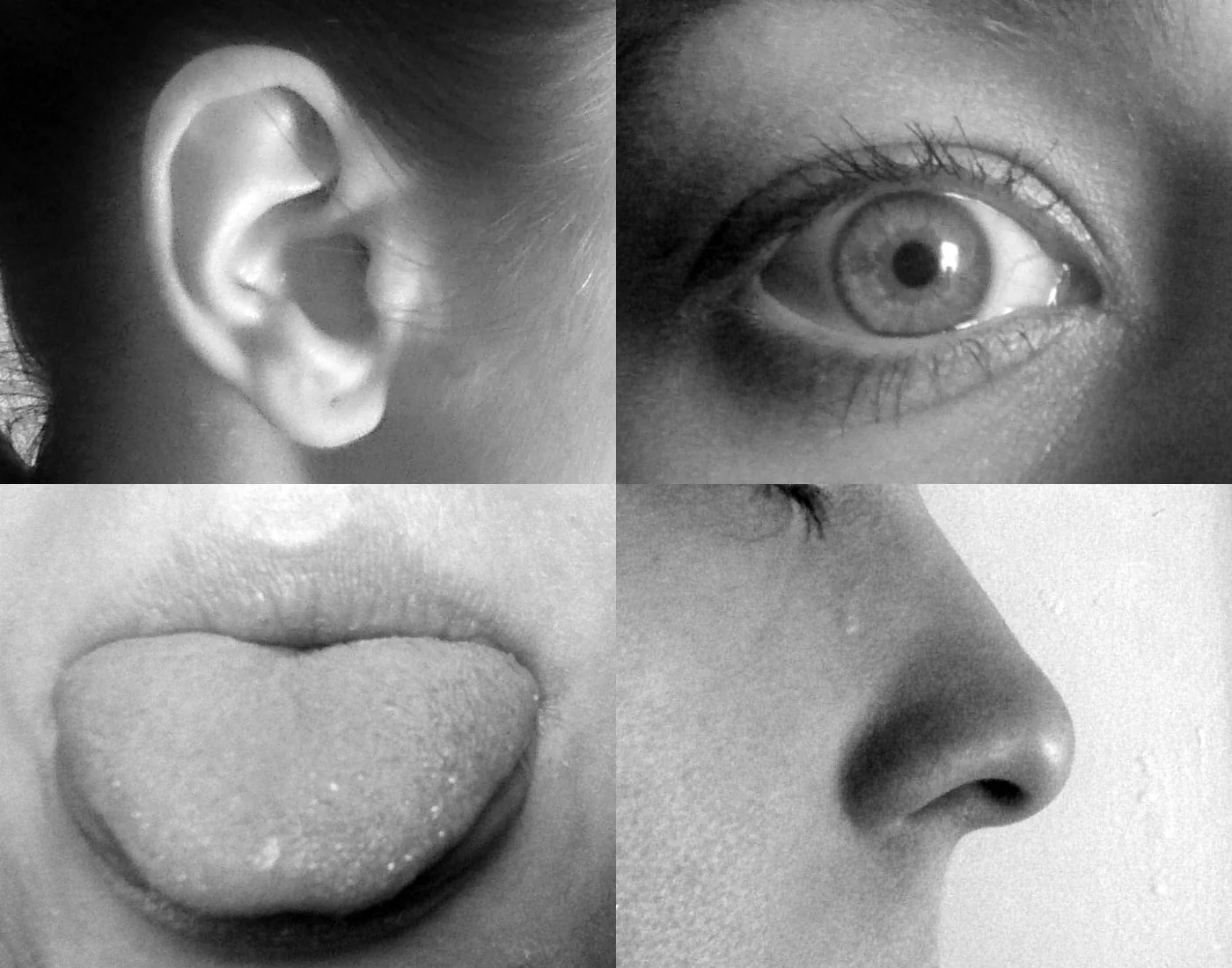
Sight, hearing, smell, taste and touch. Every schoolchild learns the five senses, and the list has stood for more than 2,000 years. The verdict is simple: it is a myth. Humans have far more than five senses, and scientists cannot even agree on the final number.
Where the five senses came from
The list comes from Aristotle, the Greek philosopher who set out five senses in his work De Anima, written around 350 BC. His five were sight, hearing, smell, taste and touch, each tied to one organ: the eye, the ear, the nose, the tongue and the skin.
The list survived because it is simple, neat and easy to teach. But it was a philosopher's summary of the senses he could see, not a full map of the nervous system. As scientists learned more about how the body gathers information, the count kept rising. Neurologists now commonly count at least nine senses, and broader classifications put the number at 21 or more. Some researchers put it as high as 33.
The senses hiding inside touch
The first problem with the list of five is touch itself. Touch is not one sense. It is several different senses bundled under one name.
Temperature is one of them. Thermoception, the ability to feel hot and cold, runs on its own receptors and its own pathways in the brain, separate from the receptors that feel pressure. Hot and cold are even handled by different parts of the brain. Feeling a hot stove and feeling a light tap on the shoulder are two different jobs done by two different systems.
Pain is another. Nociception, the sense of pain, was once treated as touch turned up too loud. That idea fell apart once scientists found dedicated pain receptors, called nociceptors. There are three different kinds, in the skin, in the bones and muscles, and in the internal organs. Pain is its own sense, not a louder version of touch.
Pressure, itch and vibration are also separate channels, each with its own receptors. The skin alone reports far more than the single word touch suggests.
Balance and body position
Two of the best known extra senses work every second of the day, mostly unnoticed.
Proprioception is the sense of where your body parts are in space. Close your eyes and touch your nose with a fingertip. You can do it because nerve cells in your muscles, joints and tendons constantly report the position of your limbs. It is why you can walk in the dark without staring at your feet. In a 2016 study published in the New England Journal of Medicine, researchers found that people with a mutation in a gene called PIEZO2 had a poor sense of proprioception, along with problems sensing touch and movement.
Equilibrioception is the sense of balance. Deep inside the ear, the vestibular system detects movement and rotation, and works with vision and proprioception to keep you upright. Anyone who has spun around as a child and then staggered knows what happens when it is thrown off.
The senses inside your body
Then there are the senses that watch what is happening inside you. Interoception is the brain reading signals from your own body: hunger, thirst, a racing heart, a full bladder, changes in blood pressure. These are senses too, by the same definition as sight or hearing, because they are channels through which the body observes itself and the world.
There are stranger ones on the list as well. Kinaesthesia is the sense of movement. Chronoception is the sense of time passing. Researchers have even reported hints that humans may respond to magnetic fields, but that claim is unproven and no one has shown that people can consciously sense them.
So how many senses do we have?
It depends on how you count. The standard neurological definition, a group of sensory cells that responds to a specific stimulus and connects to a specific part of the brain, gives at least nine. Broader classifications, which split the senses more finely, reach 21. Professor Barry Smith of the University of London, writing in The Conversation, notes that his neuroscience colleagues believe there are anywhere between 22 and 33 senses. The Naked Scientists put the figure at possibly as many as 33. At the far end, one researcher has proposed 53.
Some scientists go the other way. A reductionist view argues there are really just three senses, based on the kind of input reaching the nervous system: mechanical senses that measure physical change, light detection, and chemical sensing. The exact total is still debated. What is not debated is that five is wrong.
The verdict
Humans do not have only five senses. Sight, hearing, smell, taste and touch are the five best known, but the body also senses temperature, pain, pressure, balance, body position and what is happening inside it. The five-sense list is a 2,300 year old simplification from Aristotle, and modern neuroscience has outgrown it.
Frequently Asked Questions
How many senses do humans have?
At least nine by the standard neurological count, and possibly 21 to 33 under broader definitions. There is no single agreed total, because the number depends on how a sense is defined.
What is proprioception?
It is the sense of where your body parts are in space. Nerve cells in your muscles, joints and tendons report the position of your limbs, which is why you can touch your nose with your eyes closed.
Where did the five senses idea come from?
It comes from Aristotle, who listed sight, hearing, smell, taste and touch in his work De Anima, written around 350 BC. The list survived because it is simple to teach, not because it is complete.
Read More: Myths and Facts: Vikings Did Not Wear Horned Helmets
Read More: Myths and Facts: The 10 Percent Brain Myth Is False
Read More: Myths and Facts: The Five-Second Rule Does Not Keep Dropped Food Safe
Read More: Myths and Facts: Bulls Do Not Hate the Colour Red



Comments
Be the first to comment on this story.