


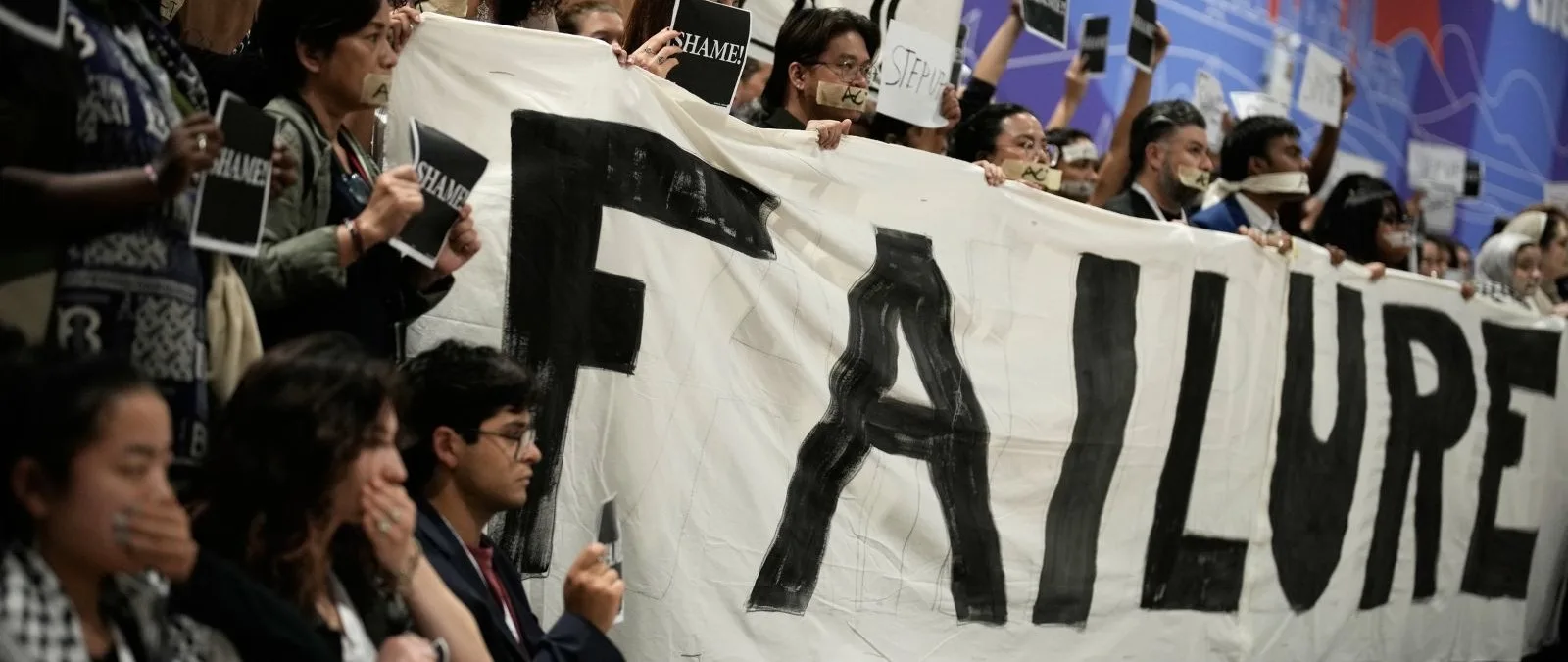
The COP31 climate summit in Antalya closed on November 22 without adopting its cover decision, the proposed Antalya Pact, which would have set out a common political direction for global climate action, including on emissions reduction, the energy transition and climate finance. It is the first UN climate summit since Copenhagen in 2009 to end without an overarching political outcome.
The World Meteorological Organization expects 2026 to rank among the four warmest years on record, with a very strong El Nino building into 2027. Europe's deadly summer heat, the flash floods in Nepal, and India's own summer season tested public systems everywhere this year. The war in Iran led to the closure of the Strait of Hormuz, driving up the price of oil, gas and fertiliser. It is in this context that the summit ended with no deal.
What is a cover decision and why does it matter
A cover decision is not legally binding, but it serves as an important political signal. It is where the conference says, in a single voice, what the world agrees on and where it goes next. Almost every conference of recent years has produced one, from Glasgow's "phase-down" of coal in 2021 to Dubai's call to transition away from fossil fuels in 2023, and even Belem's promise to triple adaptation finance in 2025.
This year, the cover decision mattered more than usual. With the world falling far short on emissions cuts needed to keep the 1.5 degree Celsius target in sight, this COP was the one venue where all countries could renew their climate ambitions to keep the Paris Agreement's targets alive.
UN Secretary-General Antonio Guterres said he was deeply disappointed that COP31 had ended without consensus on an overarching outcome, adding that there may be no consensus in the negotiating room, but there is no ambiguity in the science. His message was clear: the world must do much more to confront the climate crisis, and it must do it now.
The absence of a cover decision also sets a concerning precedent. Even relatively weaker COPs still produced a cover text. This helps restore confidence in the multilateral process to address problems of global nature such as climate change. After the failed 2009 Copenhagen conference, it took six years of rebuilding trust to reach the Paris Agreement. Cover decisions, though not binding, also signal the direction of travel to everyone outside the room, such as finance ministries, investors and regulators.
Why did the talks fail
The breaking point was the cause of the crisis itself. More than 130 countries backed a call to move away from fossil fuels during the talks. Yet the final draft did not name coal, oil or gas, and referred only to the Dubai outcome, which had called for transitioning away from fossil fuels.
Instead, the draft offered a global aspiration to scale carbon capture, utilisation and storage to gigatonne levels by 2035, and a goal of raising the share of electricity in final energy use to 35 percent by 2035. While carbon removal remains an important area of research, it cannot on its own keep the 1.5 degree Celsius target under the Paris Agreement alive. Reducing greenhouse gas emissions thus becomes non-negotiable.
For some negotiators, including those representing the EU and countries such as Panama and the Marshall Islands, a text that could not name fossil fuels but could champion carbon capture read as a retreat from Dubai. For Saudi Arabia, speaking for the Arab states, however, carbon capture was the point: it lets producers cut emissions without cutting output. Russia also objected, and for now there is no formal mitigation process at all.
Yet there is hope outside the negotiating room. Brazil handed over its voluntary roadmap for transitioning away from fossil fuels, and Denmark, Spain and Portugal announced national plans.
Money, or a lack of it, was also a major reason for this failure. Disagreements over new, quantified climate finance pledges added fuel to the fire. Developing countries said wealthier nations must provide adequate financial assistance and that developing countries should not be expected to make ambitious commitments without it. Wealthier, developed countries made no new collective financial commitments. Their announcements were selective and leaned on loans and private capital. For now, the finance work programme has survived as a process but without new money behind it.
Where did India stand and what did it secure
India came to Antalya with a familiar brief. Its third Nationally Determined Contribution, submitted in April 2026, commits to a 47 percent cut in emissions intensity from 2005 levels and a share of about 60 percent for non-fossil sources in installed power capacity by 2035. It had already crossed the 50 percent threshold for non-fossil capacity, five years ahead of its 2030 target.
Working with BASIC (Brazil, South Africa, India, China) and the Like-Minded Developing Countries, India pressed for public finance under Article 9.1 of the Paris Agreement. It wanted mitigation talks to stay bottom-up, country-driven, facilitative and non-punitive, and it opposed unilateral measures such as the EU's Carbon Border Adjustment Mechanism.
While India remained dissatisfied with the dilution of the text on developed countries' historical responsibility, it was successful in getting its key points into the draft text: developed countries' Article 9.1 obligations were recalled, and equity and common but differentiated responsibilities were placed at the heart of implementation.
Interestingly, India also recognised the need for reducing anthropogenic methane emissions and the near-term climate benefits of reducing such short-lived climate pollutants. This marks a welcome shift from its previous position, with India finally recognising the near-term climate benefits of reducing methane emissions while maintaining its stand on food security.
What does the failure mean for India
The easy reading is that Antalya failed. The harder one is that it failed honestly. A text that could not name fossil fuels, wrote a gigatonne aspiration for carbon capture into a UN decision and deleted the only number on adaptation finance would not have been a compromise. It would have been a step back dressed as consensus. No deal was better than that deal.
The cost of the stalemate is still real, and it falls on trust. The regime now runs on two currencies, ambition and money, and each camp holds one hostage to the other. Developed countries want fossil-fuel language without new finance. Producers want carbon capture without fossil-fuel language. Developing countries want finance before ambition. Under the consensus rule, everyone holds a veto and no one holds the pen.
The deeper risk is fragmentation. When parties to the UN climate convention cannot agree, rules get written elsewhere: in coalitions of the willing on fossil fuels, in voluntary pledges and in trade policy such as the EU's Carbon Border Adjustment Mechanism. These are spaces where common but differentiated responsibilities carry little weight. For India, a weak multilateral process is not a win. It is the loss of the one forum where equity is the law of the room. The International Court of Justice's advisory opinion last year gave legal weight to arguments India has long made, but that weight is useful only in a forum that still works.
So India must do two things at once. It must keep pressing for public finance and opposing unilateral trade measures at COP32 in Addis Ababa and through the second global stocktake that concludes in 2028. And it must move faster where no consensus text is needed: cutting methane emissions from waste and fossil fuels, phasing down HFCs under the Kigali Amendment, and reducing black carbon emissions. Cutting these super-pollutants is the quickest way to shave near-term warming. A summit without a deal is a setback. A decade without action would be a far bigger one.
Frequently Asked Questions
Why did COP31 end without a climate deal?
The talks broke down over fossil fuels and finance. More than 130 countries backed a call to move away from fossil fuels, but the final draft did not name coal, oil or gas. Developed countries also made no new collective climate finance commitments.
What is a COP cover decision?
A cover decision is the political outcome of a climate summit. It is not legally binding, but it states in a single voice what the world agrees on and signals the direction of travel to governments, investors and regulators.
What did India secure at COP31?
India got its key points into the draft text: developed countries' finance obligations under Article 9.1 of the Paris Agreement were recalled, and equity and common but differentiated responsibilities were placed at the heart of implementation. India also recognised the benefits of cutting methane emissions.
Read More: Explained: Ganga Water Treaty Ends December 12, What Happens Next
Read More: Explained: Jensen Huang Returns as Nvidia CEO, Why His Comeback Faces US Scrutiny
Read More: Explained: Supreme Court Backs BS-VI Only Vehicles for Delhi
Read More: Explained: Record Profits, Stagnant Pay, Why PM Modi Scolded India Inc


Comments
Be the first to comment on this story.