


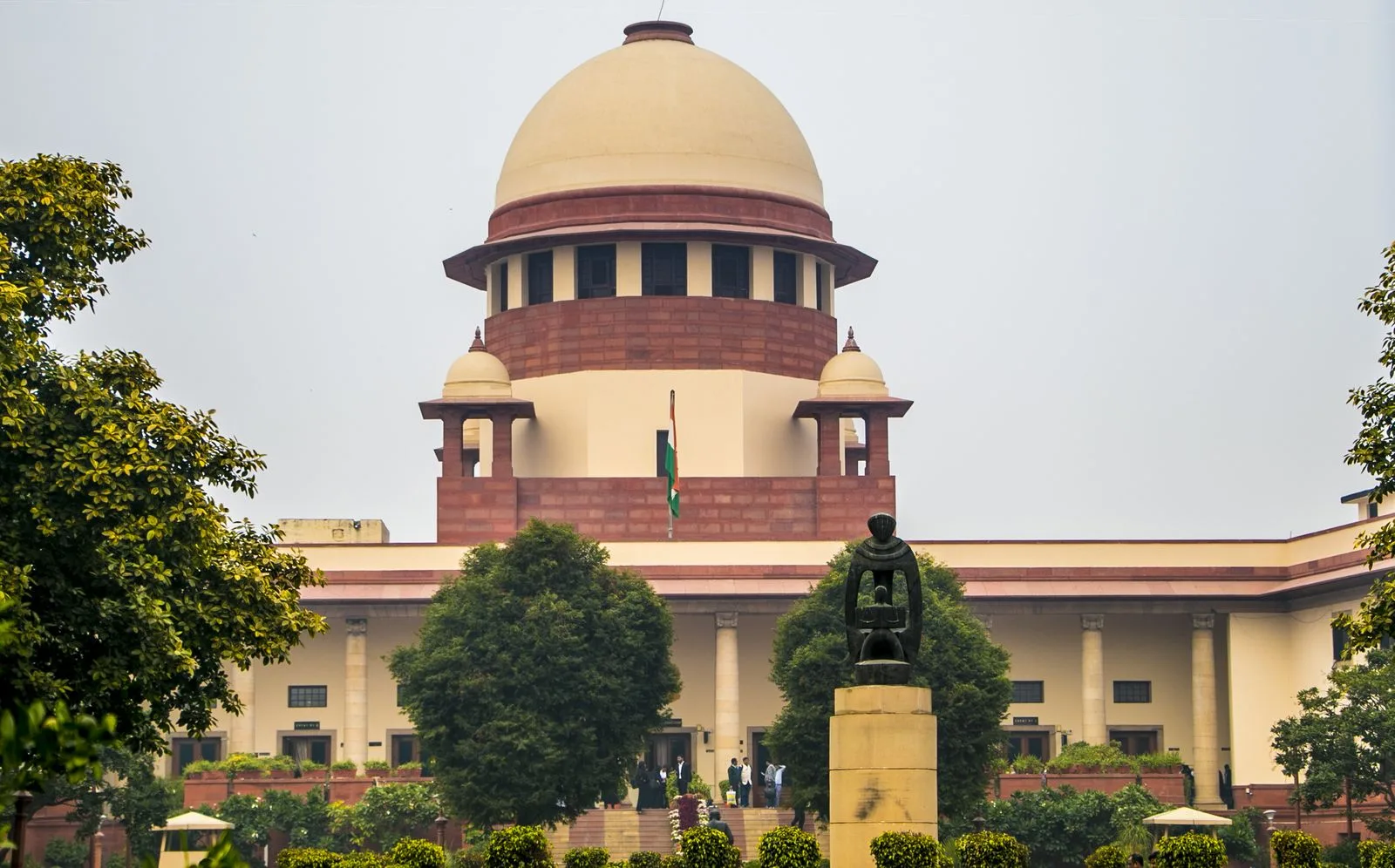
The Supreme Court on Monday, November 23, said it is in favour of allowing only vehicles compliant with BS-VI emission standards in Delhi, calling it an effective measure to combat air pollution in the capital. A three-judge bench led by Chief Justice of India Surya Kant was hearing proceedings the court had initiated on its own to deal with Delhi's annual air pollution crisis.
Justice Joymalya Bagchi, who was part of the bench along with Justice V Mohana, said BS-VI compliance must follow and should be restricted not only to Delhi but to the entire National Capital Region. "That is one thing which will significantly contribute to reduction of pollution," he said.
"We want only BS-VI vehicles in Delhi, if not NCR," Justice Bagchi added, underlining the bench's position.
A lucky winter so far
At the start of the hearing, the bench noted that Delhi had a "lucky winter" this year, as air pollution had not touched severe levels so far. The Chief Justice said the weather had been favourable, while amicus curiae and senior advocate Aparajitha Singh pointed to good wind movement.
Additional Solicitor General Aishwarya Bhati, appearing for the Commission for Air Quality Management, agreed that nature had played the main role but added that the efforts of the authorities had also borne fruit. Justice Mohana described the improvement as a cumulative effect.
"Whatever, the lungs of the people are safe till now, to a certain extent," Justice Bagchi remarked, noting that pollution had not gone into the severe category this time. Bhati agreed, saying that otherwise November is the most polluted month of the year.
The court said it will consider what further directions, both short term and long term, are needed in the matter. The next hearing is likely on November 25.
What BS-VI means
BS-VI, or Bharat Stage VI, is the emission standard for all major road vehicles in India, from trucks and cars to two-wheelers and three-wheelers. The standards became mandatory across India on April 1, 2020, for the manufacture, sale and registration of new vehicles, and are close to the Euro 6 standard followed in Europe.
BS-VI vehicles emit far lower levels of nitrogen oxides and particulate matter than older BS-IV vehicles, which is why the court sees the switch as a direct way to cut the pollution load from traffic, one of the largest contributors to Delhi's poor air.
The hearing is part of a set of five cases the Supreme Court registered on its own under a judgment of March 12, 2026, each covering one part of Delhi-NCR air pollution, including vehicles, waste, crop burning, firecrackers, construction and green cover.
The BS-IV problem
During the hearing, a counsel pointed out that the Supreme Court had said in an order dated December 17, 2025, that BS-IV vehicles would be permitted and that no coercive action should be taken against them. The counsel said Pollution Under Control certification had been stopped for these vehicles, and asked the court to let them get the certification done.
The Chief Justice said the status quo should remain for the next month or so. The counsel then repeated the request, saying that without the certification the vehicles were not getting fuel.
"That is what we want. We want that. We want only BS-VI vehicles in Delhi, if not NCR," Justice Bagchi replied.
Delhi's existing winter entry ban on older vehicles from outside the city runs until January 31, 2027, according to The Tribune.
Keeping commercial vehicles out
The Chief Justice also asked how commercial vehicles could be kept out of Delhi altogether. Senior advocate Sanjiv Sen, appearing for the Municipal Corporation of Delhi, said that thanks to the court's orders permitting an increase in the Environment Compensation Charge, there had been a 30 percent reduction in commercial vehicles coming into Delhi from neighbouring states, which had contributed greatly to the reduction in pollution.
But the Chief Justice pointed out that the capital has its own demands for food, groceries and vegetables, which have to come from outside. "So what can be the alternative? Can there be warehouses at the border and battery-operated vehicles to bring the goods into Delhi?" he asked.
He wondered whether such a system could become a reality in at least five years, if not immediately. "May not be possible this year or next year, but why not try to make it work in the next five years?" he said.
The court also questioned why neighbouring states were participating passively rather than actively in the fight against air pollution. It directed the Advocate Generals of Punjab, Uttar Pradesh, Haryana and Rajasthan to appear before it on the next date, and asked all states to file affidavits on the steps they have taken to reduce pollution in the NCR. The states were also asked to file replies to a report submitted by an expert committee appointed by the Commission for Air Quality Management.
What happens next
No direction has been passed yet on the BS-VI only proposal. Any binding direction would come only through a written order, after the states and authorities file their responses. The hearing continues on November 25, when the court is expected to take up the responses and consider further directions.
If the court does order a BS-VI only regime, it would affect lakhs of older vehicles that still run in Delhi and the NCR, and would raise questions about enforcement, exemptions and the fate of BS-IV vehicles that were protected by the court's December 2025 order.
Frequently Asked Questions
What did the Supreme Court say about BS-VI vehicles in Delhi?
The court said on November 23 that it is in favour of allowing only BS-VI compliant vehicles in Delhi, and Justice Joymalya Bagchi said the restriction should extend to the entire National Capital Region.
What is BS-VI?
BS-VI, or Bharat Stage VI, is India's emission standard for vehicles, mandatory for new vehicles since April 1, 2020. It is close to the Euro 6 standard and cuts nitrogen oxides and particulate matter sharply compared with BS-IV.
Has the court passed any order on BS-VI only vehicles yet?
No. The court has only indicated its view during the hearing. Any binding direction would come through a written order after the states file their responses, with the next hearing likely on November 25.
Read More: Explained: Ganga Water Treaty Ends December 12, What Happens Next
Read More: Explained: Jensen Huang Returns as Nvidia CEO, Why His Comeback Faces US Scrutiny
Read More: Explained: Record Profits, Stagnant Pay, Why PM Modi Scolded India Inc
Read More: Explained: Why COP31 Ended Without a Deal on Fossil Fuels

Comments
Be the first to comment on this story.