


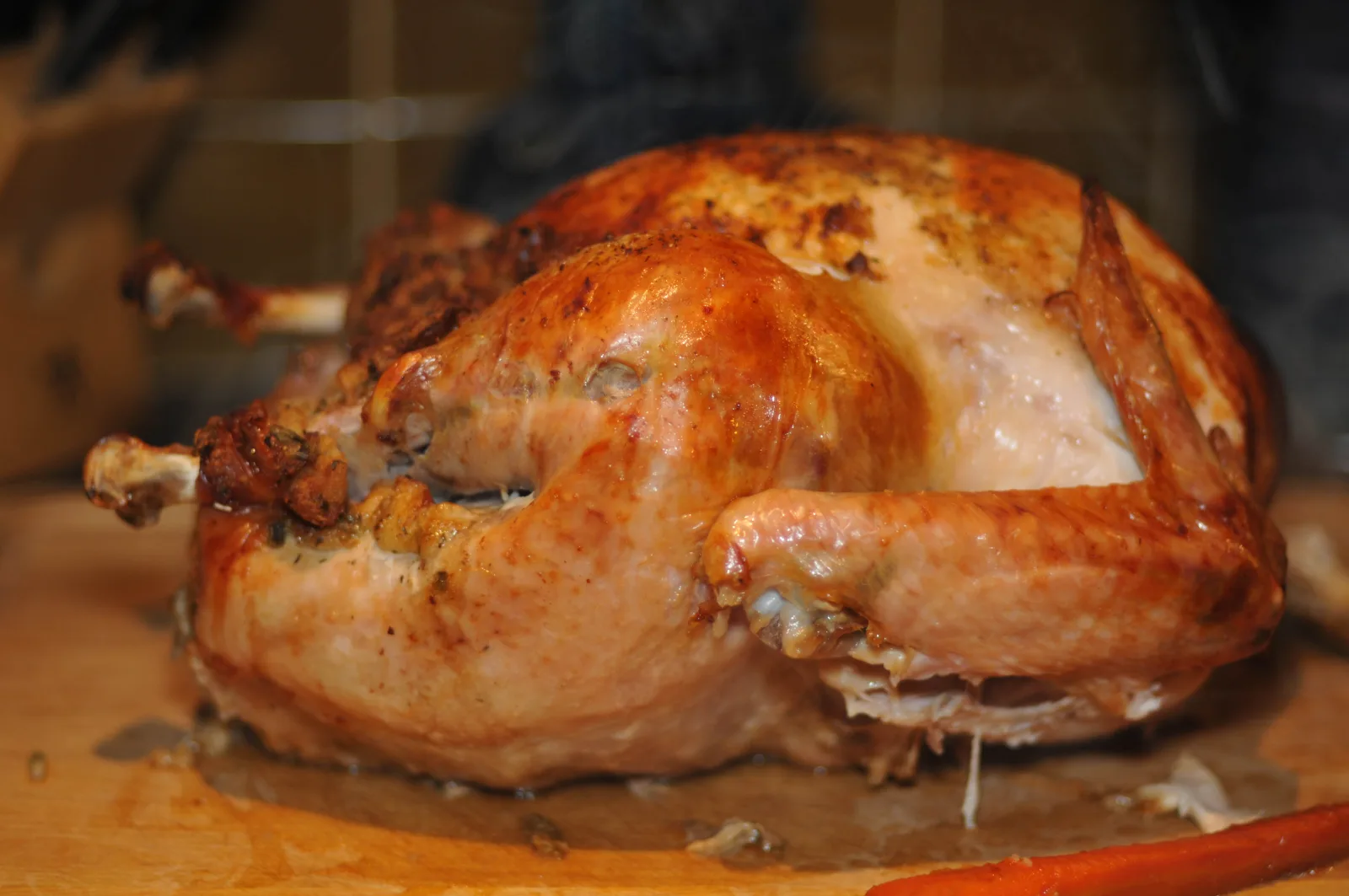
Every year, as the plates are cleared after a big festive meal, someone at the table blames the turkey for the sudden urge to nap. The story is familiar: turkey is rich in tryptophan, an amino acid that makes you sleepy, so the bird on your plate is the reason your eyelids feel heavy. It is a neat explanation, and it is wrong. Turkey contains no more tryptophan than chicken or beef, and the amount in a serving is far too small to make anyone drowsy. Verdict: False.
The myth
The claim rests on a chain of real biochemistry. Tryptophan is an essential amino acid, which means the body cannot make it and must get it from food. The body uses tryptophan to make serotonin, a brain chemical linked to mood and relaxation, and serotonin is then used to make melatonin, the hormone that helps control sleep. Because turkey is famous for tryptophan, the story goes, eating a large serving floods the brain with the building blocks of sleep.
The problem is that every link in that chain is weaker than the myth suggests. Turkey is not especially rich in tryptophan, and the amount that reaches the brain after a meal is tiny.
What the evidence shows
Encyclopaedia Britannica notes that the tryptophan in turkey is too low to cause drowsiness, and is actually lower than the level found in chicken. Scientific American puts the figure at about 509 mg of tryptophan in a 200-calorie serving of turkey, an average amount for a food, and points out that some other dishes served at the same meal can contain more.
Kent Vrana, a professor of pharmacology at Penn State College of Medicine who has studied tryptophan for his whole career, is blunt about it. All meats contain tryptophan, he says, and it is a myth that turkey contains more. He told Penn State that a person is just as likely to get sleepy from eating a cheeseburger as from a plate of turkey.
There is a second obstacle. When tryptophan is eaten as part of a protein-rich meal, it must compete with other amino acids to cross into the brain, and only a small share gets through. Britannica notes that tryptophan taken on its own, in certain doses and on an empty stomach, can make a person sleepy, but that is not how turkey is eaten. Most of the tryptophan we eat is used to build proteins in the body, not to make sleep chemicals. As Vrana puts it, 99.9 percent of the tryptophan we take in is used to make the structures in our bodies.
Why the turkey gets the blame
If the turkey is not the cause, why does the drowsiness feel so tied to the bird? Part of the answer lies in what is served with it. Dr Howard Markel of the University of Michigan explained to Scientific American that carbohydrate-rich meals trigger the pancreas to release insulin. Insulin helps the muscles take in large neutral branched-chain amino acids, but not tryptophan, so the ratio of tryptophan to other amino acids rises in the blood and in the fluid around the brain. The brain then converts that tryptophan into serotonin, which the pineal gland turns into melatonin.
In other words, the starchy sides, the bread, the stuffing and the pie help tryptophan reach the brain. The driver is the carbohydrate-heavy meal, not the turkey itself. The same effect would follow a large meal built around any meat.
Overeating plays its own part. A very large meal shifts blood flow toward the gut to deal with the load, the heart rate drops, and the body moves out of its alert state and into rest and digestion. Vrana calls the result post-prandial depression, the heavy, calm feeling after a feast. Alcohol, which often accompanies such meals, adds to the effect. Markel notes that too much wine, beer or spirits is bound to make a person sleepy.
What really makes you drowsy
The sleepiness after a big meal has several real causes, and none of them is the tryptophan in turkey. The list is short: too much food, too many carbohydrates, alcohol, and a long, relaxed meal eaten late in the day.
None of this means tryptophan is unimportant. It is an essential nutrient, and the body needs it to make proteins and brain chemicals. But the dose in a serving of turkey is far below anything that would change how sleepy you feel. The next time the table grows quiet after dinner, the honest culprit is the size of the meal and everything that came with the bird, not the bird itself.
Frequently Asked Questions
Does turkey contain more tryptophan than other meats?
No. Turkey contains about the same amount of tryptophan as chicken or beef, and less than some other foods. Experts say the idea that turkey is especially rich in tryptophan is a myth.
Can tryptophan from food make you sleepy?
Only in concentrated doses taken alone on an empty stomach. The amount in a normal serving of turkey is far too small, and other amino acids in the meal compete with it to enter the brain.
Why do I feel sleepy after a big meal?
Overeating, carbohydrate-rich food and alcohol are the main causes. A large meal shifts blood flow to the gut, and insulin changes the balance of amino acids in the blood, which can raise melatonin production.
Read More: Myths and Facts: Sugar Does Not Make Children Hyperactive
Read More: Myths and Facts: Cracking Your Knuckles Does Not Cause Arthritis
Read More: Myths and Facts: Coffee Does Not Dehydrate You, Studies Show
Read More: Myths and Facts: Vitamin C Does Not Prevent the Common Cold

Comments
Be the first to comment on this story.