


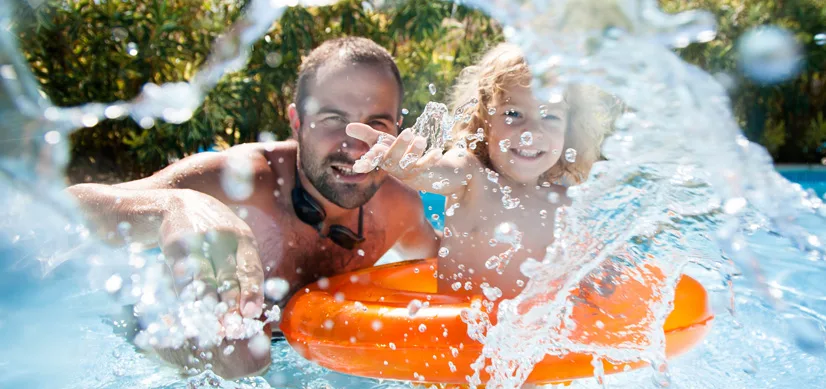
Wait 30 minutes after eating before you get in the water, or you will get cramps and drown. Almost everyone has heard this warning from a parent, a teacher or a camp counsellor. It sounds like sensible safety advice, and it has been repeated for more than a century. But there is no evidence behind it. Eating before swimming does not cause cramps, and no drowning has ever been linked to a recent meal. Verdict: False.
The myth
The claim is that swimming on a full stomach diverts blood away from the arms and legs and sends it to the stomach to help with digestion. Starved of blood and oxygen, the muscles supposedly cramp up, leaving the swimmer unable to move and at risk of drowning. The rule that follows is familiar: wait 30 minutes, or even an hour, after eating before swimming.
The warning has a long history. Fact-checking site Snopes traces it to a 1908 edition of the British Boy Scout handbook, which warned that bathing within an hour and a half of a meal could cause cramp so severe that a swimmer could not move their arms or legs. The advice crossed to the American Boy Scout handbook in 1911 and stayed there in some form until 1967. Parents, camps and swimming teachers kept repeating it long after that, and it is still passed on today.
What the evidence shows
The idea has been tested, and it has not held up. Scientists in the 1960s ran human trials to test the effect of swimming after eating on the body and on swimming ability. They found no effect on performance and only minimal side effects at several different time intervals after a meal.
A scientific review by the American Red Cross Scientific Advisory Committee, published in the International Journal of Aquatic Research and Education in 2011, surveyed the scholarly literature on the question. It found no reported cases of eating before swimming causing or contributing to fatal or non-fatal drowning in any of the literature searched. Its conclusion was plain: food intake restrictions before swimming are unnecessary, and the idea that eating before swimming is a drowning risk can be dismissed as a myth. No major medical or safety organisation makes any current recommendation to wait before swimming after eating.
Doctors who treat drowning say the same. Dr Linda Quan, an emergency physician at Seattle Children's Hospital who has researched drowning prevention for much of her career, told Inverse that there is no science and no basis to the claim. Dr Mark Messick, a family medicine doctor at Duke Primary Care, explains that the body does supply extra blood to aid digestion, but not enough to stop the arm and leg muscles from working properly.
What really causes cramps in the water
If eating is not the cause, what is? Muscle cramps during swimming are most often linked to fatigue, dehydration or an electrolyte imbalance, according to Dr Maria Alvarez, a family medicine physician at Marshfield Clinic. A swimmer can get a cramp even on an empty stomach, and a full stomach does not make one more likely.
There is one genuine warning in this area, and it concerns alcohol, not food. Dr Alvarez notes that drinking alcohol increases the risk of a vocal cord spasm if water enters the windpipe while swimming. That is a real reason to stay out of the water after drinking.
A heavy meal can still make vigorous swimming uncomfortable. Doctors note that strenuous exercise right after a large meal can cause nausea, because blood flow shifts toward the working muscles. For a hard training session, waiting an hour is sensible. But for ordinary recreational swimming, there is no medical reason to sit on the poolside watching the clock.
Frequently Asked Questions
Do I need to wait 30 minutes after eating before swimming?
No. Studies and doctors say there is no evidence that eating before swimming causes cramps, and no major medical or safety organisation recommends waiting.
Can eating before swimming cause drowning?
No case of drowning caused by swimming after eating has ever been documented. The American Red Cross scientific review found no such cases in the literature it searched.
What actually causes cramps while swimming?
Cramps are usually caused by fatigue, dehydration or an electrolyte imbalance. They can happen whether or not you have eaten.
Read More: Myths and Facts: Sugar Does Not Make Children Hyperactive
Read More: Myths and Facts: Cracking Your Knuckles Does Not Cause Arthritis
Read More: Myths and Facts: Coffee Does Not Dehydrate You, Studies Show
Read More: Myths and Facts: Vitamin C Does Not Prevent the Common Cold

Comments
Be the first to comment on this story.