


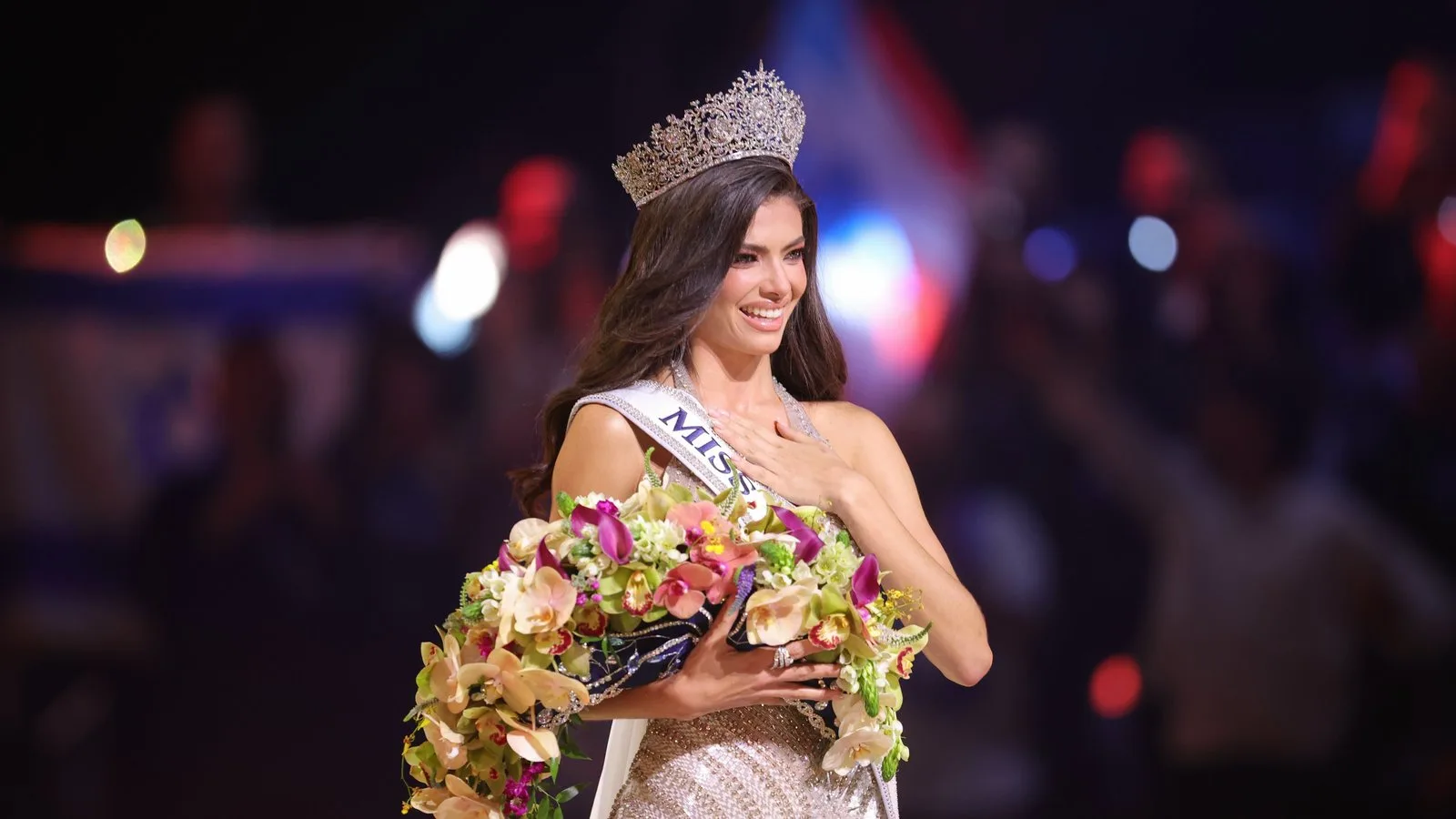
Jennifer Barreto of Puerto Rico was crowned Miss Universe 2026 on Wednesday, 25 November, at the finale in San Juan, Puerto Rico, in the 75th edition of the international beauty pageant. Contestants from the Philippines, New Zealand, Venezuela and the Dominican Republic joined her in the Top 5, while India's Kaziah Liz Mejo, 19, bowed out after failing to make it to the Top 12.
The crowning should have been the story. Instead, the 75th edition arrived carrying the same troubles that marred last year's pageant in Thailand, from an ownership fight and questions over judging to countries barred from taking part and concerns about the safety of contestants. Here are the five problems plaguing one of the world's best known beauty pageants.
Nobody knows who runs Miss Universe
Thai media company JKN Global Group, headed by Anne Jakkaphong Jakrajutatip, bought the pageant for 20 million dollars in 2022. The company filed for bankruptcy a year later and sold a 50 per cent stake to Mexican businessman Raul Rocha Cantu in 2024.
Both owners have since been named in separate criminal investigations in their countries and have disappeared from public view. Anne was sentenced in absentia to two years in prison in a fraud case, while a Mexican judge issued a fresh arrest warrant against Rocha in October over allegations of organised crime and money laundering.
An investigation published on Tuesday found that both owners had sought to sell their stakes ahead of last year's pageant. Disputes over these transactions have split the organisation into two rival camps that run competing Miss Universe websites and issue contradictory statements, including on whether Vietnam will host next year's pageant. The dispute has also drawn scrutiny from Puerto Rico's Senate over 8.7 million dollars in public funds committed to hosting this year's pageant.
Questions over how winners are chosen
Ahead of the 2025 finale, two judges quit. One of them, Lebanese-French composer Omar Harfouch, alleged that finalists had been preselected by an unofficial jury and that the victory of Mexico's Fatima Bosch had been predetermined. He claimed business ties between Rocha and Bosch's father, an adviser to Mexico's state-owned oil company Pemex, had influenced the outcome.
Rocha denied the allegation, saying his company's contract with Pemex predated his acquisition of a stake in Miss Universe. The Miss Universe Organization denied Harfouch's allegations and sued him for defamation and breach of contract. Its parent company said in a court filing that the allegations had cost it sponsorship revenue and reduced the funding promised by Puerto Rico.
Two other judges raised concerns about the absence of independent auditing and the lack of publicly available scores. The pageant previously employed independent auditors such as Ernst and Young to oversee voting. "It didn't seem like our scoring had any impact on the final results," Natalie Glebova, Miss Universe 2005 and one of last year's judges, said. This year's nine-member judging panel was announced just a day before the finale, unusually late compared with previous years.
Who could not take part
Miss Universe licenses its brand to national pageant organisers, and the Glamanand Group has held the Indian franchise since 2024. This year, contestants from six Southeast Asian countries, Indonesia, Laos, Malaysia, Singapore, Vietnam and Thailand, were barred from participating over a dispute between the rival Miss Universe camps about the validity of their franchise licences.
Contestants from Nepal and five African countries withdrew over US visa issues. France presented a different problem. The Miss France organisation, which had sent contestants to every edition since 1952, withdrew its representative this year over concerns about the pageant's management, and the organisers appointed a committee to select another French contestant.
Last year, Rocha acknowledged that visa restrictions faced by Ivory Coast's Olivia Yace had counted against her. Yace, who finished fourth runner-up, later relinquished her regional Miss Universe title.
The pageant has also become a platform for geopolitical tensions. This year, Israel's contestant drew boos from the audience during the national costume round after unveiling a cape bearing the word "peace" in Hebrew, Arabic and English, and the costume sparked allegations of AI-generated imagery. Palestine, which made its Miss Universe debut last year, could not field a contestant this year owing to financial constraints.
The safety and treatment of contestants
Several contestants walked out of a Miss Universe event last year after Thai pageant director Nawat Itsaragrisil publicly berated Bosch over her participation in promotional activities and called security to escort her out. He subsequently apologised. Jamaica's Gabrielle Henry, who says she suffered a serious brain injury after falling from the stage during the 2025 competition, has sued the Miss Universe Organization, alleging negligence.
Safety concerns resurfaced this year after several contestants nearly fell while walking on a makeshift beach runway in Puerto Rico. The Miss Universe Organization distanced itself from the event, which it said was independently organised. Bosch, meanwhile, said she had received insults and even death threats following her victory.
An outdated format and dwindling audiences
Miss Universe was founded in 1952 by a California swimwear company, and it earns revenue from franchise fees, broadcast rights and sponsorships. The pageant only began allowing married women and mothers to compete in 2023, and lifted its upper age limit of 28 in 2024. It continues to hold a swimsuit round, which has been part of its competition since its inception, even as rival competitions such as Miss World and Miss America have moved away from the format.
Despite the changes, the pageant continues to favour conventional beauty standards. "The same body types tend to win," Hilary Levey Friedman, a sociologist who has studied beauty pageants, has said. Questions about those standards have coincided with declining popularity in Western countries.
Miss Universe was once a fixture on primetime American television. Donald Trump, who owned or co-owned the pageant between 1996 and 2015, used the spectacle to promote his business empire, and in 2002 he brought NBC on board as a co-owner and broadcaster. Today, the English-language broadcast of Miss Universe is available in the US only via streaming platforms. Pageants remain popular across parts of Asia, Africa and Latin America, and the Spanish-language broadcast of last year's pageant drew 2.6 million viewers in the US, up from 2.1 million the previous year.
Frequently Asked Questions
Who won Miss Universe 2026?
Jennifer Barreto of Puerto Rico was crowned Miss Universe 2026 on 25 November in San Juan, Puerto Rico. Contestants from the Philippines, New Zealand, Venezuela and the Dominican Republic joined her in the Top 5, while India's Kaziah Liz Mejo bowed out before the Top 12.
Why is Miss Universe facing an ownership dispute?
JKN Global Group bought Miss Universe in 2022, filed for bankruptcy a year later and sold a 50 per cent stake to Mexican businessman Raul Rocha Cantu in 2024. Both owners face criminal investigations in their countries, and disputes over their stakes have split the organisation into two rival camps that run competing websites.
Why were some countries missing from Miss Universe 2026?
Contestants from six Southeast Asian countries were barred over a dispute about the validity of their franchise licences. Nepal and five African countries withdrew over US visa issues, France withdrew its contestant over management concerns, and Palestine could not field a contestant owing to financial constraints.
Read More: Explained: What Is a Civilisational State and Why Nations Are Using It in Foreign Policy
Read More: Explained: G20 Johannesburg Summit, Six Proposals by Modi
Read More: Explained: Why COP31 Ended With No Climate Deal for India
Read More: Explained: Ganga Water Treaty Ends December 12, What Happens Next


Comments
Be the first to comment on this story.