


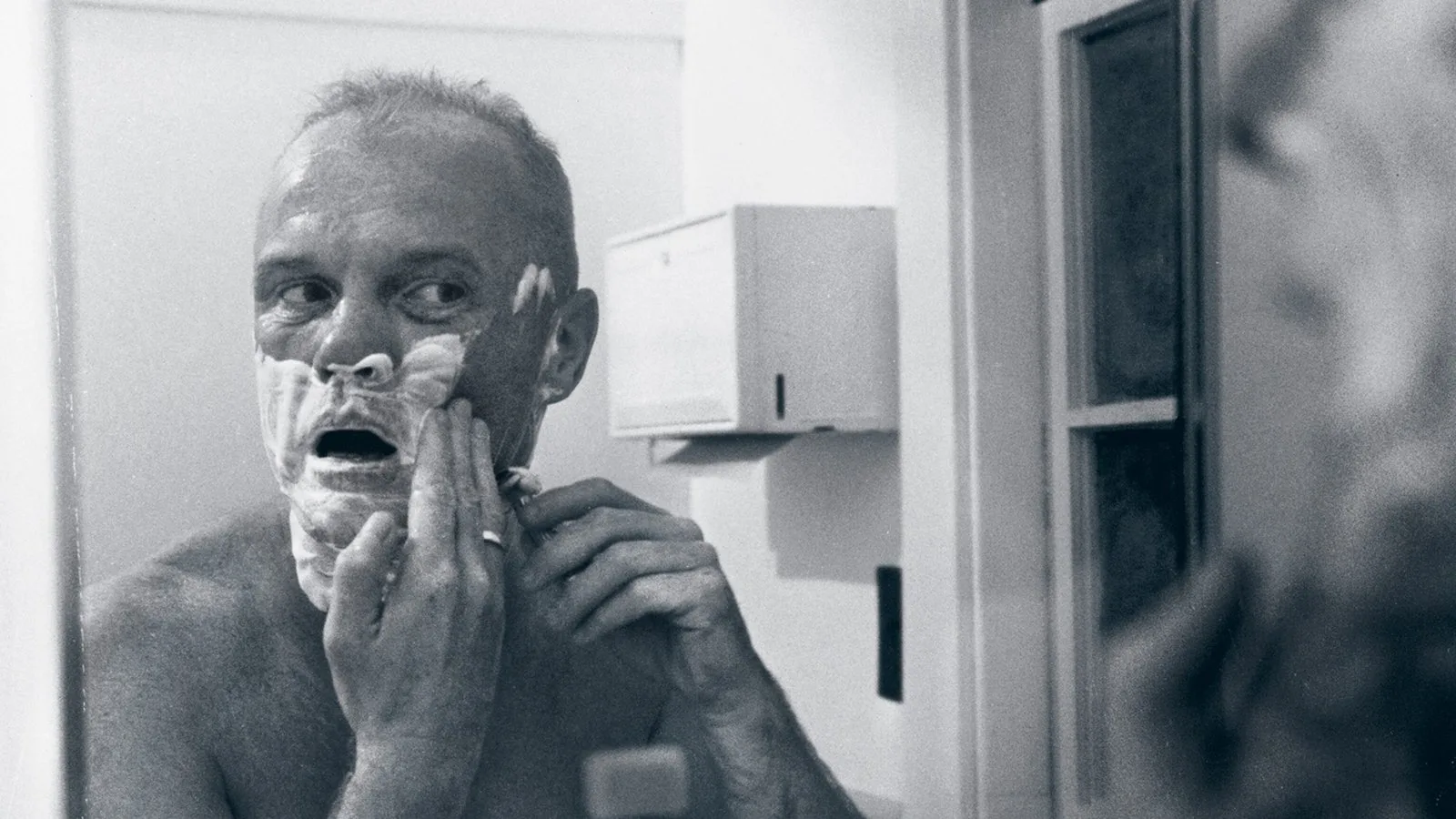
Shave once and the hair comes back thicker, darker and faster. That is what generations of parents, barbers and bathroom wisdom have claimed, and it is false. Shaving cannot change how hair grows, because a razor only cuts the dead part of the hair above the skin. The thicker regrowth people swear they can see is an illusion created by the blunt tip of a cut hair. Scientists have tested the claim for nearly a century, and the answer has not changed.
The claim
The claim is simple and it is repeated everywhere. Every shave, the story goes, trains the hair to come back stronger. The new hair is supposed to be thicker, darker and faster growing than the hair that was cut away. Parents warn teenagers about it, and adults repeat it as settled fact when they notice stubble coming in coarse after a shave.
It feels true, because the change after a shave is real and easy to feel. Stubble is rough to the touch and looks darker than the hair it replaced. But feeling different and being different are not the same thing. The hair that grows back is the same hair, cut to a different shape.
What the experiments found
The first careful test came in 1928. Mildred Trotter, an anatomist at Washington University in St. Louis, published a study called "Hair Growth and Shaving" in The Anatomical Record. She shaved a marked patch of skin on her subjects and measured the stubble that grew back at set intervals, tracking how fast the hair returned and whether its character changed. She found no sign that shaving made the hair grow faster, thicker or darker. A later history of the subject described it as the first paper to demonstrate that shaving does not affect hair growth.
The strongest test came in 1970, in the Journal of Investigative Dermatology. Researchers Y. L. Lynfield and P. Macwilliams asked five healthy young men to shave one leg every week for several months and to leave the other leg alone for comparison. They measured how much hair grew in a marked patch of skin, how wide each hair was and how fast it grew. They found no significant differences in any of these measurements that could be put down to shaving.
The wider medical literature agrees. In 2007, researchers Rachel Vreeman and Aaron Carroll reviewed common medical myths in the BMJ and concluded that the 1928 trial showed shaving had no effect on hair growth, and that more recent studies confirm it. The Mayo Clinic states it plainly: shaving does not affect the colour, thickness or rate of growth of hair. The Cleveland Clinic says the same, calling the idea a myth and noting that shaving will not make hair regrow any thicker or faster.
A few early studies did report faster growth after shaving, in 1926, 1937 and 1961, and some animal studies pointed the same way. But the controlled trials that followed, above all the 1970 leg study, did not reproduce those results. The modern consensus, built on controlled comparisons rather than impressions, is clear.
Why shaved hair feels thicker
The explanation lies in what a razor actually does. Each hair is produced by a follicle, a tiny pocket in the skin. The part of the hair you see above the skin is no longer living tissue. It is dead keratin, and cutting it sends no signal down to the follicle telling it to speed up or thicken. The follicle, and not the razor, decides how thick a hair is, what colour it is and how fast it grows.
What shaving does change is the shape of the tip. A hair that grows naturally tapers to a fine point. A razor slices straight through the shaft and leaves a blunt, flat end at the hair's full width. As the Mayo Clinic explains, that blunt tip can feel coarser and look darker as it pokes back through the skin, even though the hair's thickness, colour and growth rate have not changed at all.
The difference is easy to list.
- Shaving changes the shape of the hair tip, from tapered to blunt. - Shaving does not change the thickness of the hair shaft. - Shaving does not change the colour of the hair. - Shaving does not change how fast the hair grows. - Shaving does not change the follicle, which controls all of the above.
Why the myth survives
If the science has been settled since 1928, why does the warning survive? The first reason is timing. Boys usually start shaving at the same age their hormones begin thickening their facial hair. The beard gets coarser over the teenage years whether or not a razor ever touches it, but the shaving gets the blame because it arrives at the same moment.
The second reason is the stubble itself. The blunt, short regrowth really does feel different from unshaved hair, and people trust what their fingers tell them. The sensation is genuine. The conclusion drawn from it is wrong.
The third reason is that the claim is passed on with total confidence by people who have never checked it. It sounds like practical wisdom, and it is repeated in barbershops, locker rooms and family kitchens until it feels like something everyone knows.
The verdict
Shaving does not make hair grow back thicker, darker or faster. Controlled studies in 1928 and 1970 found no change in the weight, width or growth speed of shaved hair, and reviews of the evidence since then have confirmed the finding. What changes is only the tip of the hair, cut flat instead of tapered, and that blunt end is what feels coarse and looks dark. The myth has survived for a century on a trick of the fingertips, not on any change in the hair itself.
Frequently Asked Questions
Does shaving make hair grow back thicker?
No. Controlled studies since 1928 have found no change in hair thickness after shaving. A 1970 trial in the Journal of Investigative Dermatology had five men shave one leg for months while leaving the other alone, and measured no significant difference in hair width, weight or growth speed. The Mayo Clinic and the Cleveland Clinic both confirm that shaving does not affect hair thickness.
Why does hair feel coarser after shaving?
Because a razor leaves a blunt tip. A hair that grows naturally tapers to a fine point, but a shaved hair is cut straight across at its full width. That blunt end feels rough to the touch and can look darker as it grows back through the skin, even though the hair itself has not changed.
Does shaving affect how fast hair grows?
No. Hair growth speed is set by the follicle beneath the skin, and shaving only removes the dead part of the hair above the surface. Mildred Trotter's 1928 study measured regrowth after shaving and found no change in growth rate, and later controlled studies reached the same conclusion.
Read More: Myths and Facts: Vikings Did Not Wear Horned Helmets
Read More: Myths and Facts: Humans Have More Than Five Senses
Read More: Myths and Facts: Einstein Did Not Fail Maths at School
Read More: Myths and Facts: Sugar Does Not Make Children Hyperactive

Comments
Be the first to comment on this story.