


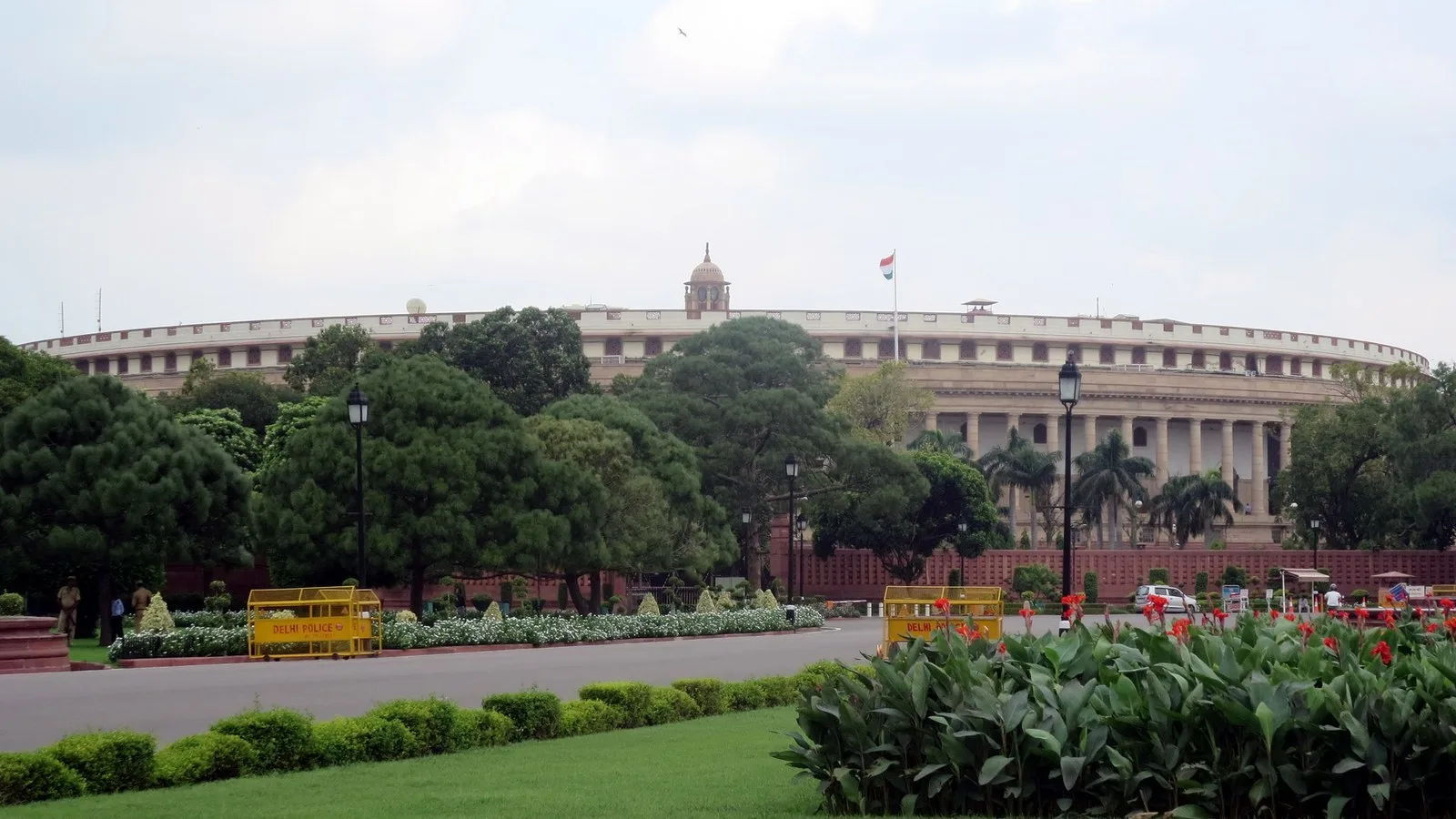
India marks Constitution Day, or Samvidhan Divas, on November 26 every year. On this day in 1949, the Constituent Assembly adopted the Constitution of India. This year, November 26, 2026, is the 77th anniversary of that adoption. Prime Minister Narendra Modi marked the day with an article titled "A commitment to strengthen our Constitution", reflecting on the document's role in shaping the country's journey.
Why November 26?
The Constituent Assembly adopted the Constitution on November 26, 1949. It came into full force two months later, on January 26, 1950, which India celebrates as Republic Day. The government decided in 2015 to mark November 26 as Constitution Day, to mark the 125th birth anniversary of Dr B R Ambedkar, the chairman of the Drafting Committee.
In his article, Mr Modi paid tribute to Dr Rajendra Prasad, who chaired the Constituent Assembly, Dr Ambedkar and every member of the Assembly. He wrote that the framers drew extensively from India's civilisational wisdom while shaping a modern document, and that the Constitution should resonate far beyond Parliament and the courts, in the everyday lives of citizens, especially young people.
How the Constitution was made
The Constituent Assembly was elected indirectly by the provincial legislatures under the Cabinet Mission Plan of 1946, with representatives of the princely states. After Partition it had 299 members. Jawaharlal Nehru moved the Objectives Resolution on December 13, 1946, setting out the ideals of an independent, sovereign republic guaranteeing justice, equality and freedom, with safeguards for minorities and backward classes.
The Assembly included 15 women members, among them Hansa Mehta, Durgabai Deshmukh, Rajkumari Amrit Kaur and Dakshayani Velayudhan. Dr Ambedkar introduced the Draft Constitution on November 4, 1948. In his final speech to the Assembly on November 25, 1949, he warned that political democracy must be made a social democracy, that people must give up unconstitutional methods, and that they must not lay their liberties at the feet of even a great man.
What the Prime Minister said this year
In his Constitution Day article, Mr Modi said his government's endeavour has been to deepen the Constitution's connect with the collective consciousness of people, especially the youth, and to strengthen the spirit of unity. He recalled his own childhood in a family of modest means, writing: "That a child born into a family of modest means, with no privileges or advantages of birth, could one day be entrusted with the responsibility of serving the world's largest democracy speaks volumes about how extraordinary our Constitution is."
He pointed to three constitutional amendments brought in by his government: the 101st Amendment, which ushered in the Goods and Services Tax; the 102nd Amendment, which gave constitutional status to the National Commission for Backward Classes; and the 103rd Amendment, which extended reservation to Economically Weaker Sections.
The article also linked welfare schemes to the Directive Principles of State Policy, the part of the Constitution that guides the state towards social and economic justice. It cited the PM Awas Yojana for housing, the PM Ujjwala Yojana for clean cooking fuel, Ayushman Bharat for healthcare, PM MUDRA Yojana and PM-SVANidhi for collateral-free credit, and UPI for digital payments. A World Bank report quoted in the article estimates that nearly 50 crore Indians have been lifted out of poverty.
The Constitution in 22 languages
For the first time since 1950, an updated version of the Constitution is now available in all 22 languages of the Eighth Schedule, Mr Modi wrote. The move, he said, brings the document closer to people in their own languages.
The article also pointed to the Bharatiya Nyaya Sanhita, which replaced the colonial-era Indian Penal Code, as a fundamental shift in criminal justice, moving from a colonial emphasis on punishment to a citizen-centric pursuit of justice. Mr Modi described this shift with the words Dand, meaning punishment, and Nyay, meaning justice.
Rights, duties and the road to 2047
The Prime Minister set out two guiding principles as India works towards Viksit Bharat by 2047: "India First in our thinking and Kartavya in our actions." Kartavya means duty, and the article stressed the Fundamental Duties in Part IV-A of the Constitution, added by the 42nd Amendment in 1976. It suggested that schools and colleges celebrate Constitution Day by honouring first-time voters turning 18.
Mr Modi also noted two milestones that fall in 2026: 75 years since the First Amendment of 1951, and 50 years since the implementation of the 42nd Amendment during the Emergency. The article argued that the 42nd Amendment had concentrated power and curtailed freedoms, and said his government had worked to undo that legacy.
The article said the government had eliminated Naxalism this year, so that people in affected areas, particularly tribal communities, can exercise their constitutional rights without fear. The claim is the government's own account of its record, and the security situation in the affected districts remains a subject of official reporting.
Frequently Asked Questions
When is Constitution Day celebrated in India?
Constitution Day, or Samvidhan Divas, is celebrated on November 26 every year. It marks the day in 1949 when the Constituent Assembly adopted the Constitution of India. The Constitution came into force on January 26, 1950, which is celebrated as Republic Day.
Why was November 26 chosen as Constitution Day?
November 26, 1949, is the day the Constituent Assembly adopted the Constitution. The government decided in 2015 to observe the day as Constitution Day, to mark the 125th birth anniversary of Dr B R Ambedkar, chairman of the Drafting Committee.
What did PM Modi say on Constitution Day 2026?
In an article titled "A commitment to strengthen our Constitution", Prime Minister Narendra Modi said the Constitution must resonate in citizens' everyday lives, especially among the youth. He highlighted the Constitution now being available in all 22 Eighth Schedule languages, the shift from punishment to justice under the Bharatiya Nyaya Sanhita, and the principles of "India First" in thinking and "Kartavya" in action on the road to Viksit Bharat by 2047.
Read More: Explained: Ganga Water Treaty Ends December 12, What Happens Next
Read More: Explained: G20 Johannesburg Summit, Six Proposals by Modi
Read More: Explained: How NSE Became the World's Fifth Largest Listed Exchange
Read More: Explained: Sensex Surges 2,000 Points, What Is Behind the Rally
Comments
Be the first to comment on this story.