


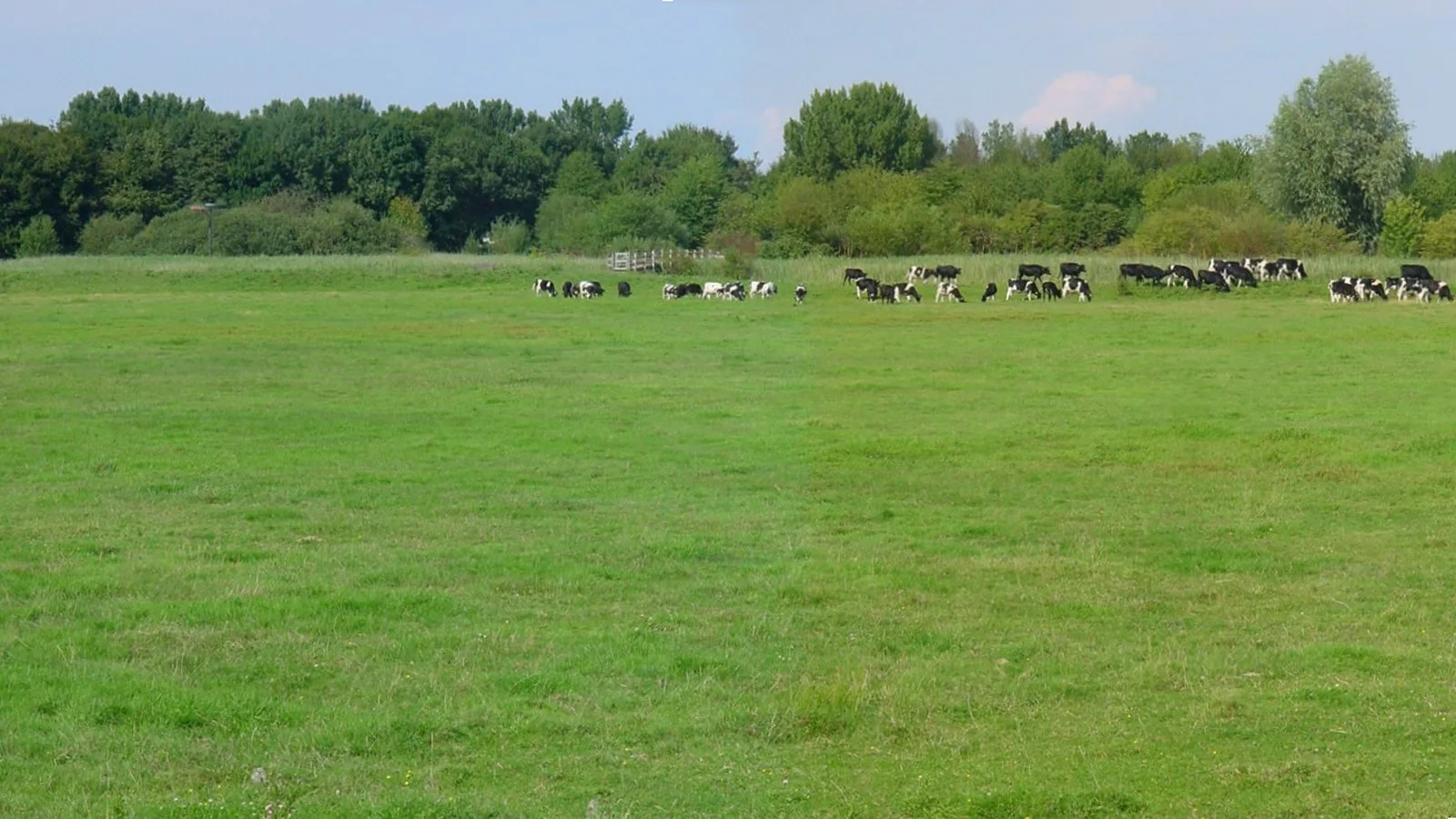
Ask a schoolchild how many stomachs a cow has and the answer comes back instantly: four. It is one of the most repeated facts in school science, and it is wrong. Cows have one stomach, divided into four compartments that work in sequence to digest grass. Washington State University's animal sciences department lists it plainly as a myth: cattle have four stomachs is false. Verdict: False.
The claim
The claim is simple and sounds scientific: a cow has four stomachs, one for each stage of digesting tough grass. It appears in textbooks, children's books and quiz shows, and most adults repeat it without a second thought. The idea seems to fit what we see. A cow eats grass, brings it back up, chews it again and again, and somehow turns a diet no human could survive on into milk and muscle. Surely that takes four stomachs.
It does take four chambers, but chambers are not stomachs. The difference is anatomical, not pedantic. A cow has a single stomach, one continuous organ, divided by folds into four compartments: the rumen, the reticulum, the omasum and the abomasum. Food passes through them in one circuit, not through four separate organs with separate exits.
One stomach, four compartments
Britannica puts it plainly: ruminants such as cattle, sheep and goats do not have four separate stomachs; they possess a single stomach divided into four specialised compartments. The University of Minnesota's veterinary guidance describes the same layout, and the Animal Agriculture Alliance agrees: cows and other ruminants have one stomach with four compartments.
Each compartment does a distinct job, which is exactly why the myth survives. The rumen is the first and largest compartment, a fermentation vat that holds 25 to 50 gallons in a mature cow. It is packed with trillions of microbes that break down cellulose, the tough fibre in grass that mammals cannot digest on their own. Fermentation there produces volatile fatty acids, which the cow absorbs as its main source of energy. About 70 to 80 percent of digestion happens in the rumen.
The reticulum sits next to the rumen and shares its contents. Its inner lining looks like a honeycomb, and it helps form the bolus of partly digested feed that the cow brings back up to chew again as cud. The two are so closely linked that anatomists often call them the reticulorumen. The reticulum is also where swallowed wire or nails can lodge and pierce the wall, causing the condition farmers call hardware disease.
The omasum is a globe shaped compartment lined with many thin folds that resemble the pages of a book, which is why it is nicknamed the manyplies or the butcher's bible. It acts as a filter and a pump, absorbing water and minerals and moving the feed onward.
The abomasum is the last compartment and the only one that works like a human stomach. It is called the true stomach because it secretes hydrochloric acid and enzymes such as pepsin, which digest proteins, including the microbial protein made upstream in the rumen. From there the feed passes into the small intestine.
Why the myth survives
The myth survives because the four compartments look and behave so differently that they feel like separate organs. One ferments, one sorts and forms cud, one filters, one digests with acid. School diagrams draw them as four labelled sacs in a row, and the shorthand "four stomachs" is easier to remember than "one stomach with four compartments".
Cud chewing adds to the confusion. A cow swallows grass quickly, ferments it in the rumen, then regurgitates it and chews it thoroughly a second time. Watching an animal apparently eat the same mouthful twice makes the four stomach idea feel obvious. In reality it is one stomach running a clever loop: ferment, regurgitate, re-chew, ferment again, then digest.
Cows are not unusual in this design. Sheep, goats, deer, antelope, bison and buffalo are all ruminants with the same four compartment stomach. Horses and rabbits, by contrast, are pseudo-ruminants: they ferment fibre too, but in the hindgut, with a single chambered stomach. The four compartment layout is a ruminant adaptation for living on grass, not a set of spare stomachs.
Verdict: False
Cows do not have four stomachs. They have one stomach with four compartments, the rumen, reticulum, omasum and abomasum, connected in a single circuit. Only the abomasum secretes acid and works like a human stomach; the first three are fermentation and sorting chambers run by microbes. The "four stomachs" line is a simplification that outlived its usefulness, and the correct statement is shorter than the myth: one stomach, four parts.
Frequently Asked Questions
Do cows have four stomachs?
No. Cows have one stomach divided into four compartments: the rumen, reticulum, omasum and abomasum. The compartments are connected and food flows through them in a single circuit. Washington State University lists "cattle have four stomachs" as a myth, and Britannica states the same.
What is the rumen?
The rumen is the largest compartment of a cow's stomach, holding 25 to 50 gallons in a mature animal. It is a fermentation vat packed with trillions of microbes that break down cellulose from grass into volatile fatty acids, which the cow absorbs for energy. About 70 to 80 percent of digestion happens there.
Why do cows chew cud?
Cows swallow grass quickly, ferment it in the rumen, then bring it back up and chew it again as cud. Re-chewing breaks the fibres down further so the microbes can ferment them more completely. The reticulum helps form the cud, and the cycle repeats until the feed is fine enough to pass to the omasum and then the abomasum.
Read More: Myths and Facts: The Great Wall of China Is Not Visible From Space
Read More: Myths and Facts: Drinking Alcohol Does Not Warm You Up in Cold Weather
Read More: Myths and Facts: Chameleons Do Not Change Colour to Match Their Background
Read More: Myths and Facts: Lightning Does Strike the Same Place Twice

Comments
Be the first to comment on this story.