


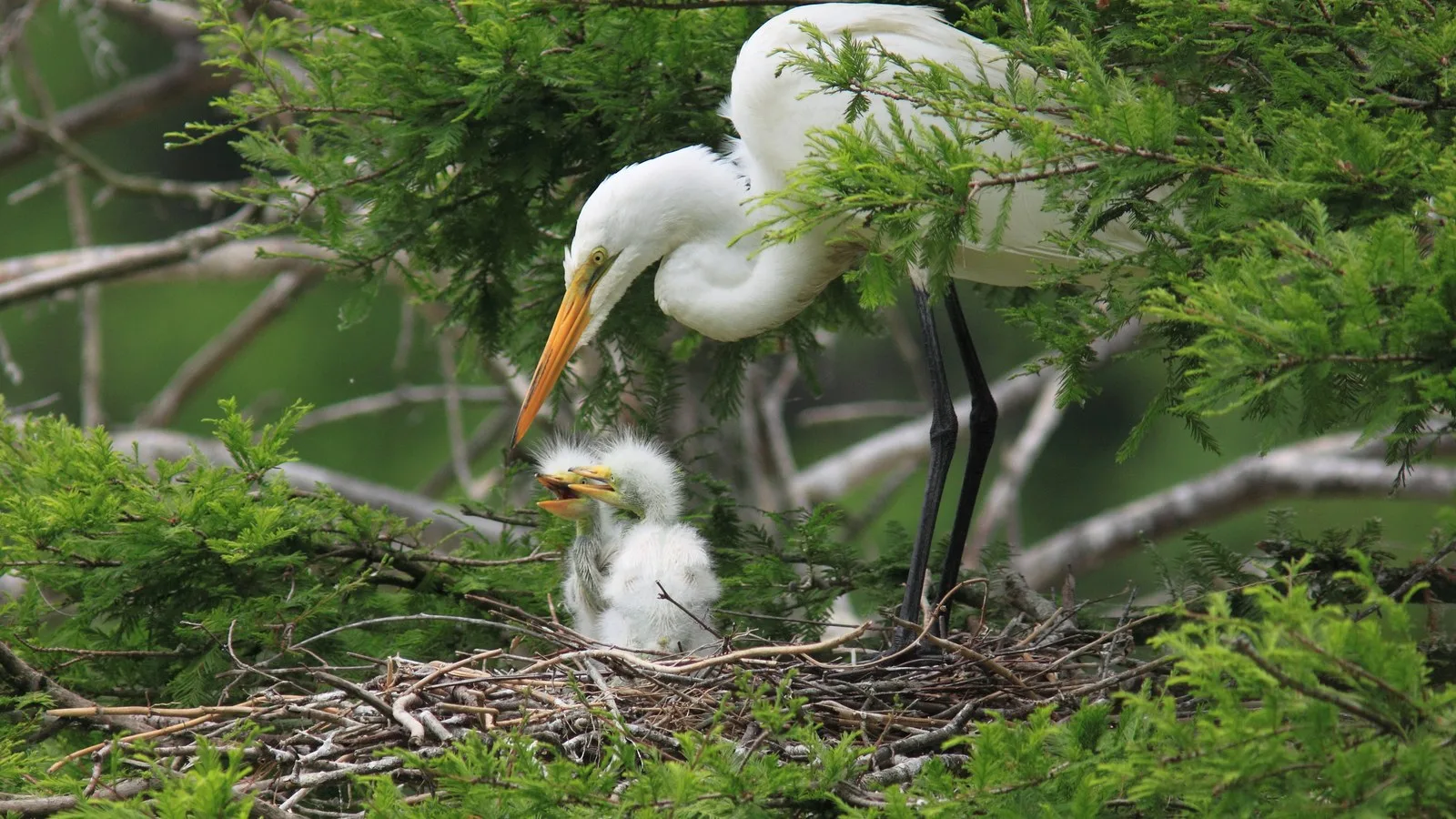
Every child has heard the warning: never touch a baby bird, or its mother will smell your hands on it and abandon it. It is wrong. Touching a baby bird does not make its mother abandon it, and the Cornell Lab of Ornithology states plainly that it is a myth that parent birds will abandon young touched by humans. Verdict: False.
The claim
The claim runs like this: a mother bird knows her chicks by smell, so a chick handled by a person carries human scent, and the mother rejects it and leaves it to die. It is told with such confidence that most people never question it. Adults who find a fallen chick often walk away, afraid that helping will do more harm than good.
The logic fails at its first step. For the myth to work, birds would need a keen sense of smell and a habit of identifying their young by scent. Most birds have neither. The Alaska Department of Fish and Game, citing a 2007 Scientific American article on the subject, calls the belief one that "denies basic bird biology and animal parents' innate drive to nurture their broods".
Birds barely smell at all
Most birds have a poor sense of smell. They find food, recognise their mates and identify their chicks mainly by sight and sound, not scent. Miyoko Chu, a biologist at the Cornell Lab of Ornithology, puts it simply: "Birds don't have a very strong sense of smell, so you won't leave a scent that will alarm the parent."
There are exceptions. Turkey vultures can smell carrion from far away, and some seabirds use scent to find food over the ocean. But even those birds do not use smell to judge their chicks, and no evidence shows any species rejecting a nestling because a human touched it. As Chu notes, "Usually, birds are quite devoted to their young and not easily deterred from taking care of them." A parent that has spent weeks building a nest, sitting on eggs and feeding chicks will not throw that investment away over a smell it can barely detect. Birds recognise their young mainly by sight and by the sound of their chirps.
Why the myth survives
The myth survives because it contains a grain of truth, wrapped around the wrong cause. Birds can and do abandon nests, but the cause is disturbance, not scent. A bird flushed from its nest again and again by people standing nearby may decide the site is unsafe and leave. The National Audubon Society warns that continued disturbance near a nest can lead to abandonment, and can also leave a scent trail that draws predators such as cats, crows and foxes to the nest.
Tom Hahn, an ornithologist at the University of California, Davis, says the real danger is human activity around the nest attracting predators. The risk is the commotion, not the touch.
The myth also survives because it is useful: it keeps curious children away from nests.
What to do if you find a baby bird
Knowing the myth is false does not mean every baby bird on the ground needs rescuing. Most do not. The right response depends on what kind of young bird it is.
* If the bird has no feathers, or only a few wisps of down, and its eyes are closed, it is a nestling. It has fallen out too soon. If you can see the nest, gently pick the bird up and put it back. The parents will not reject it, and will resume feeding it. * If the bird is feathered, can hop and grip your finger, it is a fledgling. It has left the nest on purpose and is learning to fly. Its parents are almost certainly watching from a nearby branch. Leave it alone and move away so the parents feel safe enough to return. * If the bird is in immediate danger, on a road or in a place full of cats, move it gently to the nearest bush or low branch, out of harm's way. * If the bird is visibly sick, injured or dangerously cold, or you are certain it is orphaned, call a local wildlife rehabilitator or vet before doing anything else.
Whitney Yoerger of Indiana Audubon sums it up: "A lot of people believe that if our scent gets on a baby bird that the parents are going to reject the fledgling or nestling, and that's not true." The best help you can give a baby bird is usually to step back and let its parents do their job.
Verdict: False
Touching a baby bird does not make its mother abandon it. Most birds have too poor a sense of smell to notice human scent, and they recognise their young by sight and sound. Parents are far too invested in their chicks to give them up over a touch. What can drive birds from a nest is repeated disturbance, so the wise rule is not "never touch", it is "do not linger". Put a fallen nestling back, leave a fledgling alone, and walk away.
Frequently Asked Questions
Will a mother bird abandon her baby if I touch it?
No. The Cornell Lab of Ornithology confirms it is a myth that parent birds abandon young touched by humans. Most birds have a poor sense of smell and recognise their chicks by sight and sound, and nesting birds invest too much time and energy in rearing their young to abandon them over human scent.
Can I put a fallen baby bird back in its nest?
Yes, if it is a nestling, a featherless chick with its eyes closed. Gently pick it up and place it back in the nest if you can reach it. The parents will not reject it. If the bird is feathered and hopping, it is a fledgling learning to fly, and you should leave it alone.
Why do people believe birds abandon touched chicks?
The myth likely began as a warning to stop children disturbing nests, and it stuck because birds do sometimes abandon nests after repeated human disturbance. The real cause is the disturbance itself, and the predators it can attract, not the smell of human hands.
Read More: Myths and Facts: Chameleons Do Not Change Colour to Match Their Background
Read More: Myths and Facts: Cows Do Not Have Four Stomachs at All
Read More: Myths and Facts: Bats Are Not Blind, They Can See Well
Read More: Myths and Facts: Dogs Do Not See Only in Black and White

Comments
Be the first to comment on this story.