


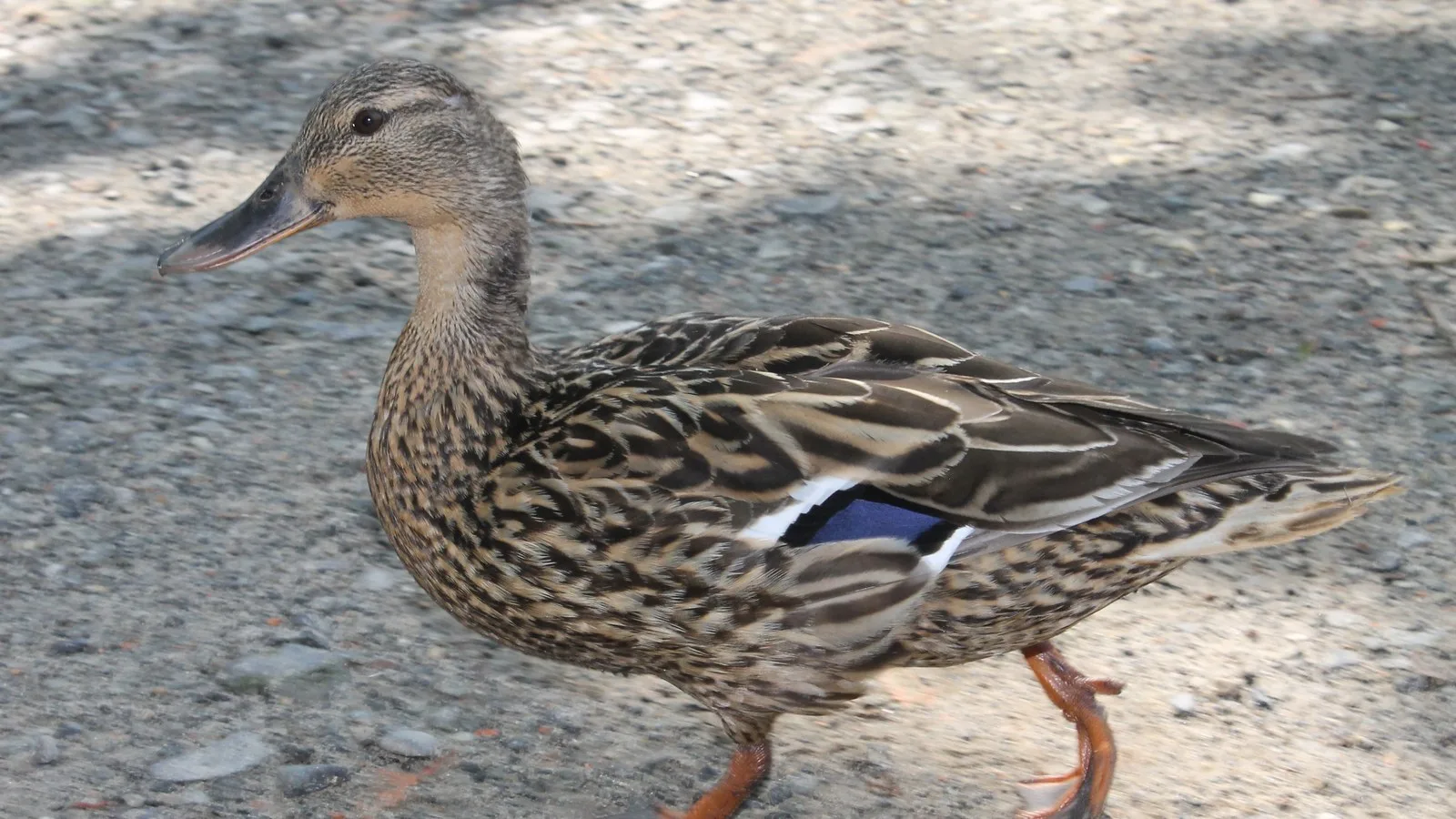
It is one of the most repeated "amazing facts" in the world: a duck's quack doesn't echo, and nobody knows why. It turns up in trivia lists, forwarded emails and pub quizzes. It is false. A duck's quack echoes exactly like any other sound, and scientists proved it in 2003 by taking a real duck into a laboratory and recording her. Verdict: False.
The claim
The claim usually runs in full like this: a duck's quack doesn't echo, and no one knows why. The second half is the giveaway. Real scientific facts do not need to announce that nobody can explain them. The line has been circulating since at least the 1990s, and the fact-checking site Snopes had been fielding questions about it since at least 1999.
The idea survived because it sounds just plausible enough. Ducks live on ponds and open water, far from walls, cliffs and buildings, so there is rarely anything nearby for a quack to bounce off. People seldom hear a duck's quack echo in the wild, and the claim filled that gap with a mystery instead of the simple answer.
The 2003 experiment
By the turn of the century the claim was so widespread that researchers at the University of Salford's Acoustics Research Centre decided to test it properly. Professor Trevor Cox led the work. The team borrowed a duck called Daisy from Stockley Farm in Cheshire and brought her to the university laboratory in the summer of 2003.
Daisy was first placed in an anechoic chamber, a room whose walls, floor and ceiling are covered in sound-absorbing fibreglass wedges, so that almost no sound reflects back. That gave the team a clean recording of the quack with every echo stripped out. Daisy was then taken into the reverberation chamber next door, a hard-walled room that sounds, in Cox's words, like a cathedral. There, her quack echoed clearly, over and over. Cox later wrote that in the reverberation chamber the quack "sounded evil and ghostly", and joked that it would make a good sound effect for a horror film about a vampire duck.
The team also fed the clean anechoic recording into a computer and simulated what Daisy's quack would sound like in a concert hall and as if she were flying in front of a cliff. In every case, the quack echoed. The same claim had already been debunked in 1998 by Cecil Adams of The Straight Dope, who took a duck to a place where echoes are easy to produce and heard the quack come straight back. The television show MythBusters tested it again later in 2003 and reached the same result.
Why the echo hides
If a quack echoes, why is it so hard to hear? The answer is in the shape of the sound itself. A duck's quack is relatively quiet, and it does not stop sharply like a handclap. It trails off slowly, with a long fading "aaaack" at the end. The echo comes back while that fading tail is still sounding, so the two blend into one long quack instead of a quack followed by a separate echo.
Professor Cox explained it plainly: "What all this shows is that the duck's quack fades away; it sounds like it quacks for a long time. Because the duck's quack is rather quiet anyway and the echo comes on the back of a fading sound field, it is as if the echo is being masked."
The physics leaves no room for doubt. Every sound echoes when it meets a surface that reflects it. For the human ear to notice the echo as a separate sound, the surface must be far enough away that the reflection arrives more than about a tenth of a second after the original, and close enough that the reflected sound is still loud enough to hear. A quack meets those conditions just as well as a shout or a clap.
Verdict: False
A duck's quack does echo. The University of Salford team proved it in 2003 with a duck named Daisy, in a reverberation chamber, in computer simulations, and the result has been confirmed again and again since. The echo is real but hard to notice, because the quack is quiet and fades slowly, so the returning sound melts into the end of the quack. The famous claim is not a mystery of nature. It is a trick of hearing, dressed up as a fact.
Frequently Asked Questions
Does a duck's quack really echo?
Yes. Researchers at the University of Salford proved it in 2003 by recording a duck named Daisy in an anechoic chamber and then in a reverberation chamber, where her quack echoed clearly. The Straight Dope had shown the same thing in 1998, and MythBusters confirmed it later in 2003.
Why do people think a duck's quack does not echo?
The quack is quiet and fades slowly instead of stopping sharply, so the echo arrives while the tail of the quack is still sounding and blends into it. Ducks also live in open spaces with few walls or cliffs nearby, so there is often nothing for the sound to bounce off in the wild.
Who was Daisy the duck?
Daisy was a farm duck borrowed from Stockley Farm in Cheshire for the University of Salford experiment in 2003. Professor Trevor Cox and his team recorded her quacks in an anechoic chamber and a reverberation chamber, and used the recordings to simulate the quack in a concert hall and near a cliff face.
Read More: Myths and Facts: Chameleons Do Not Change Colour to Match Their Background
Read More: Myths and Facts: Cows Do Not Have Four Stomachs at All
Read More: Myths and Facts: Bats Are Not Blind, They Can See Well
Read More: Myths and Facts: Dogs Do Not See Only in Black and White


Comments
Be the first to comment on this story.