


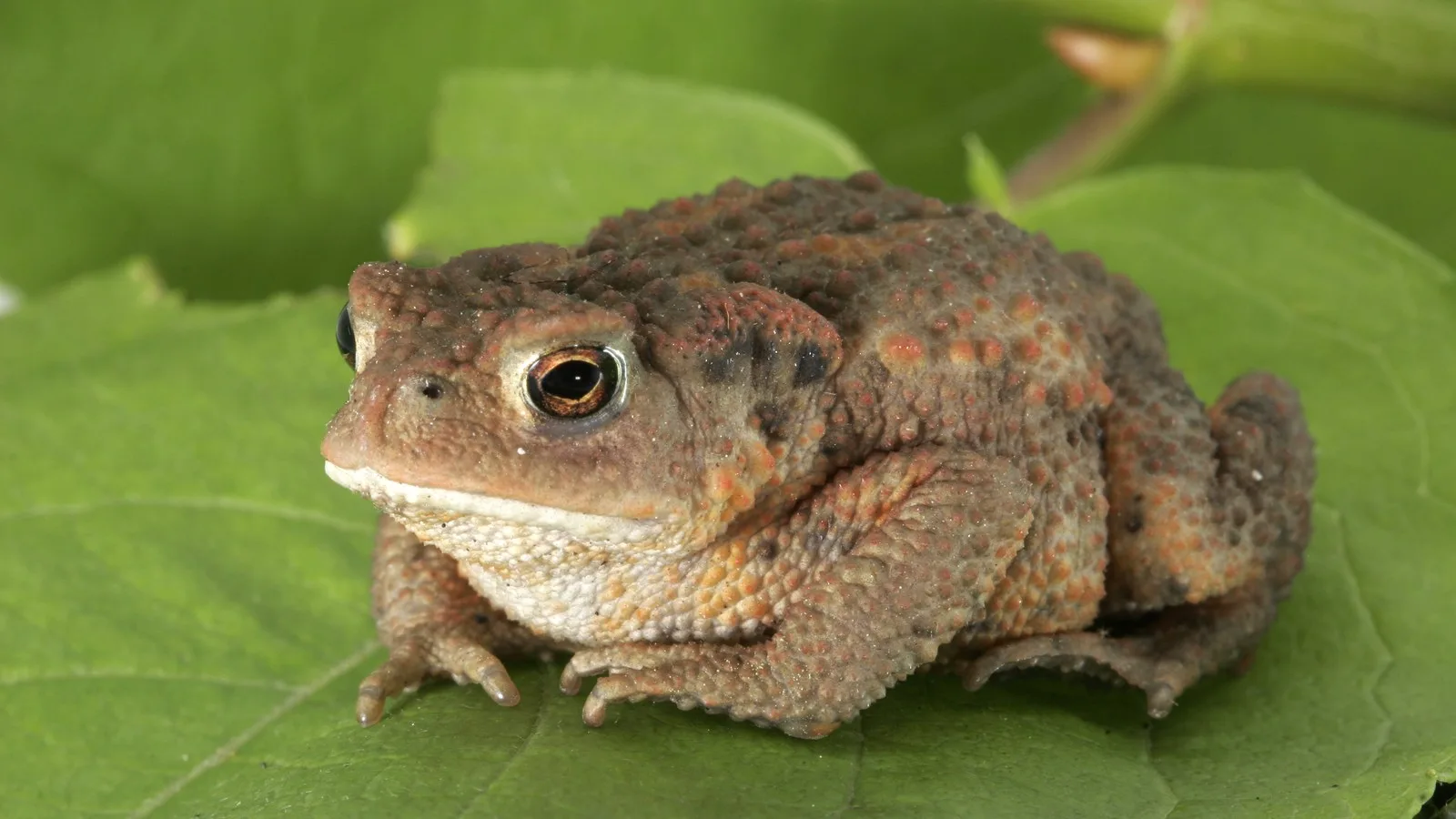
If you picked up a toad as a child, an adult probably warned you that you would get warts. The warning has been passed down for generations, and it still makes children drop a toad in a hurry. It is also wrong. Touching a toad does not give you warts, because warts are caused by a virus that only humans carry. Verdict: False.
The claim
The claim is simple: the bumps on a toad's skin are warts, and touching them passes the warts on to your hands. The idea is old. Before anyone knew about viruses, it was a reasonable guess. A toad is covered in rough bumps, a child handles one, and weeks later a wart appears on the child's hand. The timing lined up often enough by coincidence to keep the story alive, and parents repeated it as a way to keep children from picking up toads.
Why the idea sounds plausible
The bumps are the grain of truth in the myth. A common toad's back is covered in raised, reddish bumps that look very much like warts on human skin. The resemblance is striking, and it is the reason the myth exists at all. The Burke Museum traces the idea to exactly that visual likeness. But a likeness is not a cause. The bumps on a toad are not warts. They are clusters of glands that produce and store toxic secretions the toad uses to defend itself from predators.
What actually causes warts
Warts are small, rough skin growths caused by the human papillomavirus, or HPV. The virus enters the skin through a tiny cut, scrape or other opening, and the wart grows weeks or months later. More than 150 types of HPV exist, and only a few of them cause the common warts that appear on hands and fingers, according to the Mayo Clinic. HPV is a strictly human virus. It needs human skin to complete its life cycle, and it has no animal reservoir. A toad cannot carry it, and a toad cannot pass it on.
Warts are contagious, but only from person to person, through direct skin contact or through shared items such as towels and razors. You can also pick the virus up from a surface a wart has touched. Frogs and toads play no part in any of this.
The bumps on a toad are not warts
The bumps that gave rise to the myth are skin glands, including the large parotoid glands behind the toad's eyes. When a toad is threatened, these glands release a mix of chemicals that taste bad and can irritate a predator's mouth. The cane toad, the most toxic of them, secretes a cocktail of about 14 chemicals. The secretions can irritate human skin, and they can be dangerous if a dog or cat bites a toad, but they do not cause warts. Handling a toad will not make warts grow on your hands, however long you hold it.
The real risks of handling a toad
That does not mean toads are safe to handle without care. Frogs and toads commonly carry Salmonella bacteria in their digestive tracts, even when they look perfectly healthy, and the bacteria can pass to people through touch or through tank water. The US Centers for Disease Control and Prevention says amphibians are more likely than most other pets to carry harmful germs, and it recommends that children under five avoid handling them altogether.
The simple protection is to wash your hands thoroughly with soap and water after any contact with a frog or toad or its habitat. Handle the animal itself gently, with clean wet hands free of soap or lotion, because the oils and chemicals on human hands can harm its thin, delicate skin. If anything, you are the bigger risk to the toad.
Verdict: False
Touching a toad does not give you warts. Warts are caused by the human papillomavirus, a virus that only humans carry, and the bumps on a toad are defensive glands, not warts. Wash your hands after handling any amphibian, but a wart is one thing a toad can never give you.
Frequently Asked Questions
Can you get warts from touching a toad?
No. Warts are caused by the human papillomavirus, a virus that only humans carry. The bumps on a toad are glands that make defensive toxins, not warts, so handling a toad cannot give you one.
How do you actually catch warts?
Warts spread when HPV enters the skin through a small cut or scrape. It passes from person to person through skin contact, or through shared towels, razors and surfaces a wart has touched. A wart usually appears weeks or months after the infection.
Is it safe to handle a toad?
Mostly, with care. Wash your hands with soap and water afterwards, because toads can carry Salmonella. Children under five should not handle them, and keep pets away from toads, since the skin secretions can be toxic to dogs and cats.
Read More: Myths and Facts: Touching a Baby Bird Does Not Make Its Mother Abandon It
Read More: Myths and Facts: A Dog's Mouth Is Not Cleaner Than a Human's
Read More: Myths and Facts: Putting Butter on a Burn Does Not Help It Heal
Read More: Myths and Facts: Urinating on a Jellyfish Sting Does Not Help


Comments
Be the first to comment on this story.