


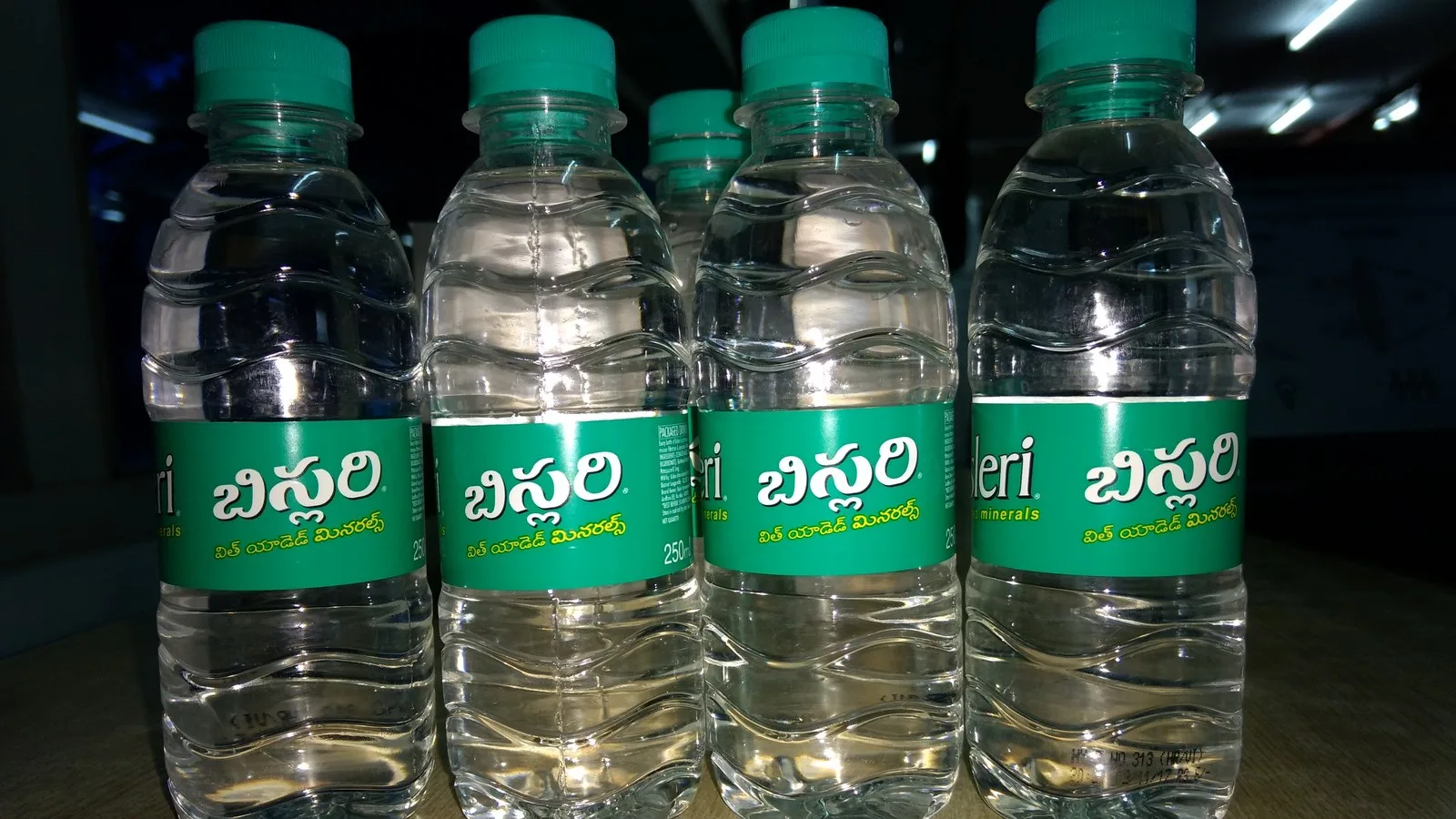
Posts claiming that Bisleri packaged drinking water has been declared unfit for drinking because it contains carcinogenic chemicals are being widely shared on social media. The claim is misleading. WebQoof found that the food safety regulator acted against one sample from one batch, not against all Bisleri water. Verdict: Misleading.
The claim
Social media posts allege that Bisleri, one of India's most sold water brands, has been declared unfit for drinking after the Food Safety and Standards Authority of India (FSSAI) issued a notice about its packaged drinking water.
The posts followed an FSSAI notice and were shared with screenshots and short videos carrying the claim that the water contains cancer causing chemicals. The claim spread fast, and it led to misreporting and a flood of memes about the brand.
What the FSSAI actually said
The FSSAI posted on its social media accounts that a regulatory sample of packaged drinking water collected from the Bisleri premises was found non-compliant with the prescribed bromate limits and declared unsafe under the Food Safety and Standards Act, 2006.
The regulator also said it had sanctioned prosecution under the Act. But its post did not say that all of Bisleri's products have been declared unfit for drinking. The action it described was about a sample, not about the brand as a whole.
What Bisleri said
Bisleri responded on its social media accounts and said its product is safe for consumption. The company said the sanction of prosecution refers to a batch produced in September 2025 at its Verna manufacturing facility in Goa.
According to Bisleri, the FSSAI collected six samples. Initial testing found that five of them met the standards. The sixth sample recorded a bromate level of 12 micrograms per litre, which was above the prescribed limit of 10 micrograms per litre.
Bisleri said that after it appealed, the sample was sent to a referral laboratory, where the bromate level was found to be within the prescribed limit, but polynuclear aromatic hydrocarbons (PAHs) were flagged in the sample. The sample was also sent to an FSSAI approved laboratory for independent testing, where the bromate level was again found to be within the prescribed limit.
The company said it submitted these test results to the FSSAI's Western Regional Office with a formal letter, and received no further communication after that.
What the FSSAI clarified
The FSSAI clarified on 23 November that only one sample from one batch, Batch No. GO 270, was found to be non-compliant, and that an order prohibiting its sale has been issued.
The sample was recorded as DO Code DO/GOA/06, Sr. No. 69/2025, Batch No. GO 270, and it was collected at Bisleri International's facility in Verna. That clarification matches what Bisleri had said about the batch, and it does not support the viral claim that all Bisleri water is unfit for drinking.
Why one failed sample does not condemn all Bisleri water
The batch at the centre of the row came from one of 143 plants in Bisleri's network. The regulator's own findings and its clarification both point to a single sample from a single batch, not to a brand wide failure.
The FSSAI has also said in a 2021 report that food businesses need to conduct mandatory product testing twice in a financial year. Testing is done sample by sample, and one failed test in one batch does not mean every bottle from every plant fails.
That is the gap between the viral claim and the record. The claim turns a single non-compliant sample into a blanket verdict on the whole brand. The evidence does not support that jump.
Verdict: Misleading
The claim that Bisleri water has been declared unfit for drinking is misleading. The FSSAI acted on one sample from Batch No. GO 270, produced in September 2025 at the Verna facility in Goa, and ordered that batch not to be sold. Five of the six samples collected met the standards, and later testing found the bromate level in the disputed sample within the prescribed limit. WebQoof found that one failed test does not mean all Bisleri water is unfit for consumption.
Frequently Asked Questions
Has Bisleri water been declared unfit for drinking?
No. WebQoof found the claim is misleading. The FSSAI found only one sample from one batch, Batch No. GO 270, to be non-compliant, and ordered that batch not to be sold.
What did the FSSAI find in the Bisleri sample?
The FSSAI said a regulatory sample collected from Bisleri's premises was non-compliant with the prescribed bromate limits. Bisleri said the sample recorded 12 micrograms of bromate per litre against a limit of 10, and that later testing found the bromate level within the limit.
Does one failed sample mean all Bisleri water is unsafe?
No. The batch came from one of 143 plants in the network, and five of the six samples collected met the standards. One failed test in one batch does not mean all Bisleri water is unfit for consumption.
Read More: Explained: SC Orders Red Hexagon Warnings on High Sugar, Salt and Fat Foods
Read More: Explained: GST on Group Health Insurance and the Input Tax Credit Change
Read More: Myths and Facts: A Dog's Mouth Is Not Cleaner Than a Human's
Read More: Myths and Facts: Putting Butter on a Burn Does Not Help It Heal

Comments
Be the first to comment on this story.