


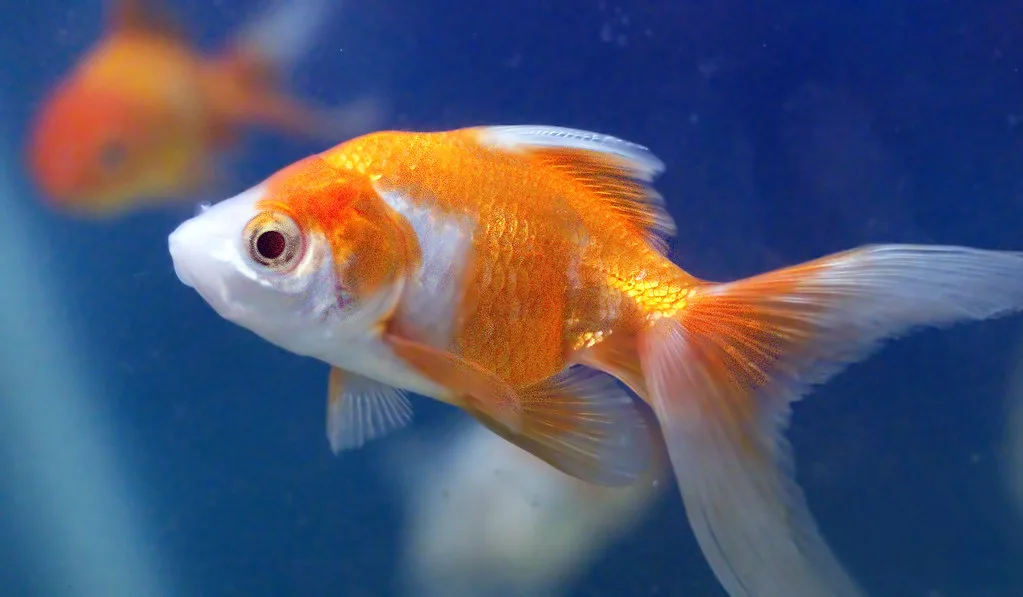
You have probably heard it said that a goldfish forgets everything in three seconds. The claim is used as a joke about short attention spans, and as a reason to think a fish in a small bowl does not mind its surroundings. It is wrong. Goldfish can learn, remember and use what they have learned for weeks and even months. Scientists have known this since the 1950s and 1960s, when goldfish became a common laboratory animal for studying learning and memory.
Where the myth came from
Nobody knows exactly where the three second figure came from. No scientific study has ever reported it, and no source has been found that gives it a scientific origin. The number itself keeps changing. In some places it is two seconds, in others ten, but it is always short. It probably grew out of watching goldfish swim in circles in a small bowl, which looks like an animal starting over again and again. The claim stuck because it is simple, funny and easy to repeat. It also makes keeping a fish in a tiny container easier to accept, since a fish that forgets everything in seconds would not seem to suffer from boredom.
What the science actually shows
The evidence against the myth is old and consistent. Researchers at the University of Plymouth trained goldfish to press a lever to get food, with food available during only one hour of each day. Over a three month study, the fish learned the schedule. They pressed the lever more often around the time food was due, and less often at other times, showing they could learn and anticipate a regular daily feeding time. When the researchers changed the schedule, the fish adapted within days. In other work, goldfish trained to tell apart smells linked to different outcomes still remembered the difference at least three months later.
Goldfish can also tell colours apart. In 1959, researchers trained goldfish to distinguish coloured panels even when the brightness of the panels was changed, so brightness alone could not solve the task. Later studies confirmed the finding with blue, green and red panels. Culum Brown, a professor at Macquarie University who has studied fish intelligence for more than 25 years, put it plainly in an interview with Live Science in 2014. He said, "The three-second memory thing is a complete myth." In a 2001 study, Brown showed that fish can remember complex tasks and environments for at least five months, depending on the species.
The schoolboy experiment
One of the best known tests of the myth was done by a 15 year old schoolboy in Australia named Rory Stokes. He placed a red Lego block in his goldfish tank and dropped food next to it. At first the fish avoided the strange object. After a few days of training, the fish started to link the red block with food. Rory then fed the fish for a week without putting the block in the tank. If the fish had a three second memory, putting the block back should have scared it just as it did the first time. Instead, the fish swam towards the block faster than before, showing it remembered the link between the block and food after a full week.
Goldfish that learned to drive
The most striking proof came in 2022, when researchers at Ben-Gurion University in Israel trained goldfish to drive a small wheeled tank on land. The fish sat in a tank of water mounted on wheels, and learned to steer it towards a target in the room to get a food reward. Steering a vehicle on land needs far more than three seconds of memory. The fish had to remember where the target was, work out which way to swim, and keep going until they reached it. The study showed goldfish can navigate, learn from their surroundings and use visual landmarks, much like animals on land do.
The verdict
The myth is false. Goldfish do not have a three second memory. They can remember feeding times, colours, places and learned tasks for weeks and months. The three second figure has no scientific source, and the research has contradicted it for more than half a century. A goldfish in a bowl is not starting its life over every three seconds. It remembers, it learns, and it can get bored, just like any other animal.
Frequently Asked Questions
Do goldfish really have a three second memory?
No. The three second figure has no scientific basis. Studies show goldfish can remember feeding times, colours and routes for weeks and even months.
How long can a goldfish remember something?
It depends on the task. Goldfish have remembered feeding schedules and learned differences between smells for at least three months, and some studies report memory lasting five months or more.
Are goldfish intelligent?
Goldfish are far smarter than the myth suggests. They can learn to press levers for food, tell colours apart, navigate mazes, recognise landmarks and even steer a wheeled tank towards a target.
Read More: Myths and Facts: The Blood Type Diet Does Not Work
Read More: Myths and Facts: MSG Is Not Bad for You, Studies Say
Read More: Myths and Facts: Waking a Sleepwalker Is Not Dangerous
Read More: Myths and Facts: Dogs Do Not See Only in Black and White



Comments
Be the first to comment on this story.