


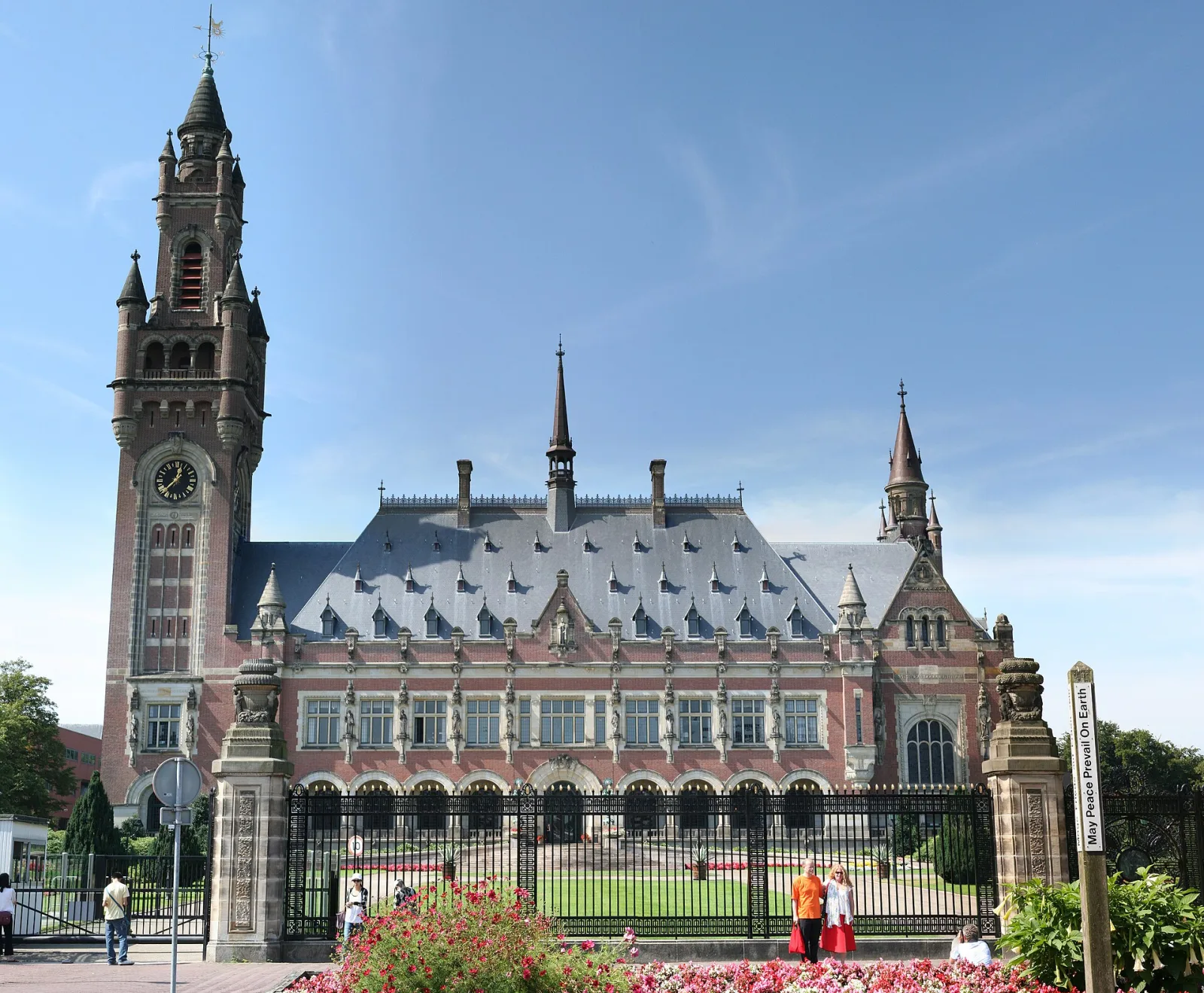
The International Court of Justice has ruled that Myanmar committed genocide against the Rohingya, a mostly Muslim minority, in a landmark verdict delivered in The Hague on 19 November 2026. It is the first time in the history of the court, set up in 1945, that it has held a state responsible for committing genocide. Here is what the court decided, how it reached its finding, and what happens next.
What the court decided
The verdict came seven years after The Gambia brought the case against Myanmar in 2019. The ruling, read out over three hours by the court's president, Judge Yuji Iwasawa, was decided by a nine to six majority of the 15-judge panel.
The court found that Myanmar's security forces killed thousands of Rohingya during a military crackdown in Rakhine State in 2017, committed widespread sexual violence, and carried out acts of extreme violence against children. It found that villages were systematically destroyed, replaced with permanent structures, and then resettled by non-Rohingya people. The court found that an estimate of around 10,000 Rohingya violently killed during the clearance operations was supported by the evidence. Hundreds of thousands of Rohingya fled to Bangladesh during the crackdown, and most remain in refugee camps at Cox's Bazar.
The ruling is final and cannot be appealed. Myanmar's government criticised it as unfair, with government spokesperson Khaing Khaing Soe saying the country had been unjustly accused.
How the court proved intent
Genocide is not only about the scale of violence. Under the Genocide Convention, adopted by the United Nations in 1948, the acts must be carried out with the specific intent to destroy a protected group, in whole or in part. That intent is the hardest part to prove, and there was no written order or extermination plan in this case.
The majority of judges said intent could be inferred from the context, the systematic nature of the acts, and the targeting of one particular group. Among the evidence they weighed were hate speeches by Myanmar's then military chief, Senior General Min Aung Hlaing, and a hate speech campaign organised by the military, known as the Tatmadaw, on Facebook.
The court also tested Myanmar's defence, that the operations were a response to attacks by the Arakan Rohingya Salvation Army. The majority found that the operations did not separate civilians from alleged insurgents, and that attacks on children, gang rapes, executions, burned villages, and attacks on people fleeing were not consistent with a counter-insurgency operation.
This marks a break from the court's earlier cases. In the Bosnia case in 2007, the court found that genocide occurred at Srebrenica but held Serbia responsible only for failing to prevent and punish it, not for committing it. The Myanmar ruling is the first time the court has found a state guilty of committing genocide itself.
What Myanmar must do, and can it be enforced?
The court ordered Myanmar to halt all acts of violence against the Rohingya, to investigate those responsible, and to provide restitution and reparations to victims, including allowing refugees to safely return home and reuniting families. Judges could not determine the amount of compensation owed, and that will be decided later. Myanmar must submit a report within two years on the measures it has taken. The country is legally obliged to comply, as a party to the case and a signatory to the Genocide Convention.
But the court has no mechanism of its own to enforce its judgments. If Myanmar refuses to comply, The Gambia could refer the matter to the UN Security Council under Article 94 of the UN Charter, though vetoes by permanent members with close ties to Myanmar, such as China and Russia, are possible. The matter could instead be raised at the UN General Assembly, where a resolution would be non-binding but carry diplomatic weight. Enforcement, as one expert put it, ultimately depends on political will.
Beyond the UN, the judgment gives other states a legal basis to press Myanmar to comply. Governments could impose targeted sanctions, limit diplomatic engagement, or halt arms, security and data transfers. The United Kingdom announced after the ruling that it was expelling Myanmar's defence attache. In 2024, prosecutors at the International Criminal Court requested an arrest warrant for Min Aung Hlaing over alleged crimes against humanity, and experts say the ICJ ruling could have a snowball effect on criminal proceedings against individuals.
What it means for the Rohingya
For the Rohingya themselves, the ruling is a historic victory, but experts caution that it is unlikely to bring immediate relief. "I think it is not going to change anything immediately," Jaivet Ealom, secretary-general of the Rohingya Consultative Council, told CNA.
The next two years will be an important test of whether Myanmar takes meaningful steps to implement the ruling. If it complies, the benefits could include the return of confiscated property, family reunification, rehabilitation for victims, and financial compensation where property or other losses cannot be recovered.
But implementing such measures could prove difficult in the near term. Conflict continues in Rakhine State between the military junta and the Arakan Army, with continued violence against Rohingya civilians. The priority, experts say, is that any return is genuinely safe and voluntary, and not rushed. As one legal expert put it, the judgment is important, but it should not just be a piece of paper.
Frequently Asked Questions
What did the International Court of Justice rule about Myanmar?
The court ruled by a nine to six majority that Myanmar committed genocide against the Rohingya during its 2017 military crackdown in Rakhine State. It is the first time the court has held a state responsible for committing genocide.
Who brought the case against Myanmar?
The Gambia brought the case in 2019, under the Genocide Convention. The court delivered its verdict on 19 November 2026, after seven years of deliberations.
What happens if Myanmar refuses to comply with the ruling?
The ruling is final and legally binding, but the court has no enforcement mechanism of its own. The Gambia could refer the matter to the UN Security Council, though vetoes are possible, or the matter could be raised at the UN General Assembly. Other states could also impose sanctions or limit engagement with Myanmar.
Read More: Explained: Why the Shenzhen Nuclear Declaration Matters
Read More: Explained: Three Cyclones in Three Weeks in the Bay of Bengal
Read More: Explained: Why the Supreme Court Panel Wants Curbs on Riverbed Sand Mining
Read More: Explained: Record $11.3 Billion FPI Inflows Into India


Comments
Be the first to comment on this story.